

The Driveway Upgrade That'll Help Improve Yard And Soil Drainage
We may receive a commission on purchases made from links.
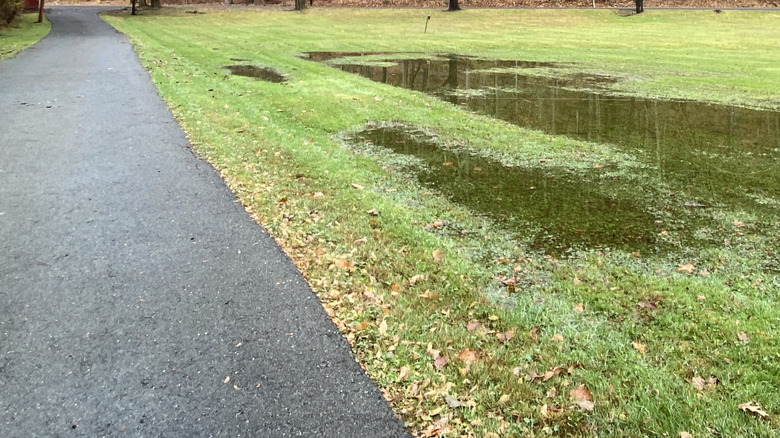
If you have issues with water pooling along your driveway edge, or notice that your lawn stays soggy after rain, compacted soil and poor grading are the likely culprits. Luckily, you can perform a fairly simple upgrade to provide a useful drainage solution that keeps your lawn from becoming a muddy mess. Excavating around your driveway's edge, adding compacted road base, topping it with sand, and installing an attractive paver pathway with edge restraints can beautify your yard while improving drainage.
This works because rain behaves predictably, flowing downhill for the easiest path. When soil runs up to your driveway paving, runoff can saturate the lawn's edge, eroding the dirt and leaving behind puddles. When you design a paver edge, it interrupts the flow of the water by redirecting it from problem areas and encouraging water to filter into the ground, rather than sitting on the surface. A paver system with gravel underneath promotes drainage by allowing water to flow through it and away. The layers imitate how natural soil would filter through water, reducing surface runoff. It also creates a base that drains more freely, helping to prevent edge compaction.
The pathway reduces erosion and keeps your soil from becoming saturated. To begin, mark out a trench along the edge of your driveway that's about 6 inches or more wide. Using a shovel or a trencher like this WORX Electric Lawn Edger, remove the grass and soil along your marked edge.
Steps to take when making a paver pathway
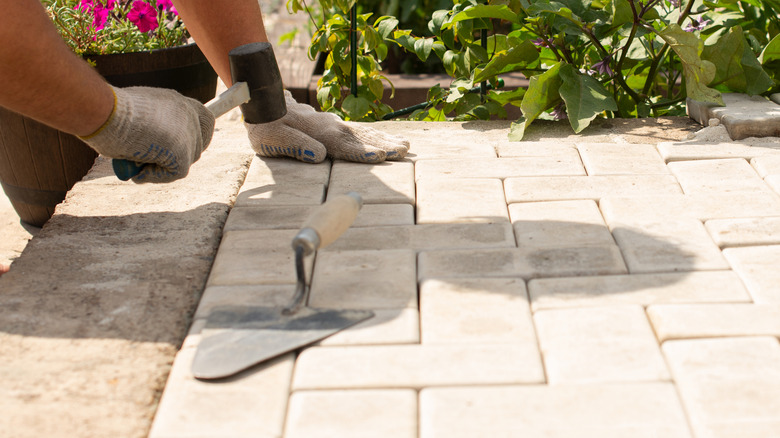
Dig down to the firmer soil, about 6 inches or more, so your absorbent materials sit below the driveway's level and the pavers will be flush with it. Now you're ready to create your paver pathway. You can add in geotextile (or filter fabric) first to keep soil from mixing in with your base. Fill in the trench with crushed stone or road base material. Layer it in 2-inch increments, so you can compact each layer down with a plate compactor. Compaction is important, because it resists any shifting underneath and helps water drain through the gaps.
Spread your coarse sand layer over the road base, about 1 inch thick. The coarse sand is a great hack since it creates a nice flat surface for your pavers and drains better than play sand due to its jagged grains. Although optional, you can install sturdy edge restraints along the driveway edge before laying your paver stones. The restraints keep them from shifting.
Place your pavers down in a chosen pattern, starting at one end and working your way around. You can include a curve for some visual interest. Use a rubber mallet to seat them evenly on the sand. Check your gaps to keep them consistent for a uniform look. Once pavers are in place, you can sweep some polymer sand into the spaces. Lastly, rinse it to stabilize the pavers and check that everything is set. If you want, you can add an additional patio drain connected to a drain pipe before installing your paver system to further direct water where you want it to go.