

The Blue Perennial You Should Plant In Spring For The Strongest Roots
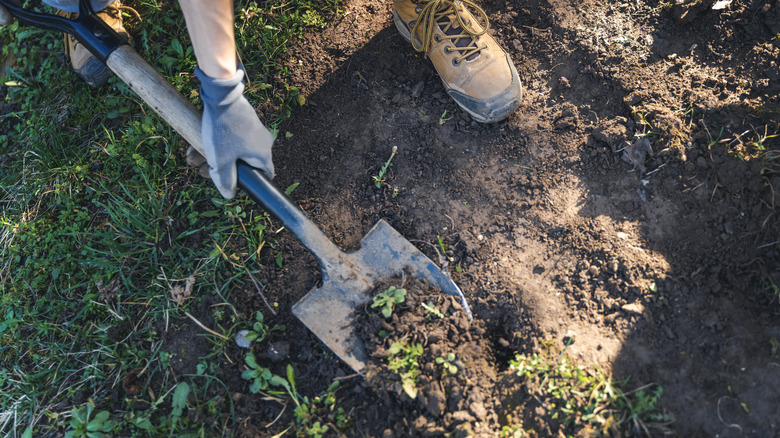
Spring is often a gardener's time to reap the fruits of the previous seasons' labor. The days are getting longer, the soil is getting warmer, and flowers planted in fall are emerging from their winter nap. Trees and shrubs pruned in winter are now healthier, more vibrant garden centerpieces. But spring is also the time to put in necessary work that will only pay off later in the year — work that can't wait until fall. Blue false indigo (Baptisia australis) is one of those plants that needs to be planted in spring. It's a big plant, growing a 2- to 3-foot wide clump of 3- to 4-foot tall stems, so it needs to establish deep, strong taproots first. And if you want it to display its striking clusters of pea-shaped flowers, you'll need to plant it early in spring.
Blue false indigo is a member of the bean family (Fabaceae) and looks like an overgrown pea plant. But unlike ordinary garden peas, snow peas, or snap peas, it's a shrubby perennial, hardy in USDA hardiness zones three through nine, and can give you years of long-blooming pleasure. Its stunning blue flowers emerge in late spring and early summer, earlier than other North American native wildflowers like purple coneflowers (Echinacea purpurea) and black-eyed Susans (Rudbeckia spp.). By the time those other native flower buds open, blue false indigo's flowers have turned to deep black seed pods that rattle when you shake them. While the flowers on their long stems are a great addition to cut flower arrangements, those same stems are often used in dried flower arrangements once the seed pods emerge.
Growing blue false indigo
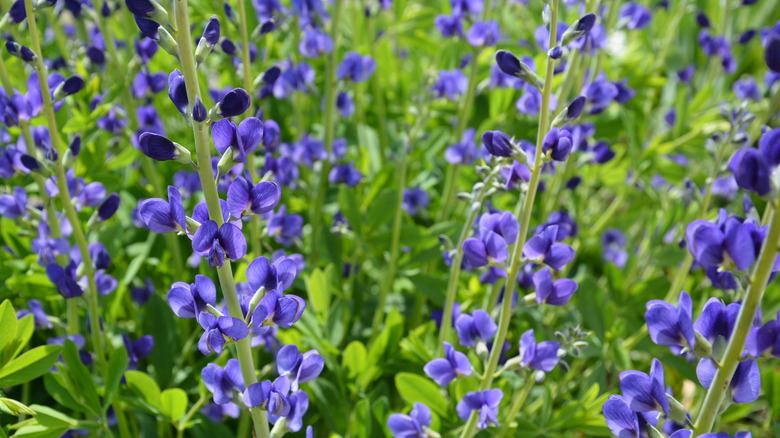
It's possible to start blue false indigo from seeds, but you would have had to start sowing those seeds as soon as they were ripe — the previous fall or early winter. Plants grown from seeds can also take years to mature and bloom. As an alternative, you can root new plants from cuttings if you have a neighbor willing to part with some of the plant's numerous stems. But if not, no worries: many garden centers carry blue false indigo, as it's a very popular species, named the 2010 Perennial Plant of the Year. It is also popular with pollinators like bees and butterflies in your garden.
Plant blue false indigo in full sun and in rich, evenly moist, well-draining soil. Blue false indigo can tolerate light shade, though fewer flowers will emerge. Just choose your spot carefully, as the plant's deep roots make it hard to transplant elsewhere once it's established. A mature blue false indigo plant needs little maintenance. It is drought-tolerant, has few disease or pest problems, and deer and rabbits don't find it palatable. The tall plant may need staking if it's planted in a windy spot or if it gets insufficient sunshine, leading to weaker stems.
Deadheading after the flowers have faded will prevent seeds from forming, but you will lose one of its most delightful features — the seed pods are excellent rattles! With the first hard frost, the plant dies back and can be cut back to the ground as an item on your fall garden cleanup to-do list. If its deep roots are left undisturbed, a blue false indigo plant that has outgrown its spot can be carefully divided in early spring.