

Making Your Own Lampshade? Don't Forget This Step To Ensure It's Not A Fire Hazard
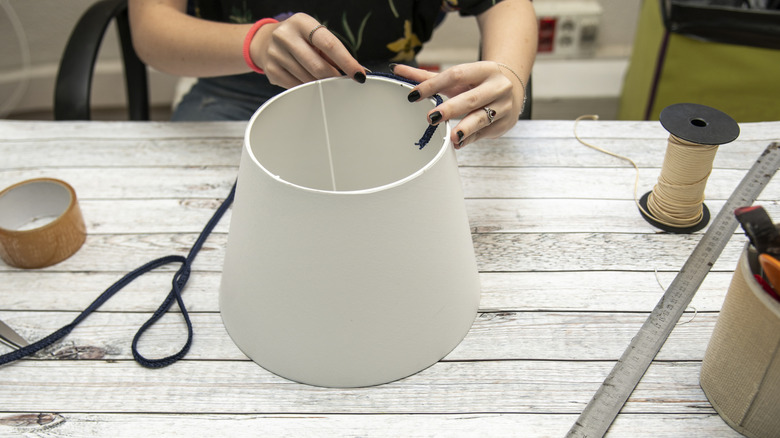
Making your own lampshade is a simple and cost-effective way to repurpose an old lamp or add a unique twist to your space. And while there's no shortage of budget-friendly DIYs to give a lampshade a personal touch, it's important to use the proper materials to ensure your new shade doesn't become a fire hazard. Some natural fabrics like cotton or linen are popular for DIY lampshades, but they are also flammable. The material you use for your shade will be in close contact with the heat generated by the lightbulb, so you should add a heat-resistant inner lining, such as adhesive styrene, to prevent the material from catching fire.
According to the National Fire Protection Association, electrical and lighting equipment are the third most-common cause of home fires, accounting for more than 30,000 fires each year. While we may not think twice about flipping on a lamp or DIYing a new lampshade, it's important to take some safety precautions to prevent fire hazards. In general, fires from lamps usually have two primary causes. Either the lamp's electrical components degrade and malfunction, or an external factor (like the heat of the bulb itself) causes the fabric to catch fire. That's why adding the heat-resistant liner is a step you don't want to skip.
Add a heat-resistant liner to your lampshade
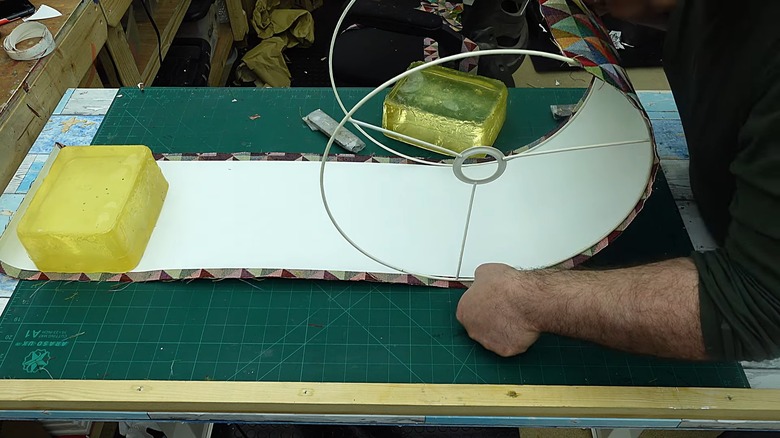
The most common type of inner lining for DIY lampshades is adhesive styrene. Styrene is a clear liquid frequently used in paper coating and carpet backing. Added to the paper, it creates a liner that is fire-resistant, flexible, and easy to attach to other fabrics. Using adhesive styrene for an inner lining will protect the outer fabric from getting too hot and potentially igniting. Adhesive styrene is widely available online and comes in sheets of various heights and lengths, such as the I Like That Lamp Styrene Sheets, so you can choose the best size for your lampshade. You could also consider other plastic, paper, or fabric options. You just need a self-adhesive material that is manufactured specifically for lampshades, and there is a range of styles, finishes, designs, and colors.
In general, the most common types of outer fabrics for lampshades are cotton and linen because they are versatile, easy to work with, and will look seamless and smooth once they're attached to the lining. But if you're feeling to go in a different direction, you could choose naturally heat-proof materials for the outer shell. DIY a modern metal lampshade or go for other non-traditional options like stained glass or even seashells. While you may not need to worry as much about fire hazards with these materials, they can absorb heat and become hot to the touch. When making your own lampshade, choosing the right materials can help you protect your home against fires while still flexing your DIY skills.