

Watch Your Carrots Thrive With The Help Of These Companion Plants
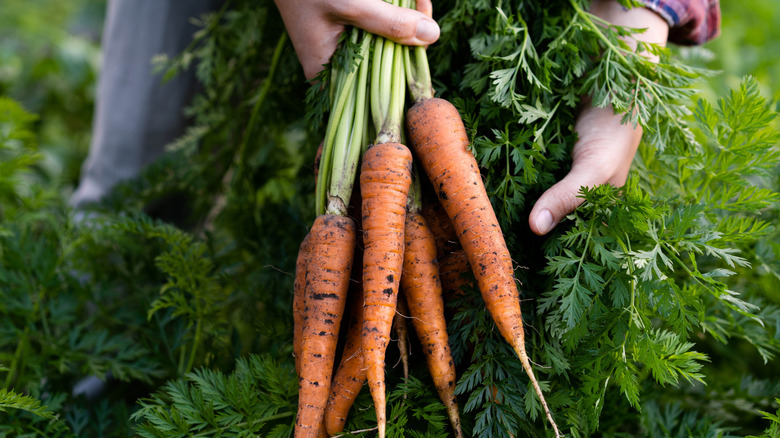
It's not just the satisfaction of growing them yourself that makes carrots fresh from the garden taste better. Unlike those you get from the grocery store, which can lose their sweetness over time, carrots quickly pulled from the soil retain their natural sugar reserves, which makes a big difference in flavor. As long as you have well-draining soil that's not too dense, you can easily grow this crop, even in cooler regions.
However, extra attention makes the difference between adequate growth and a prolific carrot patch, and this includes leaning into the science of companion planting. This time-tested practice involves planting crops that will mutually benefit each other in the same space. These plant neighbors may help you cluster garden tasks together, keep pests at bay, or help improve the soil. Herbs like rosemary, root veggies like radishes, and greens like lettuce are companion plants that will help your carrots thrive.
Although the idea is easy to grasp, there are some ways that companion planting can go wrong or not yield the expected results. Some trial and error is part of the process, but there are known companion planting mistakes to avoid. If your goal is to eliminate pests, for example, get the companions started a few weeks before getting the carrot seeds in the ground. You can also maximize your chances of success by situating the companion crops just two or three rows apart.
Radish
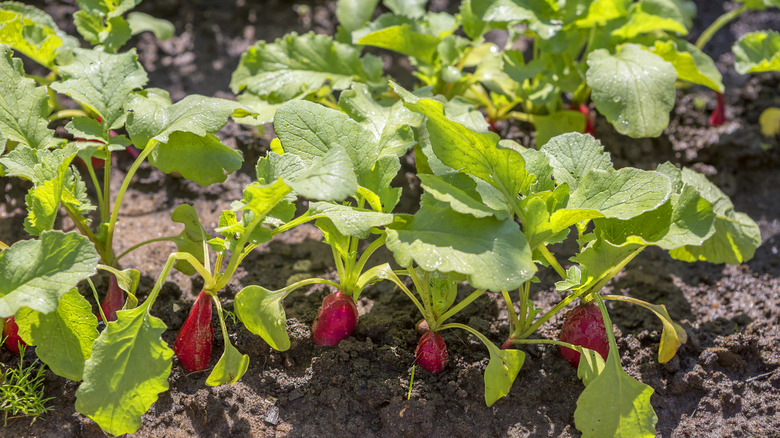
You'll experience the benefits of planting radishes next to carrots in the garden soon after you sow the seeds. Radishes sprout up quickly, so if you plant them near (and at the same time as) your carrots, their baby leaves will mark your row of carrots, so you don't mistakenly pull up still-growing carrots while weeding. The radishes should germinate in five to 10 days, followed by the carrot sprouts in six to 14 days. Also, radishes are harvested first, which opens up necessary growing space for the carrot roots.
Onion
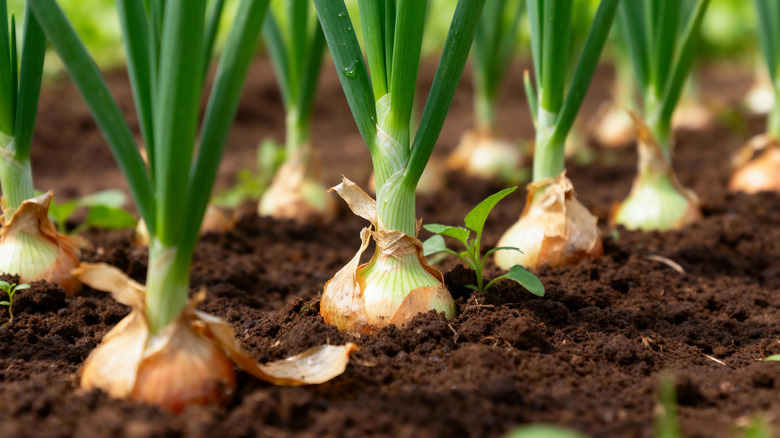
Bulb onions pair well with carrots in the garden, just like they do in a nice mirepoix. Onion plants ward off pests that would ravage the carrots. In turn, the carrots help create the loose soil conditions that onions benefit from. These bulb vegetables exude a strong smell that keeps away carrot flies. Both plants have the same soil moisture preferences, and their different-length roots won't compete with each other. You should ensure 6 inches of space between them and the carrots to maintain good garden harmony.
Marigold
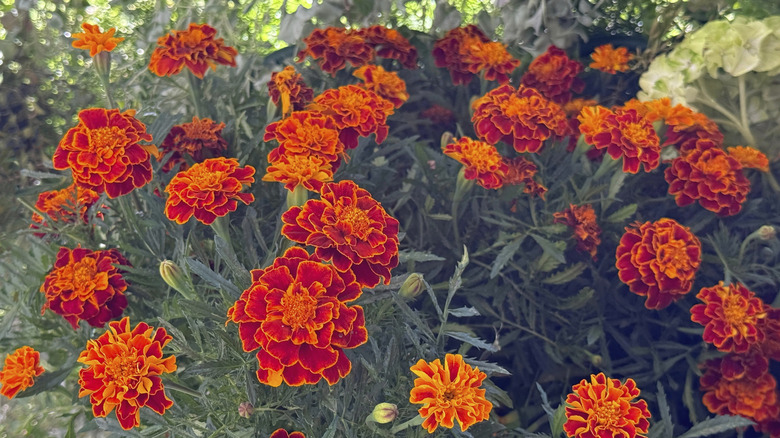
Some pests that attack carrots live underground, including roundworms known as root knot nematodes, so it's worth trying a beautiful floral solution. Marigolds (Tagetes) release a nematode-deterring compound called thiophene. In particular, the 'Petite Gold' and 'Tangerine' varieties of French marigolds can help repel these garden pests. These flowers are most effective in protecting fall-planted carrots, since they should grow for an entire season rather than being interplanted. This timing is possible with French marigolds, since they can grow outside all year in USDA Hardiness Zones 3 through 11, blooming in spring and summer.
Oregano
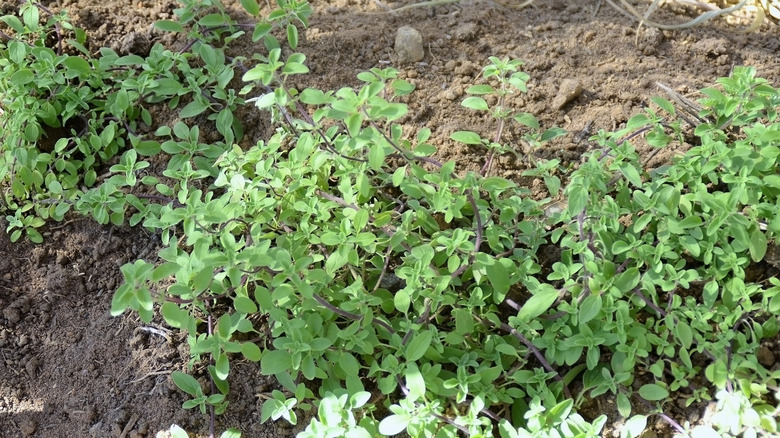
If you're looking for some natural protection against carrot root flies and nematodes, try planting oregano next to your carrots. This aromatic perennial herb has been known to kill insects through the essential oils (carvacrol and thymol) it releases. While repelling the bad bugs, it's also appealing to pollinators like bees, which can improve the crop's yield. Since oregano has a tendency to spread, grow it in pots along the edge of your garden bed, or plant it 10 inches from the carrots.
Tomato
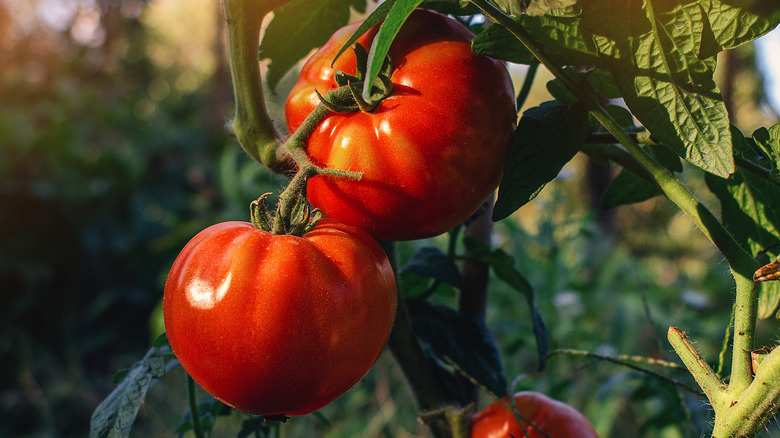
If you're growing carrots in the summer heat, they can benefit from the shade provided by tall tomato plants. It helps that both water-loving crops have similar needs. One method is to plant your carrots at the beginning of spring and add in the tomatoes when the weather is warmer. Those tomatoes will provide a canopy of shelter if you want to sow a second carrot crop at the end of the summer and into fall. A common configuration is to grow the tomatoes in the middle of a garden bed and plant carrot seeds along the periphery.
Rosemary
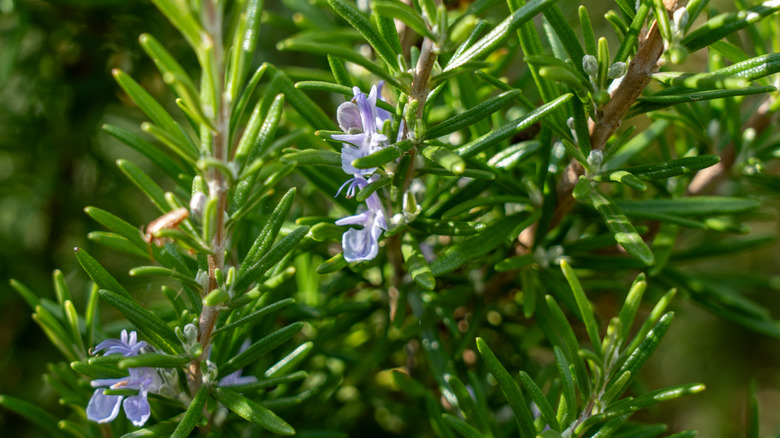
The pungent smell of rosemary makes this herb a helpful companion to your carrots in zones 8 through 10. This scent provides a screen to deter carrot rust flies, which are otherwise drawn by the smell of carrot leaves. A rosemary border around the carrot patch can stop these bugs from settling into the plants' crowns to lay their eggs. Get the rosemary started first, or place pots of this aromatic herb around the carrots, since germination can take a few weeks or longer.
Beans
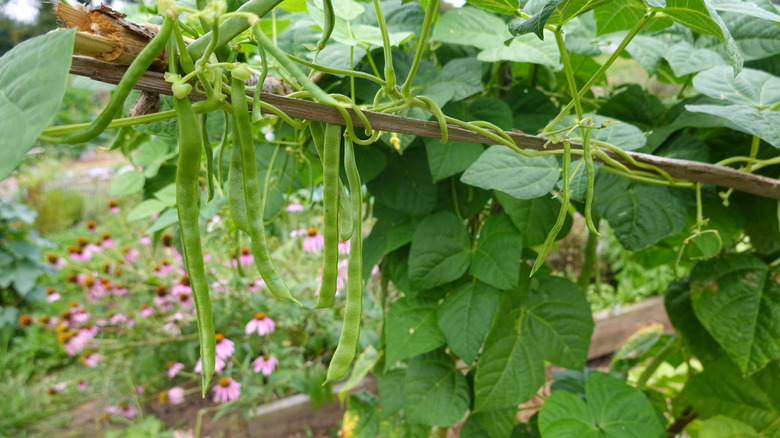
Various types of beans can change nitrogen from the air into a compound used in the soil (called nitrogen fixation) that carrots and other vegetable crops can use. Carrots benefit from bush and pole beans alike, so the choice between them depends on how much garden space you have. Vertically-grown pole beans are ideal for smaller plots, but they'll need a trellis to climb. You'll also have to choose between onions and beans as your carrot companion plant, since onions will stunt beans' growth if they're planted near each other.
Lettuce
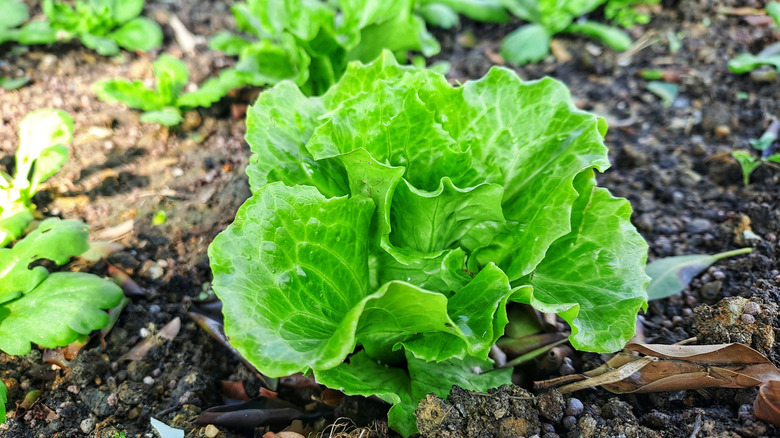
Lettuce and carrots are great garden roommates because of their compatible growing styles: lettuce roots stay closer to the top of the soil while carrots form under the ground. You can get away with growing them in close quarters — about 3 to 6 inches apart – and maximize your space. As a bonus, lettuce prefers cooler temperatures, just like carrots do. Its foliage helps keep the soil moist and sheltered from the sun. Try growing loose-leaf lettuce rather than the hard-to-grow iceberg variety.
Larkspur
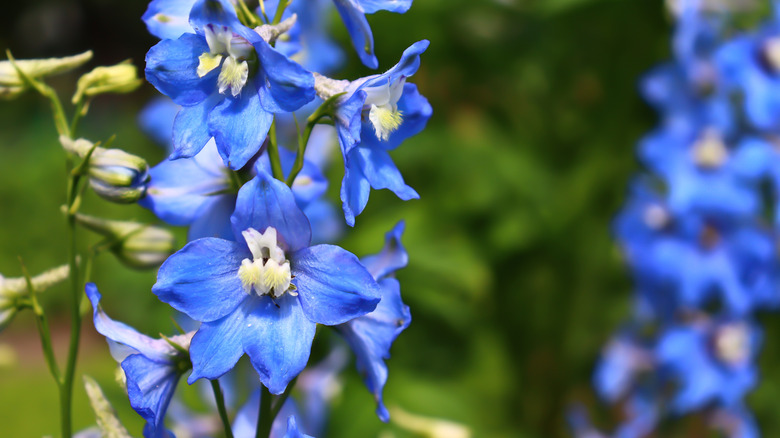
Larkspur (Delphinium) isn't just a pretty flower; these blooming perennials can also be a companion plant for carrots since they have been known to keep aphids away. Aphids can gnaw away at leafy carrot tops so that they break off, and it's hard to pull the root vegetables come harvest time. You can plant larkspur seeds at the start of spring or in the fall (if you want them to bloom in the next season) in zones 2 through 11. These flowering annuals also have a preference for cold weather in common with carrots.
Turnip
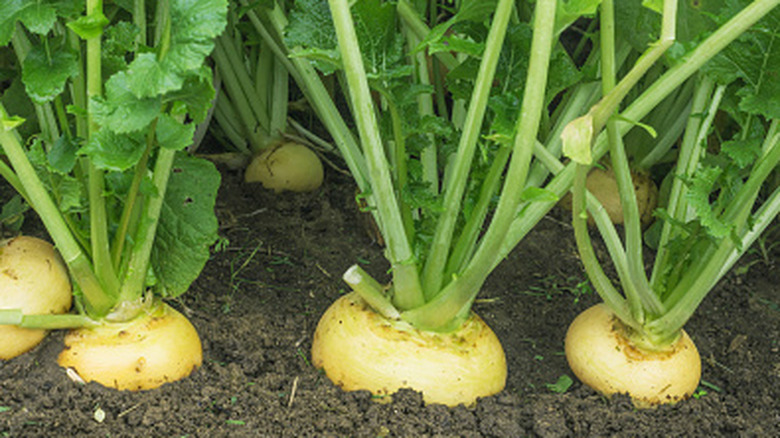
Even though turnips are root vegetables like carrots, they still make excellent garden neighbors, especially if you use smaller varieties such as 'White Lady.' Both turnips and carrots can be sown in the cool days of early spring, in loose soil that tends to stay moist. Over time, turnips' roots grow shallowly and won't interfere with carrots developing deep under the surface of the soil. Thin out the turnips when they grow 3 inches high to keep them from getting overcrowded.