

Fill Empty Garden Spaces With A Stunning Self-Seeding Flower That Pollinators Love
Wouldn't it be nice to start your own pollinator garden without the fuss of replanting each and every year? While every garden needs some annual maintenance, achieving that low-maintenance pollinator-friendly space is possible — especially when you choose a native self-seeding flower like blue curls.
Blue curls (Trichostema dichotomum) are native throughout much of the eastern and central United States. They're also prolific self-seeders, which means that even though this annual wildflower has a short blooming period, they'll come back year after year to fill in garden gaps with the right care. Of course, while this is a positive for those gardeners looking to fill empty outdoor space with low-maintenance flowers that replant themselves, it can take some extra work on your part to keep this plant under control. On the bright side, however, these seeds don't just serve to keep this flower returning in your garden: they also attract a variety of birds who eat the seeds, not to mention the fact that pollinators like bees and beetles who feed on nectar.
When planting blue curls, you want to ensure you give these flowers the best start in life by choosing an appropriate growing environment. You'll also want to take into consideration factors such as location and even nearby pollinator-attractors if your goal is to fill empty garden space while creating an amiable atmosphere for visiting wildlife.
How to grow blue curls
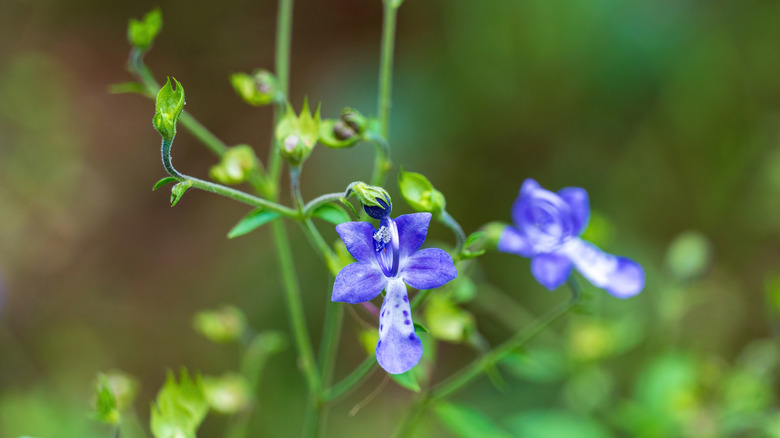
Because blue curls are annual flowers versus perennials, you won't need to worry about hardiness zones. You do, however, need to keep in mind preferred light exposure, soil, and watering habits. Blue curls do best when the soil is neutral — not leaning into either acidic or alkaline territory — and they prefer sandy soil. These hardy plants can tolerate the occasional dry spell, but it's important to provide them with moisture as needed if you want to enjoy their blooms in the late summer and early fall.
For sunlight, pick a location in your yard that receives full sun — at least six hours each day. Steer clear of areas such as along north-facing walls or beneath trees where there isn't adequate lighting. Instead, opt for open areas that provide enough sunlight while also accommodating this plant's size, since it can grow up to 28 inches tall.
Because blue curls do self-seed, they can spread throughout your garden. To keep these flowers in check (and in their correct spot), deadhead some of the spent flowers before they develop into seed heads. You can also thin out your blue curls plants as needed. For gardeners looking to specifically attract pollinators with a low-maintenance garden, consider using companion plants alongside your blue curls. This can include other popular native flowers such as red salvia (Salvia coccinea) or horsemint (Monarda punctata), which do well in similar growing conditions.