

Ditch The Landscape Fabric For A Better, Natural Solution
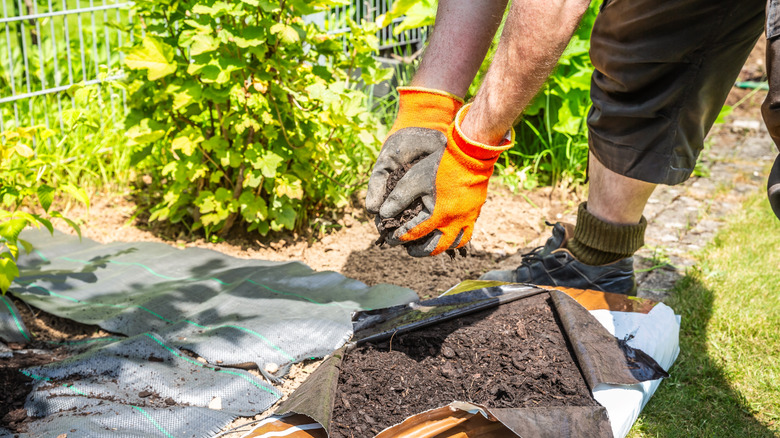
Rolls of black plastic and woven geotextile fabrics often seem like a shortcut to a maintenance-free garden, but these synthetic layers frequently trap moisture and suffocate the soil they're meant to protect. Instead of stopping weeds, they often become a tangled mess of roots and degraded plastic within just a few seasons. Shifting toward sheet mulching is a way to suppress weed growth while actually feeding the soil underneath, helping you avoid the downsides of using landscape fabric you haven't considered. By using a layer of plain cardboard topped with high-quality hardwood mulch, you create a barrier that eventually breaks down into organic matter. This method simulates the natural forest floor, where falling debris creates a protective layer full of nutrients.
Unlike fabric, which cuts off the surface from everything living underground, cardboard lets the soil breathe and soak up water while the organisms that actually build the soil move freely around. Swapping that plastic liner for a layer of cardboard creates a living environment that actually boosts the health of the garden over time. Choosing natural materials means you won't be pulling up frayed bits of polypropylene years down the road. This method is about supporting the natural cycles of the soil instead of relying on a temporary, artificial fix that rarely delivers on the promise of a weed-free garden bed.
Cardboard and hardwood mulch stop weeds without harming the soil
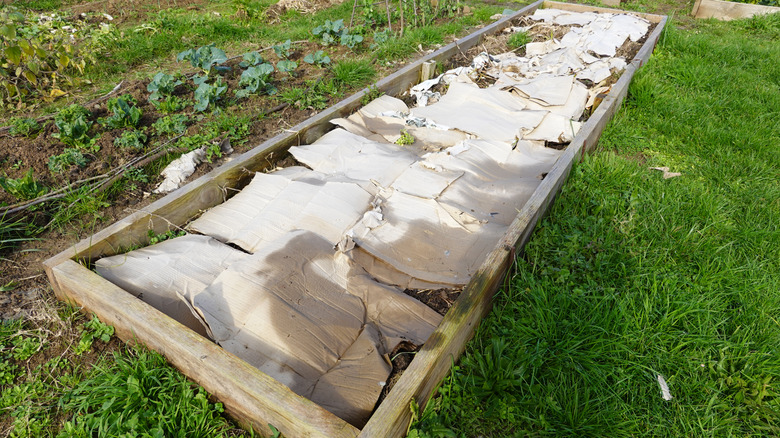
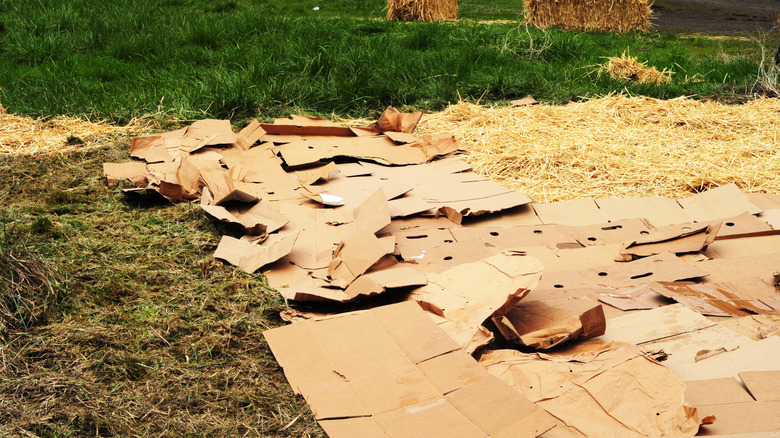
Sheet mulching relies on the science of light deprivation to clear out existing grass and weeds. When you put heavy-duty, non-glossy cardboard over an area, you effectively prevent photosynthesis, which is key to knowing how to smother weeds effectively. This process kills off weeds without the need for chemicals. Once the cardboard is in place and thoroughly soaked with water, a thick layer of hardwood mulch is spread on top to weigh it down and give the area a more uniform look.
Because cardboard is permeable, it allows rainwater to soak through to the roots of other plants in a garden bed while preventing the soil from eroding or baking in the summer sun. This steady moisture helps the covered weeds break down faster, turning them into food for the dirt rather than leaving them to rot slowly in a dry environment. As the cardboard breaks down, earthworms move up to feed, leaving behind improved air and water movement through the soil.
This activity builds a spongy layer that holds onto water much better than a patch of soil covered by synthetic liners. Many gardeners find that this organic barrier lasts long enough to kill even the most stubborn weeds before it totally breaks down into the soil. It basically creates a transition from a spot full of weeds to an area ready for new plants.
Natural sheet mulching improves garden drainage and plant health
One big problem with synthetic barriers is how easily they clog with silt and debris, which eventually causes water to pool and rot any roots beneath the surface. Switching to cardboard skips this mess because the materials break down completely and never leave behind a plastic sheet that blocks the air. These mulching tips to makeover your garden focus on long-term soil health rather than makeshift fixes. Keeping the ground well-drained is the best way to prevent fungal issues and keep the garden healthy. As natural mulch decays, it releases nutrients slowly, feeding the life in the dirt in a way that synthetic fabrics just can't. All that biological activity produces a sticky substance that helps soil particles clump together, creating better pockets for air and water to move through.
By the time the cardboard breaks down, the soil is usually in much better shape, looking darker and easier to work with than when you started. This change in the soil's texture can lead to stronger root systems and hardier plants that can handle a dry spell. Wood mulch also helps regulate ground temperature, keeping roots cooler in the middle of summer and warmer when the first frost hits. The wood chips and organic matter keep decaying, feeding the dirt long after the cardboard has completely broken down. This ongoing process builds a healthy environment that improves with every season, unlike plastic liners that only get more brittle and messy as they age.