

What To Do If You Find A Baby Opossum In Your Yard
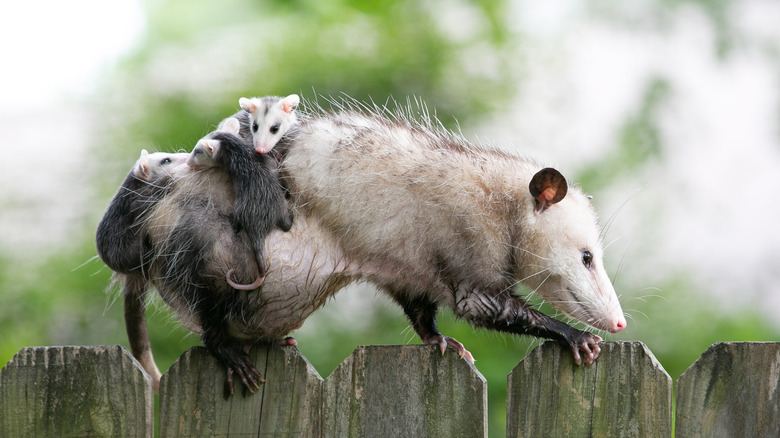
You step out into your garden. The sun is setting, the crickets are chirping, and — is that something moving? The Virginia opossum (Didelphis virginiana) is North America's only marsupial, and although they seem like common pests in your gutters and gardens, they're a helpful part of a healthy ecosystem. However, while you may be no stranger to finding the occasional adult opossum (not to be confused with possum, there's a difference!) wandering into your yard, there may come a time when you're faced instead with a baby opossum. Infant opossums are fully dependent on their mothers. As a result, it's important to determine whether a licensed wildlife rehabilitator is needed or if you're simply getting to watch a newly independent youngster navigate the world.
It takes around four months for an opossum to become independent. When they're first born, they spend several weeks solely within their mother's pouch. Then, once their eyes are open and they gain additional mobility, they begin to crawl out of the pouch and hitch a ride on their mother's back. Unfortunately, during this time, they may fall off, leaving them stranded. In other cases, the mother may be killed by a predator or traffic, leaving the young opossum to face the world before they're ready. Any opossum that is abandoned at too young an age or injured needs a wildlife rehabilitator, while juvenile but independent opossums should be left alone. Fortunately, there are several signs to help you identify a young opossum in need.
When to contact a wildlife rehabilitator for baby opossums
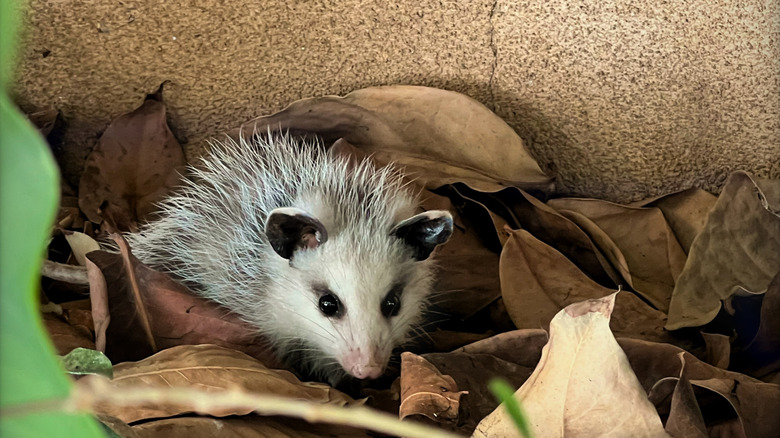
Before deciding what to do with a baby opossum in your yard, there is one thing to keep in mind. You should not attempt to keep or rehabilitate any young opossum on your own unless you are a state-permitted wildlife rehabilitator. Not only is this illegal in many states, but it puts the opossum at greater risk of harm. You should also keep children and pets away and avoid handling wildlife, instead contacting a licensed professional if needed.
Many wildlife rehabilitators use a general guideline based on body length to determine if a found opossum is old enough to live on its own, with opossums over 7 inches from the tip of the nose to the base of the tail often being independent. If you believe the opossum in your yard is smaller than this, contact a rehabilitator for further advice and assistance. Check the surrounding area, as the mother could be nearby even if the baby appears abandoned — if you've ever found a baby deer alone in your yard, this is often a similar situation.
Aside from size, there are two indicators that you need to contact a wildlife rehabilitator. First, check for any signs of distress like persistent crying or shivering. Second, look for a visible injury, such as blood, broken bones, or open wounds. In either of these cases, it's best to find your nearest rehabilitator without handling the opossum yourself. You can find state-permitted rehabilitators on wildlife agency websites, such as your state's Department of Natural Resources, or in directories like Animal Help Now.