

10 Of The Most Colorful Birds You Can Attract To Your Yard In The U.S.
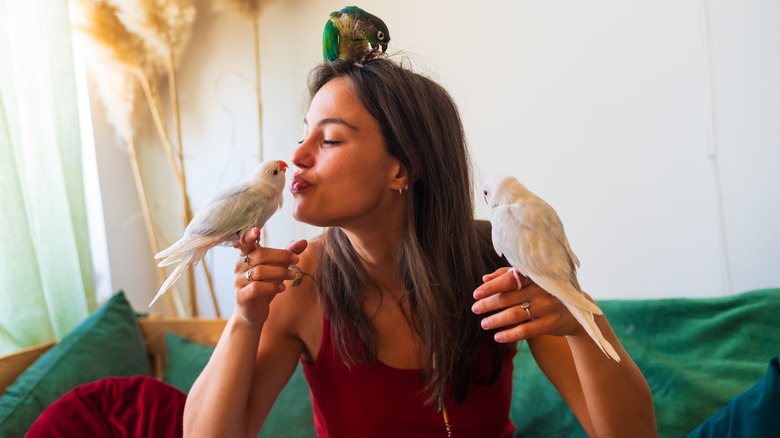
Birds make every outdoor space look instantly better. And when they're birds drenched in vibrant colors, well, let's just say the space becomes a bit more magical. Flashes of blues, greens, yellows, and reds fluttering between tree branches and bushes add a dose of oomph to your landscape. The best part is you don't have to venture off to some remote tropical island. Around the U.S., there are dozens of bird species that bring that island-like vibe straight to your backyard.
Persuading colorful birds to flock to your space isn't about luck. It's about creating the right bird-friendly environment that makes them want to become regular visitors. Many are drawn to yards with food and lots of shelter. Native plants, blooming perennials, and berry-producing shrubs are only half the story. The other half is hanging the right type of bird feeder and filling it with the perfect seeds to attract the colorful birds in your region. For example, the rainbow-colored painted bunting might look exotic, but if you live in southern states, you can persuade them to make an appearance with white millet seeds. Or, if you call the West Coast home, the crimson rufous hummingbird can be tempted with a garden of tubular flowers.
Whether you're an expert birdwatcher or someone who thrives on having wildlife outside your window, with the right plants, seeds, and a little patience, your yard can become a regular stomping ground for some of the most colorful birds in the U.S.
Painted bunting
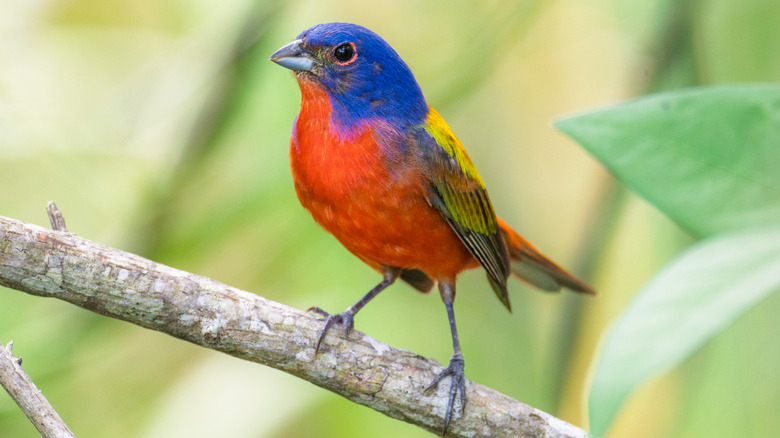
When you talk about the most beautiful birds in the U.S., the painted bunting tops the list. These colorful high-pitched songbirds spend their time across the southern states – Texas, Oklahoma, Arkansas, Louisiana, and parts of Florida in the winter. While female painted buntings are green, males flaunt every color of the rainbow. Painted buntings are shy birds and prefer brushy, wildlife-friendly yards and a feeder with white millet seeds for making a quick escape, when needed.
Eastern bluebird
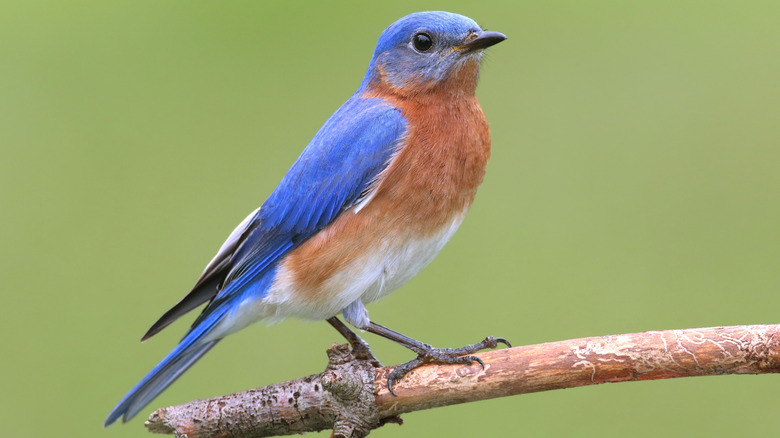
The eastern bluebird is one of the most beloved backyard birds. As their name suggests, you'll find these pretty birds spending time around the eastern to middle sections of the U.S., and don't be surprised if you catch them perched on fences or power lines. Eastern bluebirds are one of many backyard birds that love birdhouses in areas with meadows, trees, and vegetation. They prefer to eat insects, but will also munch on wild fruit and berries.
Rufous hummingbird
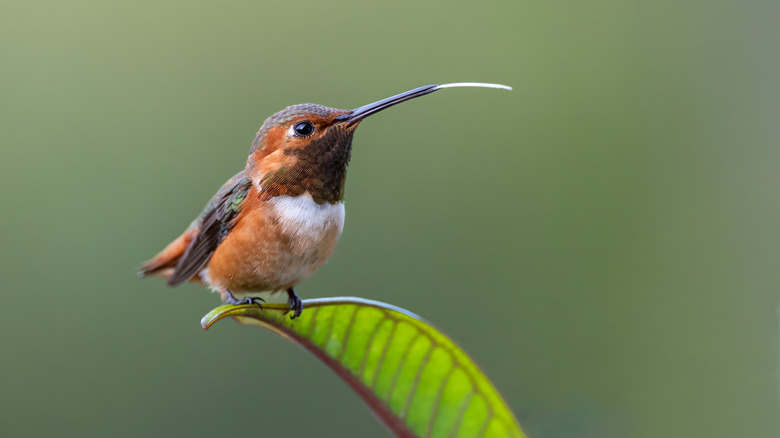
The rufous hummingbird may be tiny, but their fiery color and feisty personality make them unforgettable. They spend most of the time moving from one area to another, preferring to travel along the Pacific Coast in the spring. Though they won't make your backyard a permanent spot, rufous hummingbirds will frequent your space when it's filled with plenty of blooms and a hummingbird feeder or two with sugar water.
American goldfinch
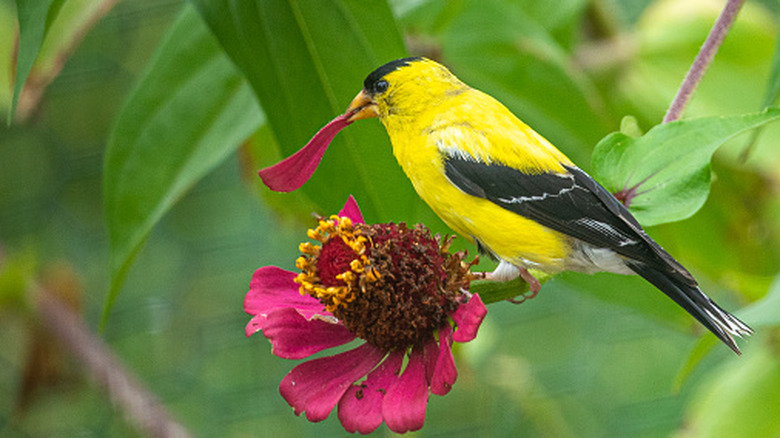
As the official bird of three states, the American goldfinch is like a little burst of sunshine, with bright yellow feathers and black wings. These lively birds frequent weed patches and semi-open areas in the upper regions of the U.S., but migrate south during winter. To bring them to your backyard, fill feeders with nyjer or sunflower seeds. Plus, you can grow native plants in your yard, like milkweed (Asclepias syriaca), zinnias (Zinnia elegans), and thistles (Cirsium arvense).
Purple finch
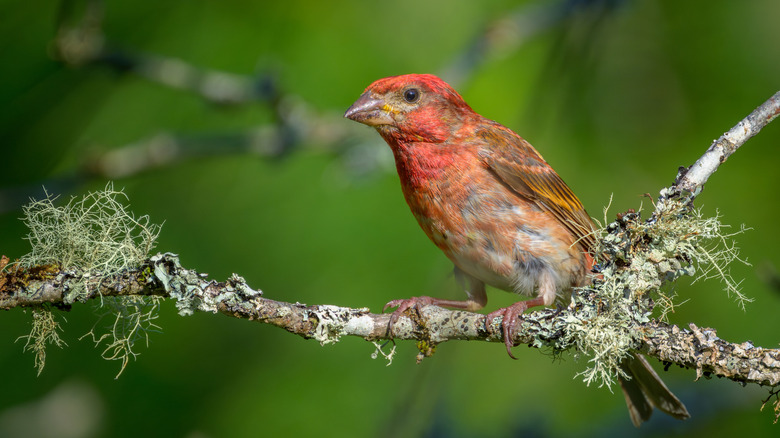
If you cross paths with a red-hued purple finch, you're looking at a male because females have been described as looking relatively nondescript. The cheery songbirds spend most of the time in the north-eastern parts of the U.S., but have been known to show up along the West Coast. They prefer woodsy areas and always look for berry-producing shrubs like elderberry (Sambucus canadensis) and buttonbush (Cephalanthus occidentalis) for both food and cover.
Indigo bunting
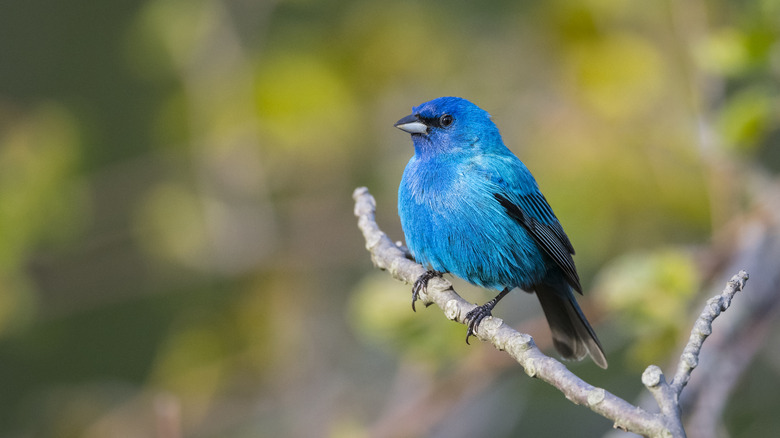
Indigo buntings are quite the sight. Known for their bright blue feathers and rapid musical notes, these pretty birds can be found around brushy and weedy areas throughout the central and eastern parts of the U.S. To coax them into your space, fill feeders with white millet, sunflower, and nyjer seeds, and plant shrubs and flowers, which will attract plenty of other summer birds, too.
Scarlet tanager
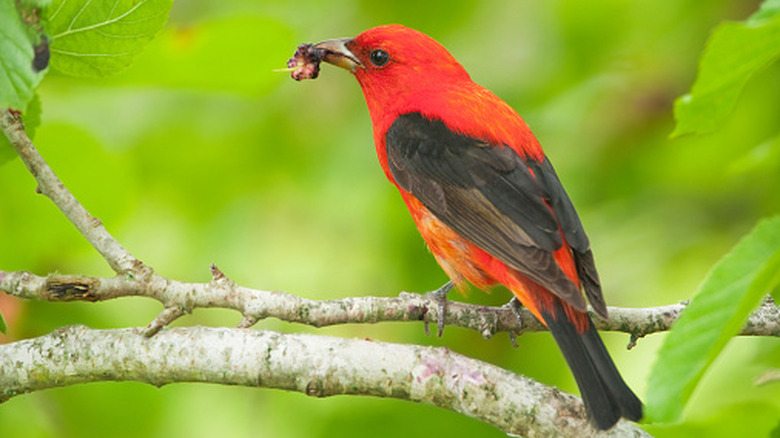
The scarlet tanager has vibrant red feathers and jet-black wings and tail that create a splash of color in high treetops. They split their time between the eastern U.S. in the summer and South America during winter. They prefer eating insects, but likely won't pass up sugar water or bananas and watermelon. Scarlet tanagers have also been known to dip their toes in a birdbath or fountain, especially when there are sounds of trickling water.
Rose-breasted Grosbeak
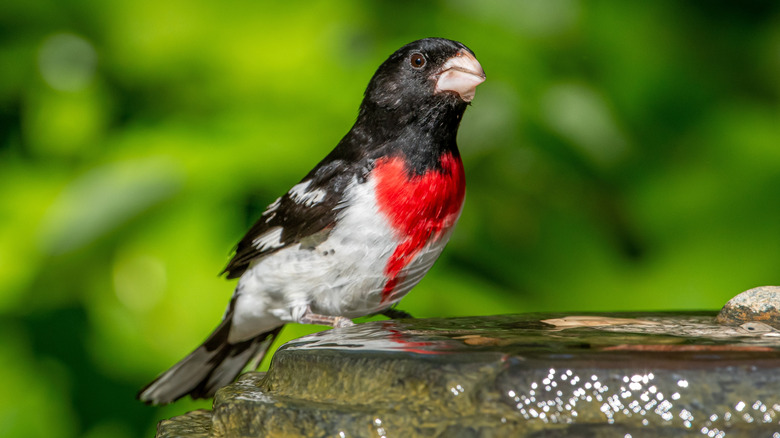
The rose-breasted Grosbeak has black-and-white feathers and a vivid rose-colored patch across its chest. Males look like they've been dipped in raspberry paint, while females are less colorful with brown streaks. They spend their lives flying around the central to eastern parts of the U.S. and will happily stop by your backyard feeder when they're stocked with sunflower and safflower seeds.
Vermilion flycatcher
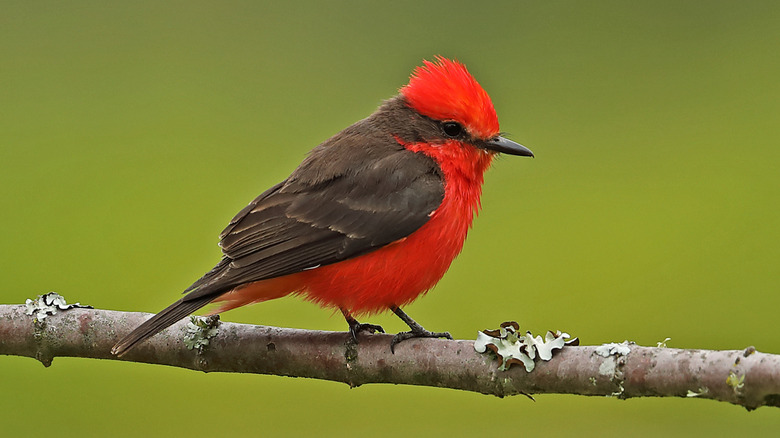
The male vermilion flycatcher brings splashes of orangey-red color to residents along the California and Gulf Coasts in the U.S., but has been spotted in Arizona and New Mexico. That's because they prefer living near brushy areas close to water, like ponds and springs, where they can perch and keep a lookout for insects. So, adding seeds to a feeder won't attract these little birds. If you're not squeamish, mealworms will bring vermilion flycatchers to your yard, but we're sure it'll be worth it.
Green jay
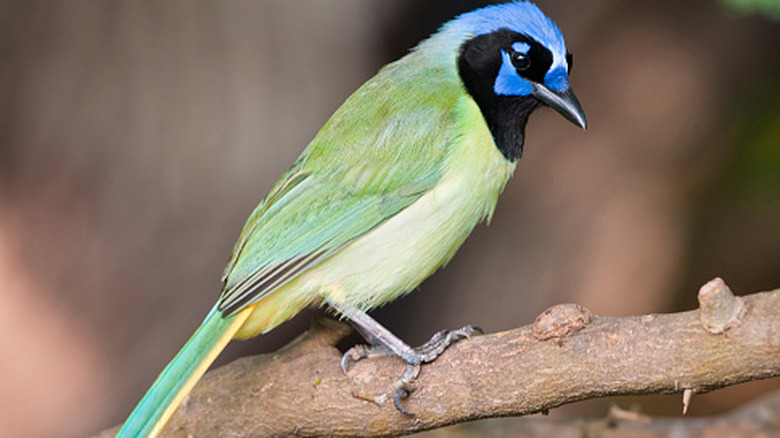
For those living in South Texas, the green jay is one of the prettiest birds you can spot. Its vivid green body, bright yellow chest, and electric-blue and black around the head make it look almost tropical. Preferring the protection of wooded areas and mesquite brush, green jays can be social little birds in certain situations. Add a feeder full of seeds to your South Texas landscape, and they might just stop by.