

The Tiny Hardware Hack That Gives Plain Tile A High-End, Custom Look
We may receive a commission on purchases made from links.
If you're looking to give your home interiors a refresh, there are tons of stunning kitchen backsplash trends that are taking over right now — many of which will also work in your bathroom. However, you don't need anything fancy to give your backsplash in any room a high-end look. Ceramic tile is a classic decor choice because it's strong, fireproof, doesn't stain easily, and is simple to clean. The material is particularly water-resistant if you install it with a waterproof grout or regularly seal the surface. But plain, square-set tile can be a little boring. For a sleeker, more high-end look, set square tiles on the diagonal, and insert metal thumbtacks into the corners after grouting. The aesthetic is reminiscent of tufted furniture — but it's on your walls.
Start this hardware hack's shopping list with a few items from Amazon: Tenedos Classic Look Gloss White Ceramic Tile and Hualahuala Solid Pure Brass Tacks should work, though you'll want to be selective when it comes to grouting. Epoxy-based grouts are waterproof, but they're typically more expensive than cement-based grouts, which need to be resealed every six months to three years depending on frequency of contact with water. If you go with cement-based grout, choose an unsanded grout, which is best for vertical surfaces and doesn't scratch ceramic tile. A cement-based thinset mortar like VersaBond Professional Polymer-Modified Thinset Mortar works well as your tile adhesive. You'll also want to get your hands on some tile spacers, a trowel for the mortar, a grout float or squeegee, and a rubber mallet.
Installing ceramic tile for a thumbtack backsplash hack
To achieve the tufted aesthetic of this DIY, you need to set your tiles diagonally rather than in the standard grid pattern. As with any tiling project, in order to neatly fit the tiles around obstructions, such as outlets, or the edge of the wall, you may have to trim them. Use a tile cutter, such as this Anvil 14‑inch Ceramic and Porcelain Tile Cutter from Home Depot, or a wet tile saw. Always wear appropriate protective gear, such as goggles and gloves, when working with power tools.
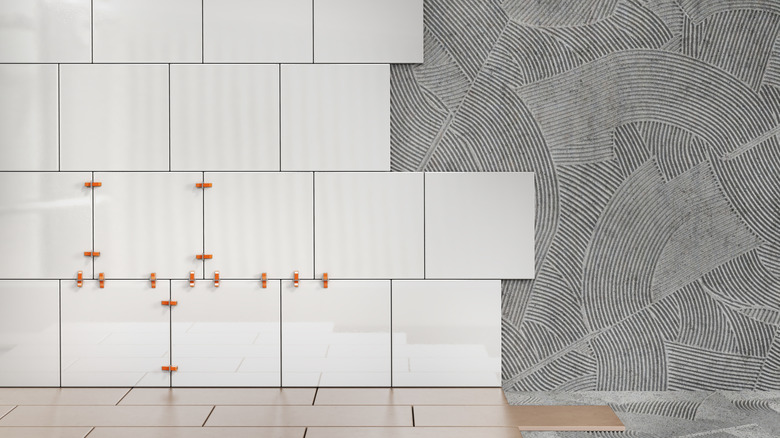
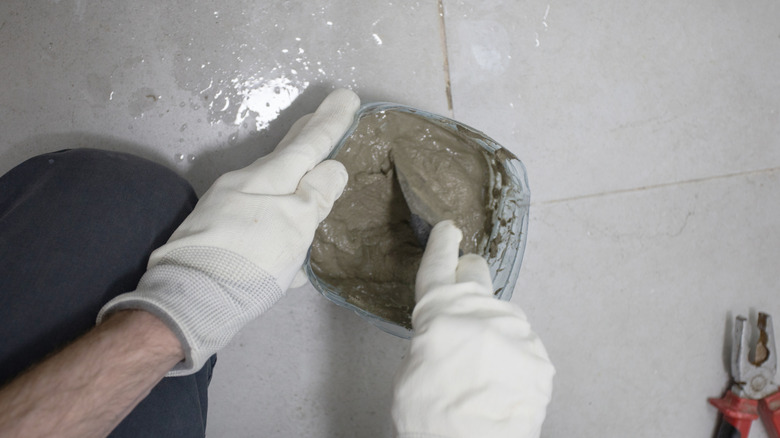
Make sure the stretch of wall you're tiling is clean, smooth, and dry. Not checking off this box is a mistake that could ruin a DIY peel-and-stick backsplash — or any tiled area, for that matter. Adhesive tiles are simple to apply: map out a grid on the wall, peel the backing off each tile, and stick them in place. For traditional tiles, spread mortar across the wall with the flat side of your trowel, and set the tiles in place using tile spacers for the grout lines. Tile adhesives generally have about 20 to 30 minutes of open time, so work quickly. If you have gaps between the tiles that are around ⅙ to ⅛ inch wide, unsanded cement grout will work best; an epoxy-based grout is better if your tile gaps are wider than ⅛ inch. Of course, make sure you don't go wider than your thumbtack-head or you'll lose the tufted effect.
This high-end custom backsplash is easy to customize
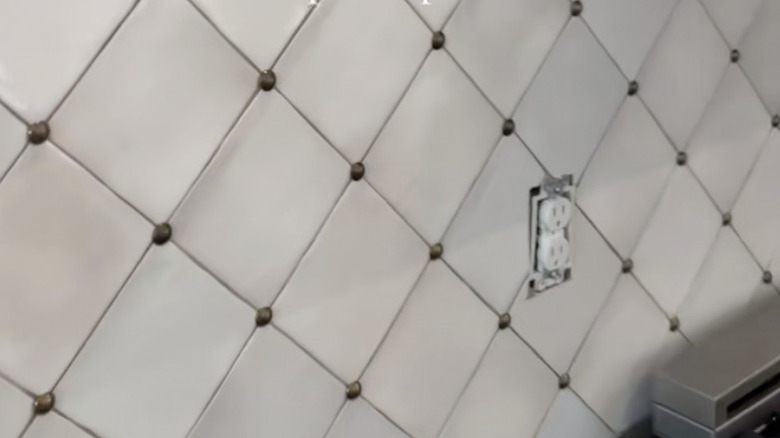
Give the newly laid tiles about 24 hours to set before filling the gaps with grout using your tool of choice — a grout float or squeegee. Wait for 15 to 20 minutes before cleaning the newly grouted tiles with a damp sponge or soft cloth. If you use cement grout, you can apply a waterproof sealant in about three weeks. For the finishing touch, gently hammer thumbtacks into the corners of each tile using a rubber mallet. Be careful not to hammer too hard — you don't want to accidentally crack the grout or the tiles.
This interior design hack has a lot of customization options, depending on what aesthetic you're after. You can blend different tile patterns in your bathroom or kitchen, for example. There's no need to stick to plain square tiles either, and you can save a lot of time by using peel-and-stick options that bypass the need for mortar. However, even shortcut products, such as Art3d Glossy White Peel-and-Stick Subway Wall Tiles, will need grouting. For the decorative elements, brass or bronze tacks aren't always the ideal option because they contain copper, which tarnishes in damp environments. You could buy something like TTSAM Black Flat Thumbtacks instead, which will give the same look but are made of plastic. One nice thing about using this thumbtack design hack is it will add additional layering and texture to your otherwise plain tile walls. You can continue building upon this aesthetic with paintings or light fixtures that capture the same antique look of tufted buttons.