

8 Sneaky Ways You're Bringing Microplastics Into Your Garden
We may receive a commission on purchases made from links.
Plastic has become an integral part of modern life, both indoors and out. We even use it in our gardens; consider for a minute the many plastic items you use to grow those delicious vegetables or stunning flowering annuals. In addition to all the garden items that are obviously made of plastic, like disposable nursery pots and shade netting, plastic might be sneaking into your garden in other, more surprising ways. You may not realize that plastic is present in common gardening tools, supplies, and additives, such as landscape fabric, grow bags, gardening gloves, mulch, and even plastic coatings on fertilizer.
As plastic degrades and breaks down, the tiny particles that form during the process are called microplastics. These tiny pieces of plastic make their way into our oceans, rivers, and even the bodies of animals, including humans, increasing exposure to the toxic chemicals present in plastics. Some of these chemicals have been linked to a host of health problems, including reproductive problems, neurodevelopmental disorders, and cancer. Microplastics are a worldwide problem that scientists, governments, media, and the general public have been paying more attention to in recent years. While eliminating plastic from your garden entirely may be challenging, reducing your use is a step toward mitigating the spread of microplastics, even if only on a hyper-local scale.
Landscape fabric
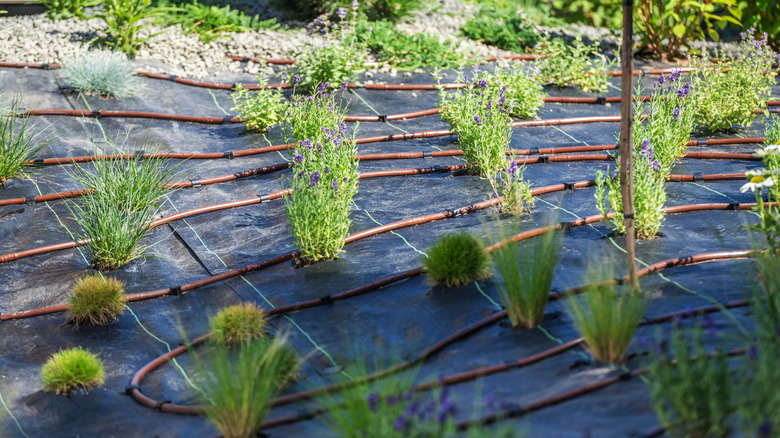
Weed control is a common source of frustration among gardeners. Landscape fabric is a go-to solution for keeping weeds out of garden beds. However, there are some major drawbacks to using landscape fabric. Although it goes by the moniker fabric, it is typically made from plastic. As the fabric degrades, it releases microplastics. In addition to ending up in your soil, these tiny particles of plastic gradually proliferate into the surrounding environment, eventually making their way into the ocean via streams and rivers. Replace it with a biodegradable landscape fabric, like Vecacosic Biodegradable Paper Weed Barrier.
Plastic fill in garden pots
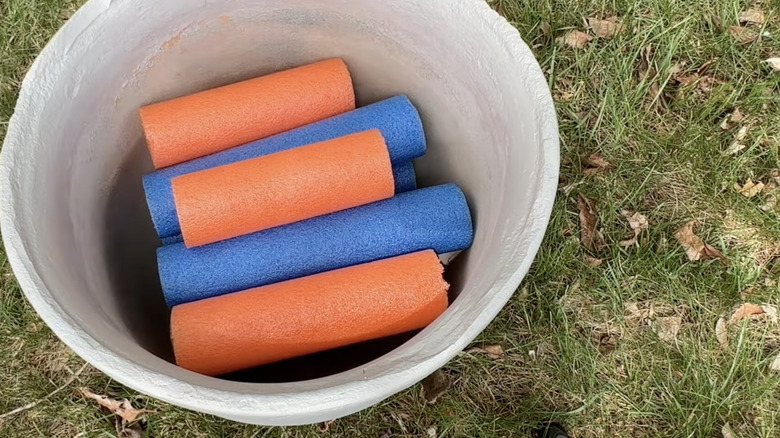
Filling a large planter with another material can reduce the amount of potting soil you need. However, what you fill the planter with matters. Use the wrong materials and you can interfere with drainage or cause soil contamination. One of the common materials you should never use to fill the bottom of large planters is plastic. When plastic materials — from soda bottles to pool noodles — are used to fill planters, you risk introducing microplastics to the soil. Consider alternatives, such as gravel, broken ceramic pieces, cardboard (stripped of any tape), pinecones, or wood chips.
Mulch
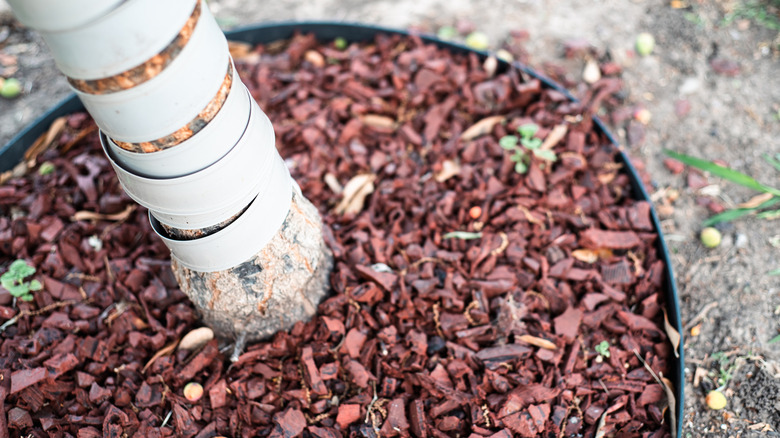
Mulch is commonly used to control weed growth and conserve moisture in the soil so you don't have to water your garden as often. Broadly speaking, mulch offers several advantages to gardeners. However, there may be unexpected danger lurking in your mulch that could harm the surrounding ecology. Using the wrong mulch, like poor-quality organic mulch or outright plastic mulch, can introduce microplastics into your garden. When using mulch in the garden, only buy mulch entirely made of high-quality woodchips or use an alternative, such as pine straw or river pebbles, depending on the application.
Grow bags
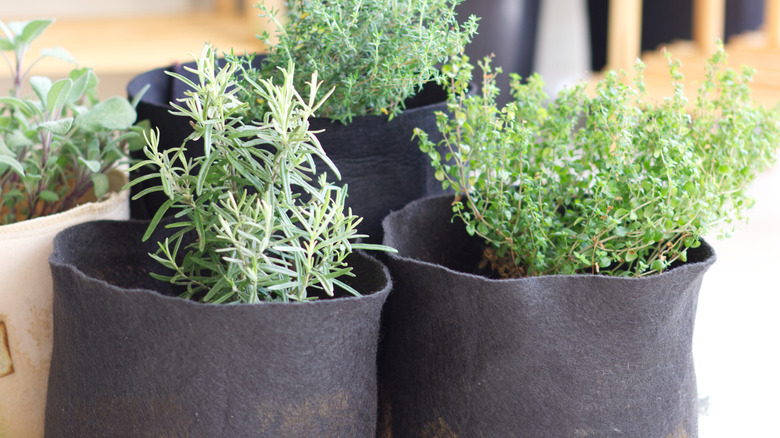
One of the biggest hidden downsides of fabric grow bags you should know about is their tendency to leach microplastics. The name can be confusing, leading people to believe the grow bags they're using are made of biodegradable materials and therefore safe for their garden. However, most grow bags are made of plastic-based fabrics. As a result, they shed tiny plastic particles into the soil as they deteriorate with exposure to water and UV radiation. Consider using Bio-D Heavy-Duty Biodegradable Grow Bags instead, which are made from a compostable plant-based fabric.
Slow-release fertilizers
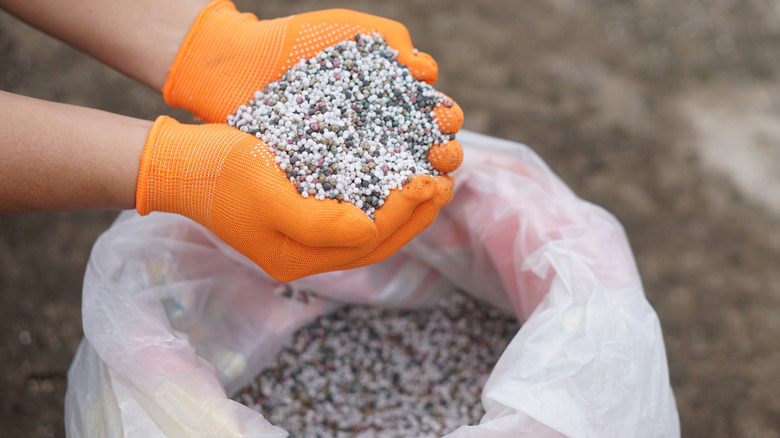
Controlled release fertilizers have a coating that slowly releases fertilizer into your garden. On the surface, that's a good thing. However, one of the problems with these fertilizers is that some manufacturers apply a petroleum-based polymer coating. Over time, as the coating degrades, microplastics are introduced into your garden. The nursery you buy your plants from may have already applied some of this fertilizer to each plant pot, so it can be hard to avoid. Choosing organic fertilizers can help prevent soil contamination, as can using natural soil amendments like compost or well-rotted manure.
Commercial compost
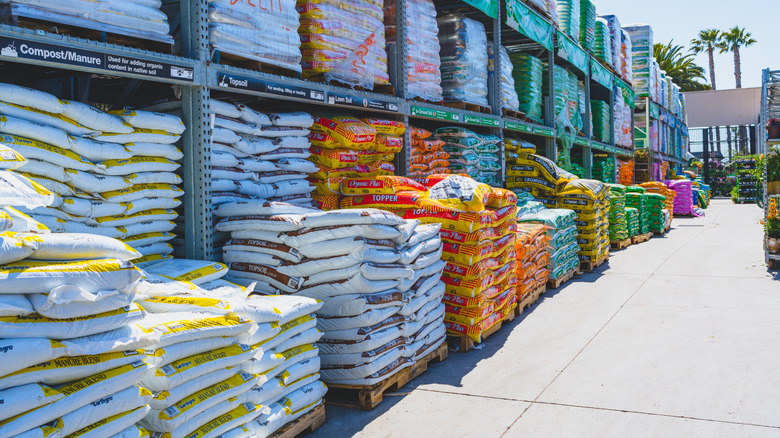
Compost is an easy option for enriching garden soil. If you make your own, you reduce food waste at home. If you don't have room for a compost pile, commercial compost may seem like a no-fuss way to benefit from all that goodness. However, microplastics have been found inside store-bought material. If you're buying your compost pre-packaged from a retailer, there's really no way of knowing what's in it, even if you trust the source. Making your own compost is the only way to be sure you're not adding microplastics to your garden — at least via this route.
Degraded plastic gardening supplies
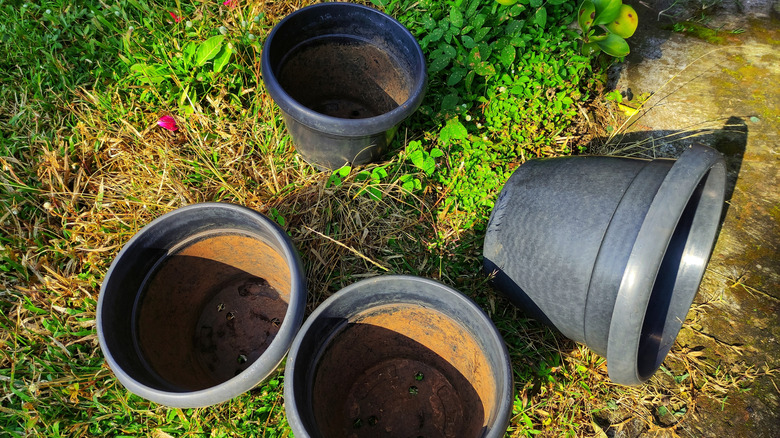
Plastic can be found in all kinds of gardening supplies, including plant tags, gardening gloves, the bag your potting soil came in, the handle of your shears, and the pots your plants come home from the nursery in. The list is long. If you leave plastic garden items out in exposed areas, they will slowly degrade, breaking down and shedding microplastics into the surrounding soil. Always dispose of plastic items responsibly or store them away indoors. Whenever possible, consider using alternatives to plastic. Terracotta pots are a good replacement for plastic planters, for example.
Garden netting
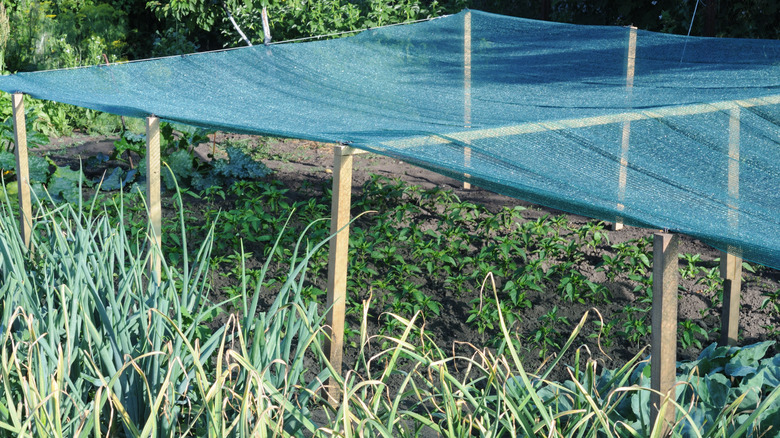
Gardeners use plastic netting as pest protection or, sometimes, to shade plants from harsh sunlight. While it's undeniably helpful, netting isn't without risks. As the fibers degrade in the sunlight and wild weather, microplastics are released into your soil. Plus, plastic netting is rarely recyclable — the nets clog the machinery used in recycling centers, so they often reject it. Alternatives to plastic netting include open-weave textiles, such as Agfabric Natural Jute Netting, though it can only be used a few times at most. Noisy or flashy pest deterrents may work, too.