

The Very Best Way To Wash White Clothes (& What To Avoid)
We may receive a commission on purchases made from links.
Whether it's fluffy robes you can't wait to share with your Thanksgiving guests or a crisp new t-shirt that's jonesing for a Friday night pairing with jeans, if it's white, then you need to know how to wash it properly. You can't simply bundle it into the washer with the rest of your clothes and hope for the best. If you do, then "the best" is the last thing you're likely to get. What's more likely is that your whites will quickly dim and lose their dazzle, leaving your face and your palm on an irreversible course for collision.
For many, this is probably ringing lots of bells. How many times have you added a new white garment to your wardrobe only to realize how much your other so-called whites have faded and turned gray by comparison? If you've lost count, then it's time that you learned the best ways to wash your whites.
Some are simple, like adjusting how you dry them or upping the temperature on your wash cycle. Others are a little more involved, like soaking your clothes in lemon juice to combat the natural yellowing that occurs when you sweat. Whether your whites need restoring or you want to know how to prevent those plush new towels from spoiling in the wash, as you'll see below, there are several things that you can do to ensure you give them the care they deserve on laundry day.
Dry your whites outside and let the sun work its magic
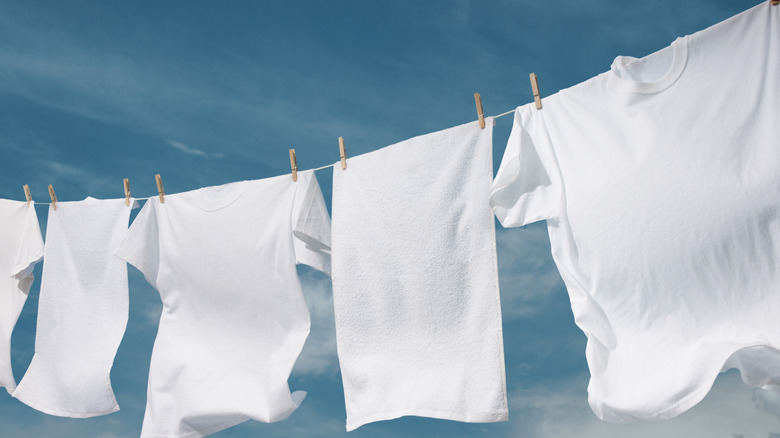
Electric dryers are super convenient, and we're not for one second suggesting that you put yours up on Facebook Marketplace. But it's worth knowing that the high, dry heat that they emit can actually damage your clothes, contribute to yellowing, and cause lingering stains to bake and become "set." Once they have, those stains can be nearly impossible to remove. Tumbling in the dryer can also pill certain fabrics, especially those with looser weaves, which contributes to a general look of dullness and age.
With this in mind, consider hanging your whites out in the sunshine. Drying your whites outdoors is much gentler than in the dryer; the lack of tumbling means your clothes can't pill, and the gentler heat is unlikely to set greasy stains. What's more, the natural UV rays in sunlight can actually help to re-bleach the white back into your clothes.
Use warm or hot water to keep your whites sparkling
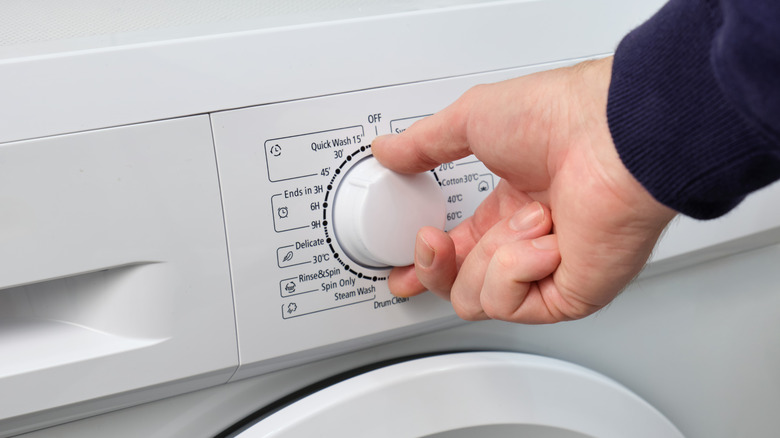
Using cooler wash cycles is a great way to save on energy costs, particularly for clothes that are lightly soiled or that benefit from a gentler approach to laundering. But, when it comes to your whites, cooler washes can fail to remove some of the common culprits for stains, like natural body oils. And if stains aren't properly dissolved and duly lifted from the fabric, they can trap more debris against the fibers, leading to gradual discoloring over time.
For cottons, towels, and linens, the best temperature to wash your whites is between 120 and 140 degrees Fahrenheit. For fabrics that will shrink in high heat, use warm water between 90 and 110 degrees. The heat helps to dissolve any oils that have come off your skin and soaked into your garments. In turn, this allows the water in your machine to flush them away.
Try using oxygen bleach to break down stains
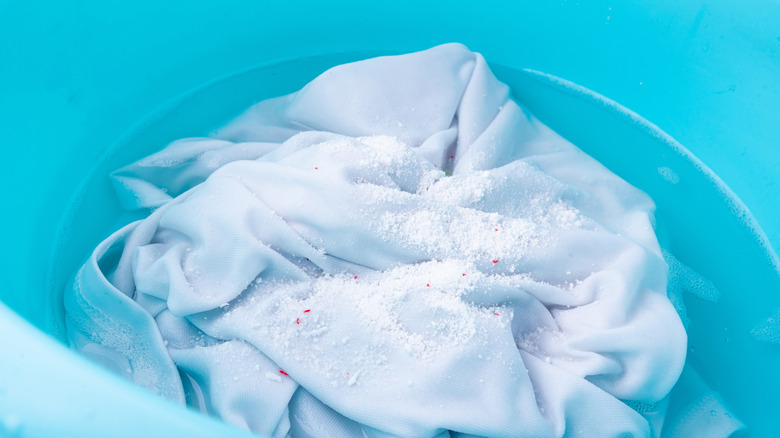
If you have stubborn organic stains in your whites — perhaps natural body oils, or yellow sweat stains — then you may assume that bleach is a great way to remove them. However, it's important to bring yellow-stained clothing back to life with oxygen bleach, rather than harsher, chlorine-based bleach. The latter usually does more harm than good.
With oxygen bleach (whether you use it as a soak or add it directly to your machine), you get a very similar amount of oomph when it comes to maintaining your whites. However, you get none of the damage that's typical with chlorine bleach. The chemicals in oxygen bleach release oxygen bubbles during the wash cycle, which essentially "lift" stains from your fabrics. Provided that your machine isn't overloaded, these can then be flushed away, leaving your whites shining with a new lease of life.
Bluing is an old-school trick that boosts whiteness
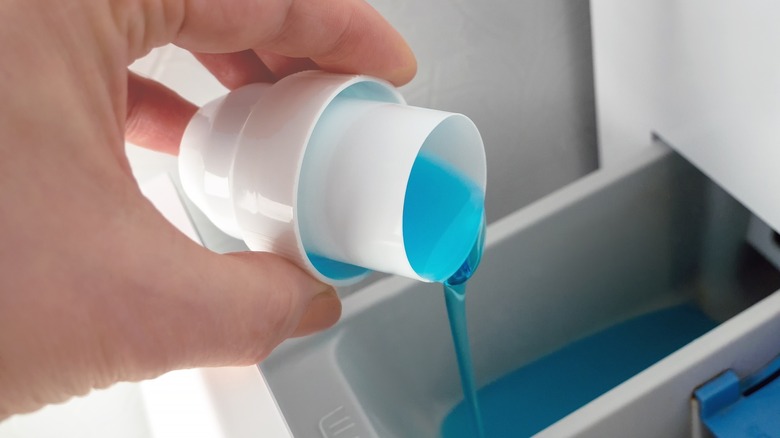
Over time, white fabrics naturally take on a faint yellow tint that makes them appear unwashed, even if they're perfectly clean. It happens as a result of body oils and perspiration, among other culprits. These things build up and, over time, begin to take on a dirty, yellow-ish tinge, particularly around the collars and beneath the armpits of white shirts. Of course, there's not a lot we can do to stop ourselves from sweating. However, it's possible to counteract the effects with a bit of old-school laundry bluing.
What is laundry bluing, you ask? Bluing agents add a tiny trace of blue pigment to your fabrics. Since blue and yellow are opposites, this helps to effectively trick your eyes into seeing pure white. To do it, grab yourself a bottle of bluing agent — perhaps an old-school brand like Mrs. Stewart's Concentrated Liquid Bluing — and dilute it according to the manufacturer's instructions. Add it to your load of whites along with your detergent, and allow it to work its magic.
Lemon juice can break down alkaline stains
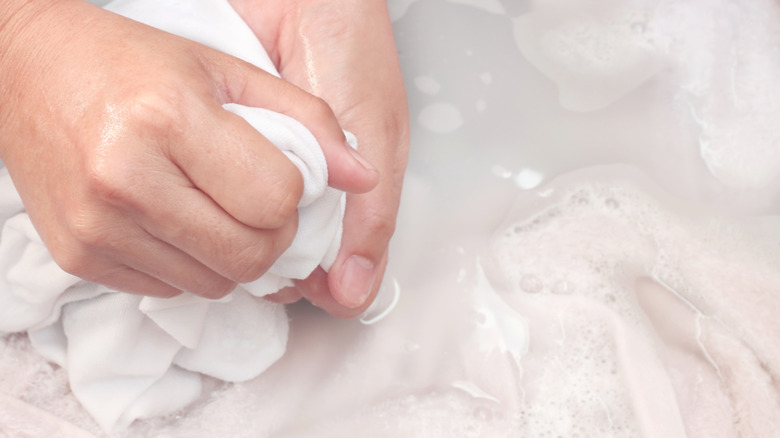
One of the most common reasons that whites lose their store-fresh shine is because of alkaline deposits left in the fabrics. In the washing machine, depending on where you live, hard water can leave traces of minerals in the fibers and cause dirt to build up in your clothes, effectively sealing it in. Certain deodorants can leave residue, and so, too, can certain bodily fluids, like sweat.
If it's alkalinity that's behind your woefully discolored cottons, then one way to neutralize it is with a little acid. This makes lemon juice a fantastic natural ally. The citric acid in it naturally brightens whites, and the acidity helps counteract alkaline stains. And since you probably have some in your cupboard, it's much more cost-effective than buying a dedicated laundry whitening agent. To use it, add around ½ to 1 cup of lemon juice to a tub full of hot water, and use it to soak your whites. After an hour or so, load the garments into your washer as usual, remembering to use a warm or hot wash cycle.
Washing with white vinegar can strip away residues
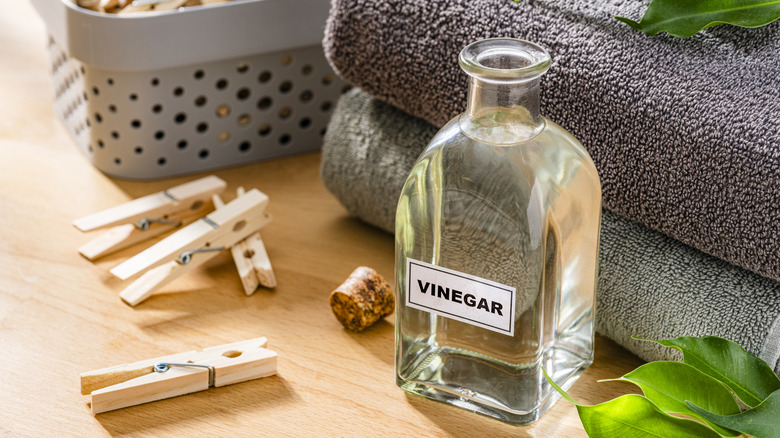
Detergent is a common culprit behind whites losing their glow. It can leave behind residue, which ironically prevents dirt from being properly washed away. In turn, this can cause your whites to feel "scratchy" and lend them an undesirably off-white appearance. If any of this sounds familiar, then consider grabbing yourself a bottle of white vinegar.
To effectively use vinegar in your laundry, one option is to add a cup to your load before switching on the machine. The acidity of the vinegar is strong enough to dissolve build-up, but not so strong that it'll damage your clothes. However, some washing machine brands advise against adding vinegar directly into the tub, in case it damages the rubber components, and instead recommend adding it to the rinse cycle instead. Alternatively, if your clothes have seriously started to dull, try soaking them first. Add 1 cup of white vinegar to a tub full of water, then submerge your clothes for an hour or two before washing.
Always separate your whites from the rest of your fabrics
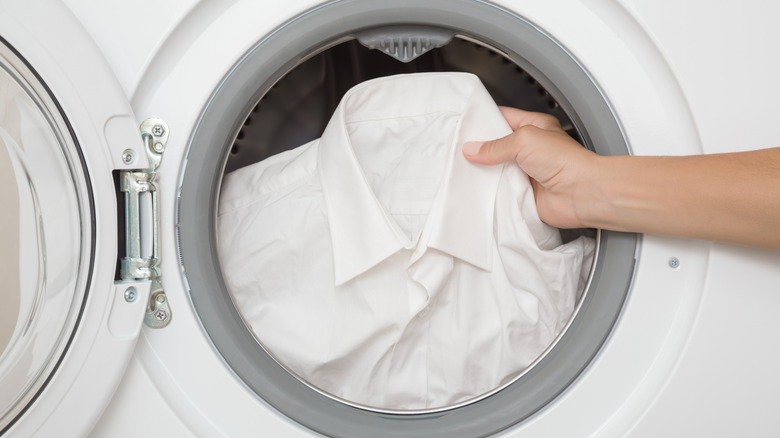
Even if your whites are perfectly stain-free, if you fail to separate them from the rest of your non-white clothes and linens, they're guaranteed to eventually lose their brightness. It's one of the biggest mistakes people make when sorting their laundry. The items won't necessarily suffer from severe color run (where your other clothes leak their dyes), and you may not even notice right away that your whites have started to turn dull. But they will, and the longer they go untreated (and the more they're tossed in with your colors), the worse they're likely to get.
To avoid this, the solution is simple: Ensure that you run a strict load of whites on laundry day. You may need to wait a little longer to gather enough clothes to warrant a separate wash. But it's worth it. Not only can you prevent dulling your clothes, but running a whites-only wash allows you to raise the temperature (without risking color run). This, in turn, makes your detergent better able to emulsify and remove any oily stains from your fabrics.
Pre-treat stains as soon as they occur
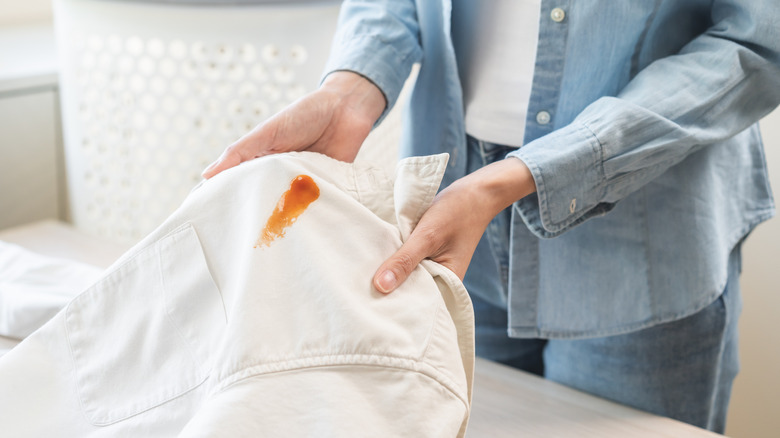
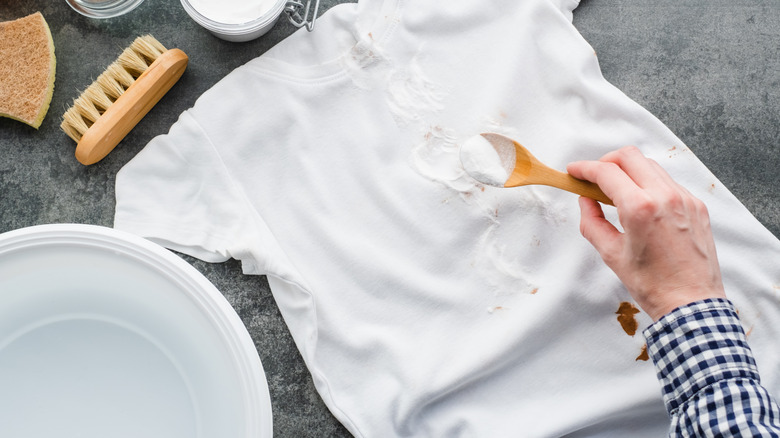
Of all the laundry mistakes that will make stains way worse, this has to be one of the worst. By allowing stains to dry, you're effectively rolling out the welcome mat and inviting them to make themselves at home. Whether it's a food stain, sweat mark, or, dare we say it, red wine, if not treated urgently, it'll become much more difficult to remove as the stains sink ever deeper into your fabrics.
There are several things you can do to jump on stains and prevent them from putting their feet up. The first is to ensure you carry a stain removal pen with you when you leave the house, which will allow you to treat minor incidents on the go. For larger stains, provided that you're able to do so without breaking the rules of polite society, it's best to remove the afflicted garment and treat it. Dab greasy stains with laundry detergent or a dishwashing detergent. If you're trying to coax out a splash of wine, sprinkle it with salt to absorb any excess liquid or dab it with vinegar to help lift the wine's intense pigmentation.
Resist the urge to overload your washing machine
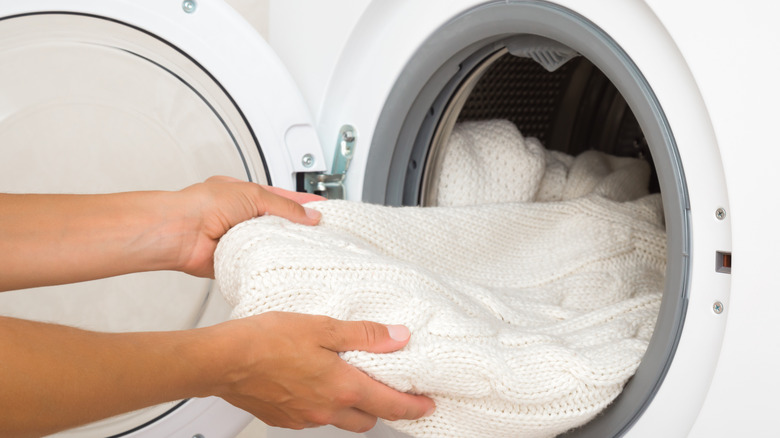
We can understand why you might be tempted to overload your washing machine. It could be that you're in a hurry to get through a massive pile on laundry day. Or it could be that you don't quite have enough dirty clothes to warrant two loads. In either case, if you stuff too much into your washer's drum, it's unlikely to clean properly. Washing machines are designed to agitate your clothes, and this can only happen if there's enough spare room inside the drum. If you don't allow for this, then instead of being lifted from your clothes and flushed away, the dirt and stains will simply stay where they are.
To ensure a thorough clean, aim to fill your drum no more than three-quarters of the way to the top. If you need a simple trick to avoid overloading your washing machine, just follow the one-hand rule. Place your hand inside your machine once it's loaded, and see how well it fits. If it fits comfortably between the top of your laundry and the wall of your drum, great! If it doesn't, then it means your drum is overloaded.
Avoid using chlorine bleach to restore the wow to your whites
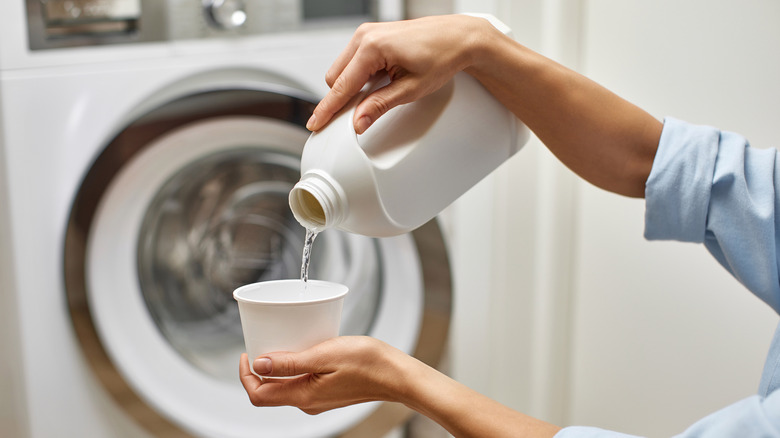
Using chlorine bleach may seem like an obvious and speedy solution to restoring the glow to your whites. The science is pretty sound, too. Chlorine bleach converts various stains and soils into colorless particles that are then flushed away by the water in your washing machine.
So, what's the problem? Chlorine bleach can lead to weakened fibers, especially in fabrics from animals, like wool and silk. It can also cause certain fabrics to turn yellow — the very opposite of what you're trying to achieve! Additionally, if used on stains from sunscreen containing DHHB (a type of UV filter), bleach can actually turn these marks red or pink.
In other words, unless you're absolutely desperate, chlorine bleach should be reserved for super-stubborn stains on fabrics that can cope with it. Cotton and polyester are both usually safe, as is nylon, although even with these materials, you should avoid using chlorine bleach too frequently. Fortunately, there are plenty of other ways to brighten your whites without resorting to bleach.
Detergents with optical brighteners may help, but at a cost
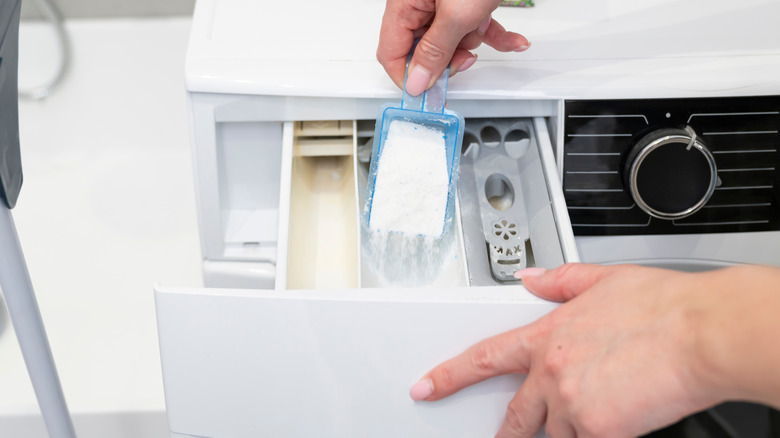
Optical brighteners have long been touted as a quick and simple means of restoring the wow to whites. And to be fair, they work in the short term. The problem isn't that they're ineffective. It's that, in the long term, they tend to cause more problems than they solve. In order to make your clothes appear both cleaner and brighter, optical brighteners contain certain chemicals that work to cover the stains up — rather like an optical illusion. They do nothing to actually solve the root cause of your discolored whites, and the residue they leave behind can build up and cause a raft of annoying problems, like making your clothes less comfortable and irritating sensitive skin.
Generally speaking (and especially with new clothes), it's best to follow more skin- and fabric-friendly practices, like those we've already covered. Use oxygen bleach to maintain whiteness, separate your whites from your colors, and ensure that you wash them in hot or warm water. Even if you have whites that have seen better days, there are usually better ways to re-whiten them than optical brighteners. You may even be better off running a once-off wash with chlorine bleach, depending on the fabric you're trying to whiten.
Fabric softeners can cause biofilm build-up, leading to dulling
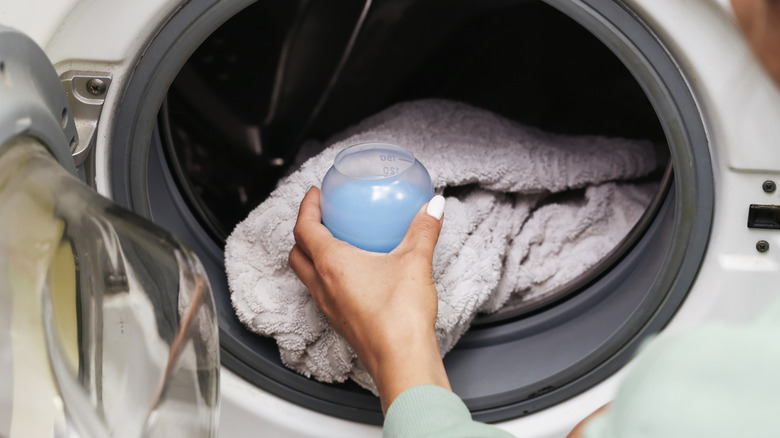
It might sound extreme, but if you're worried about your whites losing their luster, this is a reason to stop using fabric softener immediately. Again, it isn't that it doesn't work; in fact, it's great for leaving clothes smelling fresh and feeling soft. But such softness is the result of a waxy layer that the liquid leaves behind at the end of the wash cycle. In towels, this leads to a reduction in absorbency, and in any garments, it can trap biofilm. When this happens, body oils, bacteria, and other sources of soiling become sealed against the fabric, which can lead to discoloration and a funky smell.
Instead, if you want your clothes to come out of the dryer feeling fluffy, then it's best to use dryer balls. Added to the drum along with your freshly-washed clothes, these balls bounce around inside, agitating (and thus fluffing) the fibers of your fabrics. They also promote good airflow between your clothes and linens, helping to dry your clothes more efficiently and save energy. Dryer balls are available in various materials, but if you use woolen ones, you can even add a few drops of essential oil, thus imitating the scent of your favorite fabric softener.