

Plant Calibrachoa In The Spring For Full, Cascading Planters All Summer Long
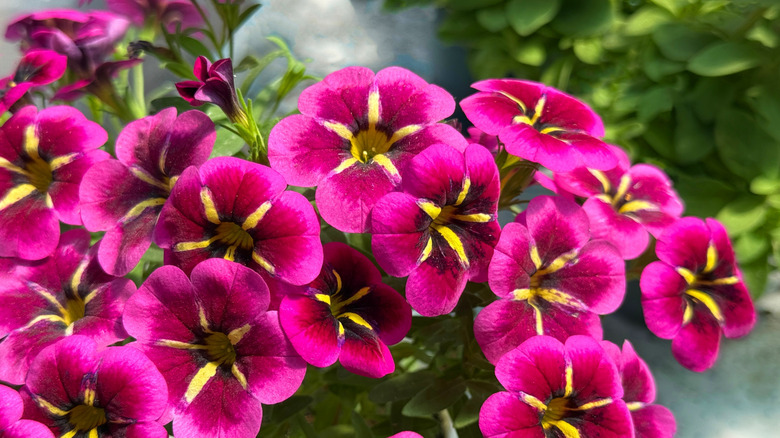
Spring is the season of potential for gardeners, and if you want your yard looking like a botanical garden by July, now's the time to get started. The perennial Million Bells (Calibrachoa) is a consistent favorite for cascading planters. Hardy in USDA Zones 9 to 11, this plant produces hundreds of tiny, bell-shaped blooms that spill over the edges of pots and planters, no matter which variety of Million Bells you choose. Starting your Calibrachoa in the spring gives the root system time to settle in before summer's harsh heat arrives. This also gives it time to make sure its stems are long enough to begin their dramatic shape just as patio season hits its peak.
To get the most from Million Bells, also known as trailing petunia, focus on setting the plant up for success during spring planting. Calibrachoa plants are heavy nutrient consumers, but do not tolerate wet, soggy soil. Make sure you use a high-quality potting mix designed for containers to ensure there's excellent drainage. When arranging your planter, don't be afraid to pack 'em in; for a hanging basket, use three or four nursery starts to create a dense, rounded shape quickly. Place your containers in a spot that gets at least six hours of direct sunlight. This early boost of sunlight helps the plant develop the sturdy, woody stems necessary to support a heavy waterfall cascade of flowers all summer long. Before you grab your gardening gloves, be sure the last frost has passed so these delicate starts are protected as the weather stabilizes.
How to keep those lovely colors cascading all summer

Once your spring prep is all complete, your gardening goal should shift to caring for Million Bells and keeping up its explosive growth through the hottest months. One of the best features of Calibrachoa is that they are self-cleaning; this means the plant handles deadheading on its own, so you don't have to spend every Saturday morning keeping the plant looking tidy. However, because Million Bells bloom so prolifically, they require frequent nutrients. To keep the blooms coming and the colors from fading, use a balanced fertilizer every two weeks. This consistent feeding provides the nutrients needed to keep the cascade growing downward, preventing the plant from ever looking thin or leggy at the top of the pot as the season grows on. Since these are high-performance plants, they burn through nutrients much faster than average garden plants.
If your Calibrachoa starts looking a little tired or sparse in the middle of July, don't panic. A small trim-up can work wonders for their appearance. Use clean shears to trim about an inch from the ends of several stems, which encourages branching and a fresh flush of blooms. Keep the soil consistently moist (but, again, not saturated), especially during August heatwaves. With fairly minimal maintenance, planters can maintain cascading color until the first frost. Give this hanging basket beauty a little TLC now, and it'll thrive all summer and reward you with a spectacular show of blooms. Your neighbors will definitely be asking for your gardening secrets on this one.