

Our Expert Explains Why Your Basement Is So Cold & Tips To Help

Basements offer a coveted, spacious area to relax and spend time with your family. Whether you choose to make this space into a game room or a home theater, it can be challenging to make the lower level of your home feel truly cozy. Basement rooms tend to be notably colder than the rest of a house, and you might wonder if it's normal how frigid this space can feel. We spoke to a home heating and cooling expert to get the inside scoop on why a basement might be cold and how to keep your home warm and cozy.
"Basements tend to be a naturally cold place within the home because they're typically constructed with concrete, which absorbs and retains cold — especially during the winter months — and they often lack sufficient insulation to prevent heat loss," Steve Clemente, president and COO of One Hour Heating & Air Conditioning, shared with House Digest in an exclusive interview.
There are a lot of factors that can play into why a basement might be cold. To tackle this issue, it's vital to understand these causes and rule out any potential underlying issues. "Cold air also naturally sinks, while warmer, lighter air rises, leaving lower levels of the home like basements and ground floors feeling noticeably cooler than upper levels," Clemente emphasized. "Basement temperature issues can also be tied to broader home comfort challenges, including reduced HVAC performance caused by blocked vents or filters, as well as leaks or damage within the ductwork."
When is a cold basement an issue?
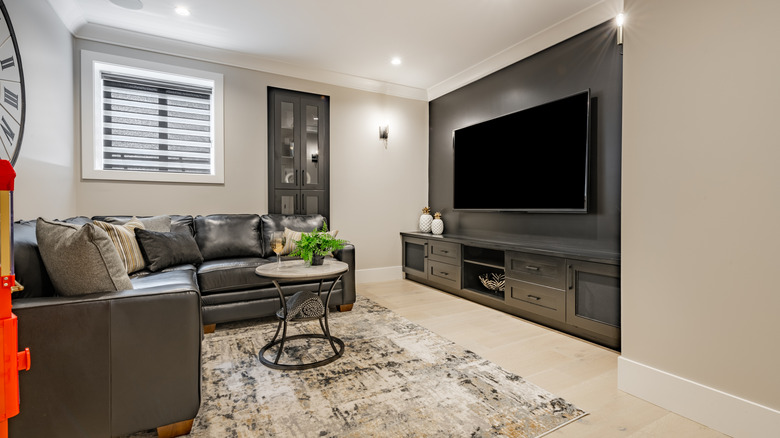
There is no need for immediate concern if your basement is cold. Most basements will be a bit cooler than the rest of your home. There are, however, certain factors that may raise concern. Structural and HVAC issues are problems you should rule out to ensure your space is truly just a normal, cold basement.
"If a basement is simply naturally cold, and there are no structural concerns such as cracks in the foundation or insulation gaps, and the home's HVAC system is operating efficiently, homeowners who don't mind the lower temperature may not need to take action," expert Steve Clemente shared exclusively with House Digest. "However, if the cold temperature is caused by structural concerns, blocked vents or filters, leaks within the ductwork, or other HVAC inefficiencies and damage, it's important to address the issue."
If you have an HVAC issue in your basement, this will impact your entire home. You may be dealing with a larger efficiency issue that you'll need to consult a professional about as soon as possible. Clemente warned that failing to address HVAC problem can lead to "higher energy bills, humidity and air quality issues, frozen pipes, and even system breakdowns."
How to address issues with a cold basement

HVAC professional Steve Clemente explained exclusively to House Digest, "To ensure the home's HVAC system is operating safely and efficiently, and there are no larger home comfort concerns at play, homeowners should schedule a seasonal evaluation with a trained technician ... An HVAC technician can inspect your system's vents and filters to ensure they're clean and unblocked, assess ductwork for leaks or damage, and address any other issues that may be preventing the system from heating the lower levels of the home effectively."
Once a trained professional rules out any pressing issues such as air leaks or foundation cracks, you can explore other solutions if you want a warmer basement. For instance, you can have a professional add or extend registers for more efficient heating. You can also opt for a good old-fashioned space heater. However, Clemente warned that while they require no professional installation, they can be less energy efficient for larger spaces and can't be left on for long stretches of time.
Luckily, there are other easy ways to heat a basement without an electrical space heater. "Sealing cracks along the foundation of the home and adding or improving existing installation are other cost-effective steps that can help prevent heat loss and make a noticeable difference in basement temperature levels," Clemente explained. He went on to mention pellet stoves as another type of energy-efficient, low-maintenance heating solution to explore.