

Spring Is The Best Time To Plant This Fast-Growing Flower That Pollinators Love
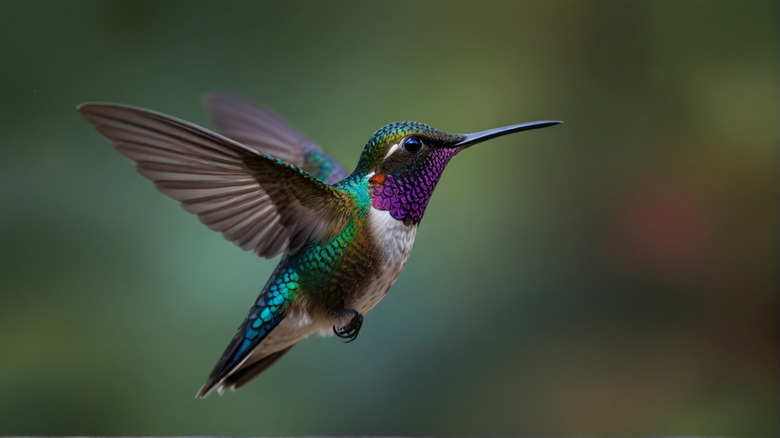
Your garden is your own slice of the great outdoors, a private retreat where you can take in the sights and sounds of nature. While filling your backyard with your favorite greenery and flowers provides a spot where you can enjoy various sights and scents, nothing truly brings a garden to life like pollinators. From the faint buzzing of busy bees to the playful, aerial antics of hummingbirds, pollinators are the cherry on top of an already successful outdoor space — and with this fast-growing plant, you can start your own pollinator-friendly garden in no time.
Bee balm (Monarda spp.) is a genus of perennial flowers with brightly colored, nectar-rich blooms. It's no wonder this is one of the top flowers to plant to attract hummingbirds and other pollinators to your garden. Bee balm can reach full maturity in as little as 120 days, although exact times depend on the species you choose. As a result, spring is the perfect time to plant this pollinator magnet to enjoy its summer blooms, which can last for up to six weeks. Its long-lasting flowers paired with its overall rapid growth make it a great option for gardeners who might have failed to get a head start on planning their pollinator garden.
Before adding bee balm to your garden, keep in mind that, because bee balm is related to mint, it can spread rapidly throughout your yard. Fortunately, there are ways to prevent bee balm from taking over your garden, such as deadheading or dividing adult plants.
How to grow bee balm
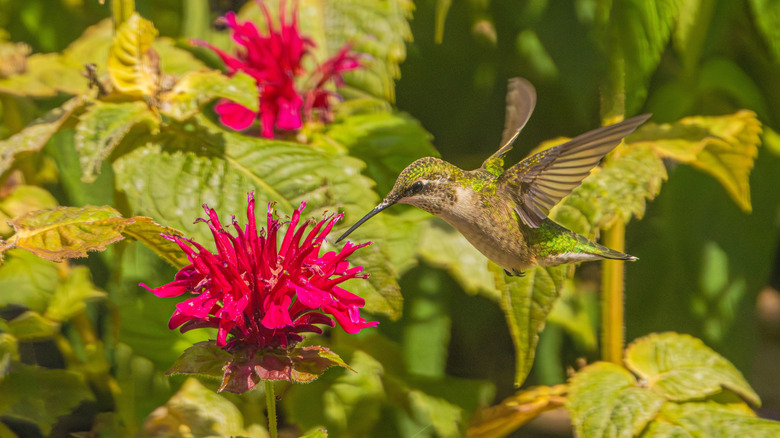
If bee balm sounds like the right addition to your pollinator-friendly garden, it's best to plant them in the spring after the last frost. Some species of bee balm can be grown as an annual, although the genus as a whole is overall winter hardy in zones 4 through 9. You can grow bee balm in either full sun or partial shade, although full sun often helps reduce the likelihood of certain problems such as powdery mildew.
In all, bee balm is considered easy to grow. This makes it the perfect plant for beginners looking to add some wildlife appeal to their garden, as well for those who simply want more time to sit back and enjoy the visiting pollinators attracted to this flower. Aside from deadheading and pruning to keep bee balm from taking over your garden, you'll also want to keep up with regular tasks such as watering and fertilizing.
Bee balm does best when given moist soil, but waterlogged soil can do more harm than good, potentially leading to root rot. As a result, water deeply but infrequently, which gives the soil plenty of time to dry. Fertilizer should be applied as needed during the spring, but avoid overdoing it unless you want more greenery and less of those vibrant blooms that pollinators love. Plant this flower in spring and you'll be attracting pollinators with its blooms come June and July.