

The Hidden Hazard That May Be Causing Mold Growth In Your Kitchen

Dealing with indoor mold can result in issues that range from coughing and runny noses to long-term health concerns such as asthma, depression and anxiety, or even a compromised immune system. You may not even notice mold growth in your kitchen if the fungi is festering underneath your tiled floor or backsplash due to poorly maintained lines of caulking or grout. Mold will thrive in moist, warm, and dark conditions, so it's common to have to remove black mold from areas like your bathroom ceiling, but it can also pop up in your tile grout or the caulking around your kitchen sink. Surface-level mold can typically be cleaned by throwing on a mask and gloves and scrubbing with wire brushes and mild detergents (that don't contain phosphates). Powering up a vacuum equipped with HEPA filters can also help, but mold hidden in the spaces beneath your grout can lead to more substantial damage.
Both the mortar used to set your tiles and the grouting between tiles can be made from cement-based materials, which are susceptible to mold growth. Cement is porous enough to absorb water, leading to mold growth beneath the gaps of unsealed or cracked grout. The fungus Aspergillus niger, commonly found on kitchen veggies like onions, can produce a type of citric acid that affects the overall pH of cement mortar, causing it to degrade. If mold is growing underneath your tile grout, a musty smell may be your only early indicator. In more severe cases, you may start to find tiles becoming loose or discolored as mold impacts the structural integrity of your home's construction.
Maintain caulk and grout to prevent mold growth
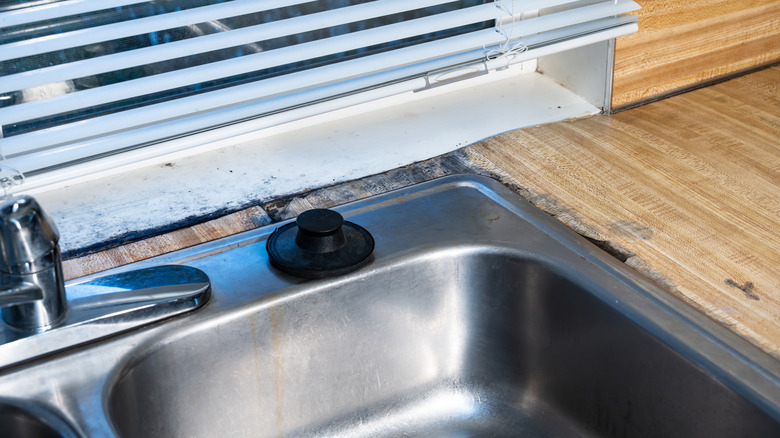
It's much easier to prevent mold growth than it is to remove it after the fact. This problem is a sort of self-fulfilling prophecy because the chemical-based cleaning agents that are often necessary to combat mold growth can also degrade caulk, thus making it more susceptible to moisture issues. The caulking around fixtures like your kitchen sink could need to be replaced as often as once a year, as it will typically begin to crack much sooner than the lifespan given by manufacturers. In fact, it's worthwhile to do more than just track the hidden signs there may be mold lurking in your kitchen. Give every water-exposed room a regular inspection and caulking refresh to avoid mold growth around your bathtub, sinks, water heater, or washing machine.
The best treatment for mold it tile grout will vary based on the kind of material between your flooring or backsplash tiles. Depending on the room's ambient moisture and your maintenance routines, grout might not have to be replaced for upwards of 8 to 20 years — especially if you're using a pricier, epoxy-based waterproof grout. Grouts made using cement-based materials will need to have their waterproof sealants reapplied at least every 2 or 3 years (more often if it's in a super wet area). It's also worth taking some preventative measures to nip mold growth in the bud and help your grouts and sealants last longer. Combat excessive moisture in your kitchen by installing proper ventilation and exhaust fans, using mobile air conditioners and dehumidifiers, or even keeping absorbent materials like silica gel handy.