

22 Perennial Herbs You Should Be Dividing In Spring
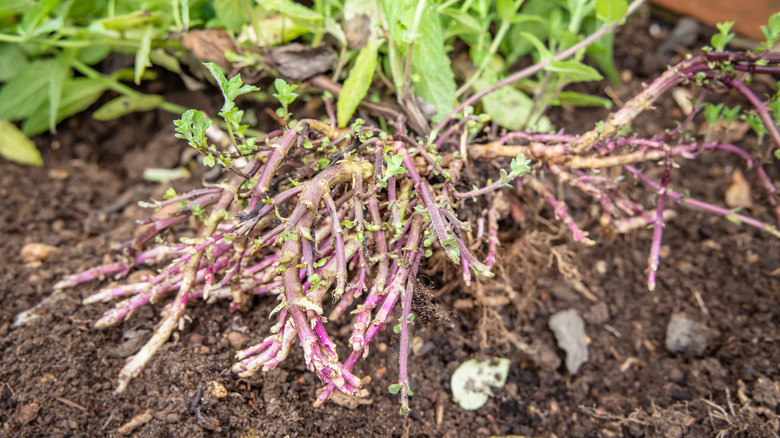
Of all the rewarding plants to grow in your garden, perennial herbs can be especially satisfying. Unlike annuals, which need to be replanted year after year, you only need to plant perennial herbs once, and they'll return to your garden on their own each year. A well-established herb garden can provide everything from fresh culinary flavors and medicinal powerhouses to fragrant foliage and pollinator-friendly flowers. Many perennial herbs are also surprisingly resilient, thriving in garden beds, borders, or even tucked into mixed ornamental landscapes. However, just because they keep coming back, it doesn't mean they are completely care-free. As these plants mature, they can become crowded, woody in the center, or simply outgrow their space. Dividing perennial herbs is one simple garden task that can reinvigorate older plants while giving you extra herbs to plant elsewhere or share with your friends!
Early spring is the ideal time to tackle perennial dividing for a wide range of herbs. As new growth begins, many perennial herbs respond well to being lifted and split into smaller sections, especially if they are still in a cold-frame. Because they have been in a dormant state through the winter and are preparing for new growth, they are primed to divert energy to repairing damage and establishing deeper root systems. Plants like chives, oregano, bee balm, and lemon balm often form dense clumps that benefit from division every few years. Others, such as lovage and yarrow, naturally expand over time and can quickly grow beyond their designated space. Dividing in spring helps to control the spread and encourages healthier growth.
Anise hyssop
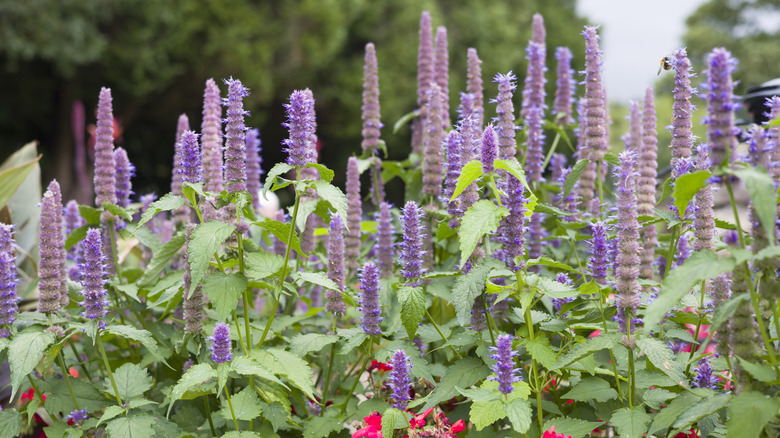
Hardy in USDA hardiness zones 4 through 8, anise hyssop (Agastache foeniculum) is a fragrant perennial herb known for its licorice-scented leaves and tall spikes of lavender-blue flowers that attract pollinators. Over time, clumps can become crowded, which may impact growth. Dividing in early spring every three to five years helps refresh the plant before its active growth period begins. Lift the clump carefully and separate it into smaller sections using a shovel or garden knife, keeping the roots attached. This herb prefers well-drained soil and full sun, so try to make sure any newly divided sections are placed somewhere that won't stay soggy.
Bergamot (Bee balm)
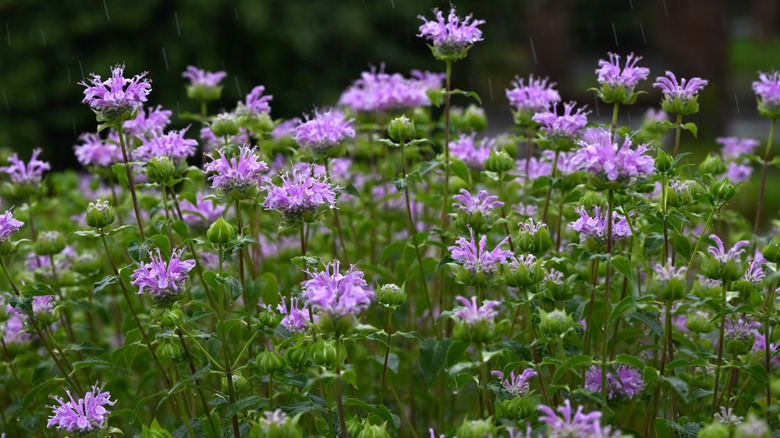
Bergamot (Monarda), also known as bee balm, is prized for its vibrant flowers and ability to attract bees, butterflies, and hummingbirds. The herb spreads through underground rhizomes in zones 4 through 9, which can cause clumps to become dense every few years. Dividing is an essential part of caring for your bee balm. Doing it in early spring helps manage its spread and improves air circulation, which can reduce issues like powdery mildew. Dig up the clump every 2 to 4 years, separate the outer sections with healthy roots, and replant them in fresh soil.
Catnip
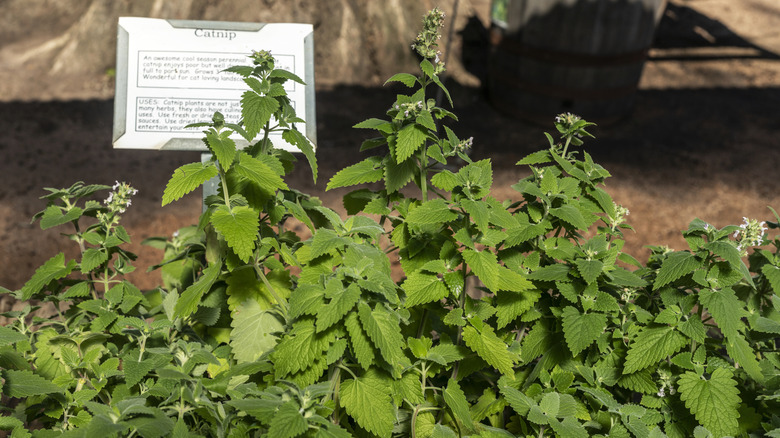
Catnip (Nepeta cataria) is famous for its effect on cats, though gardeners also appreciate its soft gray-green foliage and delicate flowers. This vigorous herb can spread readily in zones 3 through 9. In fact, catnip is considered invasive in some regions, so check with local authorities before planting. Dividing catnip in spring is a useful way to control its growth while creating new plants. Simply dig up the clump, and separate it into several rooted pieces before replanting. Since catnip self-seeds easily, keeping an eye on volunteer seedlings can help prevent it from taking over nearby beds.
Chives
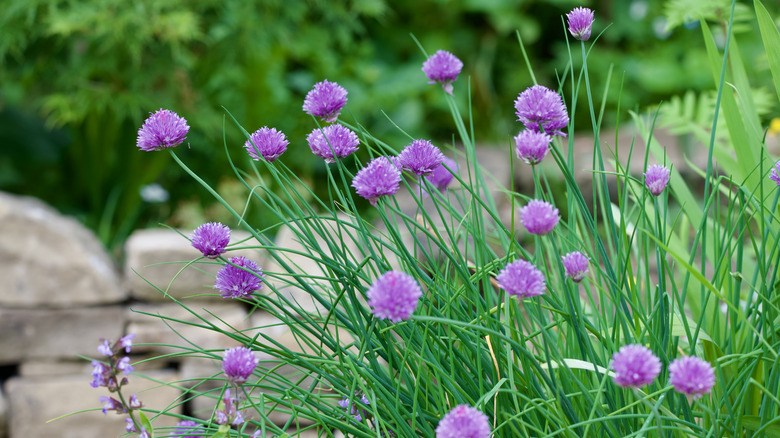
Chives (Allium schoenoprasum) are one of the easiest perennial herbs to grow indoors or out, with a wide range of benefits. Chives thrive in zones 4 through 8. Their hollow leaves and purple pom-pom flowers emerge from tight clumps that gradually become crowded. Dividing them every few years in early spring helps rejuvenate the plant and encourages fresh, tender growth. Lift the entire clump and pull or cut it into smaller sections with several bulbs attached. Replant divisions about the same depth as the original plant, and water them well so they establish quickly.
Comfrey
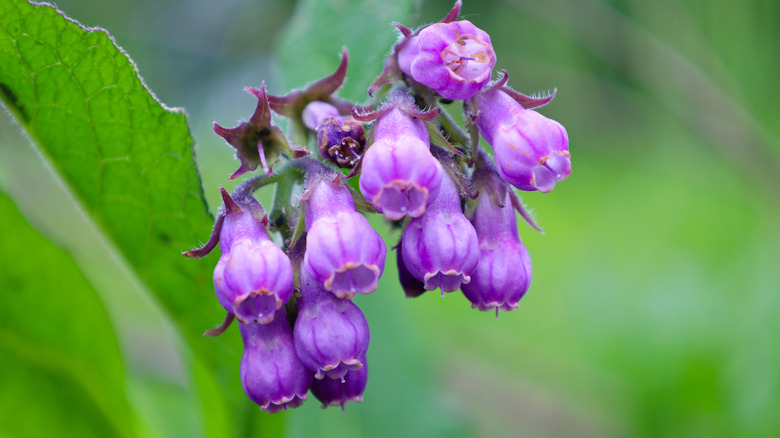
Comfrey (Symphytum officinale) grows in zones 4 through 8 and is known for its large leaves and medicinal roots. The plant can become quite substantial over time, making spring division helpful for controlling its size. Dig up the clump and cut the crown or root into sections, ensuring each piece contains a bud or growing point. Because comfrey regenerates readily from root fragments, divisions usually establish quickly. Choose the new planting location carefully, though — once established, this vigorous herb can be difficult to remove. It is considered invasive in many parts of the U.S. and should not be grown in those regions.
Echinacea
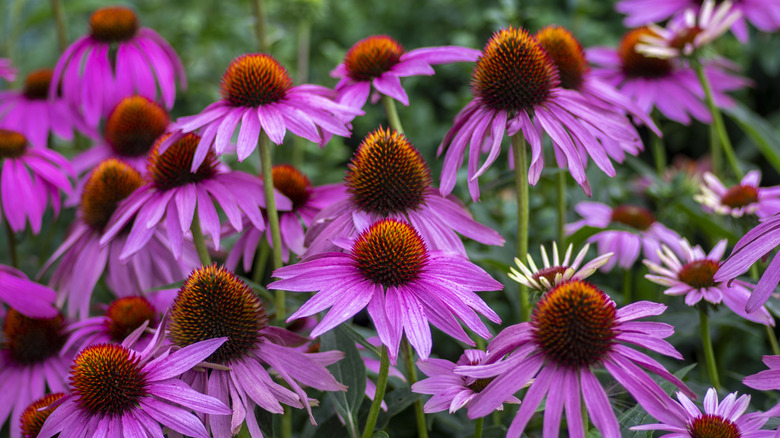
Echinacea (Echinacea purpurea), commonly called coneflower, grows best in zones 3 through 8 and is well known for its daisy-like blooms and medicinal history. Mature plants may develop dense clumps that benefit from occasional division. In early spring, dig up the plant and gently separate the root mass into smaller sections, making sure each piece has healthy roots and shoots. Replanting these divisions gives them room to grow and can help maintain strong flowering. Since echinacea prefers full sun and well-drained soil, you'll want to be sure the new location meets these conditions.
Elecampane
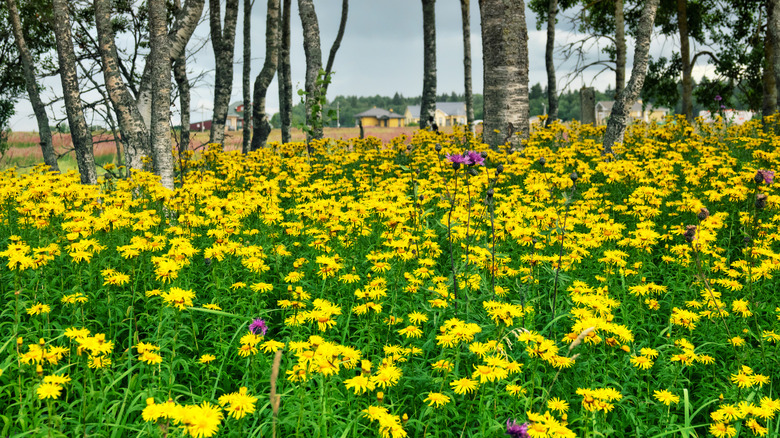
Elecampane (Inula helenium) is a lesser-known perennial herb with medicinal properties that you can grow in your garden. It grows in zones 3 through 7 and produces tall stems topped with bright yellow, daisy-like flowers. The plant forms a substantial clump over time, which can be divided in early spring to keep it manageable. Dig up the root mass and separate it into sections with a portion of the crown and roots attached. Because elecampane can grow quite tall and spread rapidly, giving each new section plenty of space helps prevent overcrowding later. This herb is considered invasive in parts of the U.S. including Oregon, so do not plant it in these regions.
Garlic chives
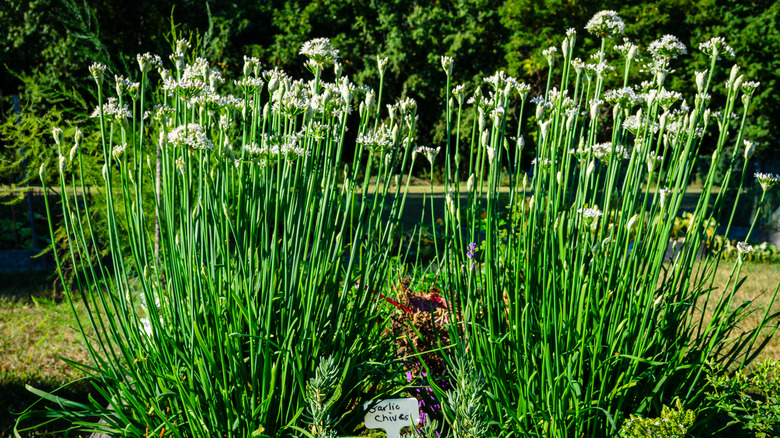
Garlic chives (Allium tuberosum) are hardy in zones 3 through 9 and resemble regular chives but with flat leaves and a mild garlic flavor. It can be invasive under some conditions, so be sure to check with your local agricultural extension before planting. Like other alliums, they form clumps that expand steadily. Dividing them in early spring encourages vigorous new growth and prevents the center from becoming crowded. Lift the plant, split the bulbs into smaller groups, and replant them with some space between each section. These herbs tolerate a range of soils but perform best in full sun with moderate moisture.
Lemon balm
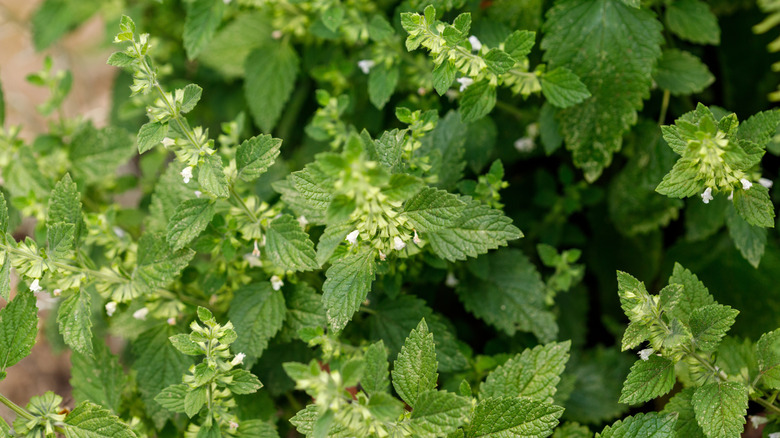
Lemon balm (Melissa officinalis) is beloved for its citrus-scented leaves in zones 3 through 7. The plant spreads readily and can easily take over spaces. To keep it under control, you'll want to plan for periodic division every three or four years. Early spring is a convenient time to dig up the root ball and split it into several sections before new growth takes off. Replant the divisions in well-drained soil, and water them thoroughly. Since lemon balm can self-seed and spread easily, dividing helps keep it contained in the garden. Note that lemon balm is invasive in some parts of the U.S. and should not be planted in such regions.
Lovage
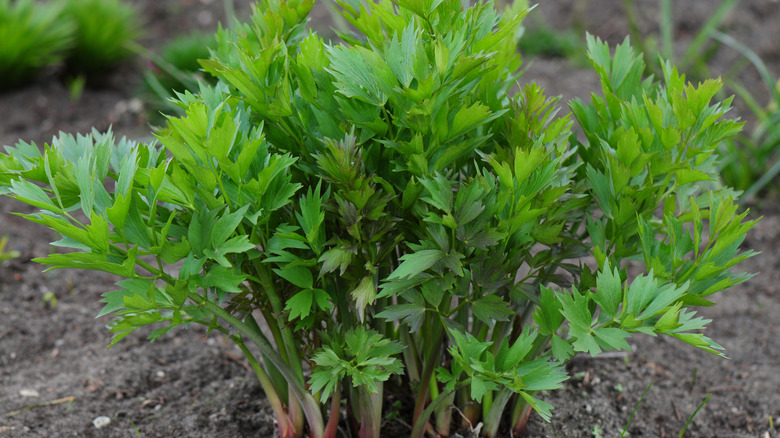
Lovage (Levisticum officinale) is hardy in zones 4 through 9 and produces tall stems with celery-flavored leaves. Mature plants develop thick root systems that can be divided every few years to maintain healthy growth and control the spread. In early spring, dig up the roots and cut the plant into sections with a portion of root and crown attached. Replant each division in rich, moist soil with plenty of space. Because lovage can grow several feet tall, spacing new plants generously will help them reach their full size. Lovage is considered invasive in parts of New England and other scattered regions of the U.S. so do not plant it in these locations.
Oregano
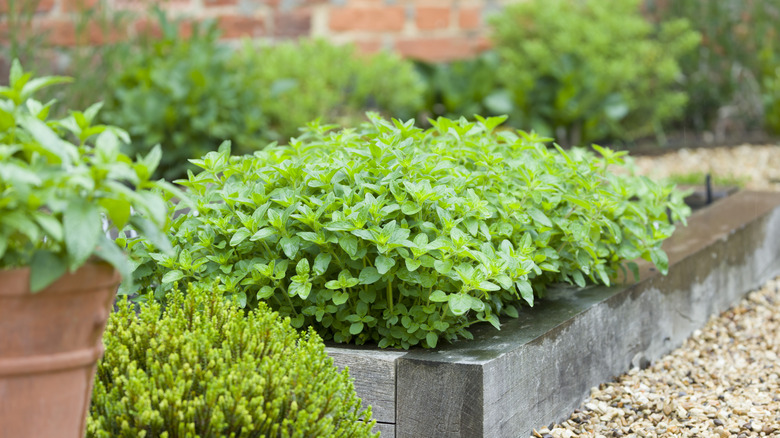
Oregano (Origanum vulgare) is one of the most common kitchen herbs, especially since it is so easy to care for even the most forgetful gardens can grow it. Hardy in zones 4 through 10, oregano grows in dense clumps that can eventually crowd themselves. Dividing in the spring every few years keeps it productive and prevents it from getting woody or losing flavor. For indoor plants, divide in late spring. Lift the root ball and gently separate it into smaller pieces, making sure each division includes roots and new shoots. Replant them at the same depth, and water well.
Roman chamomile
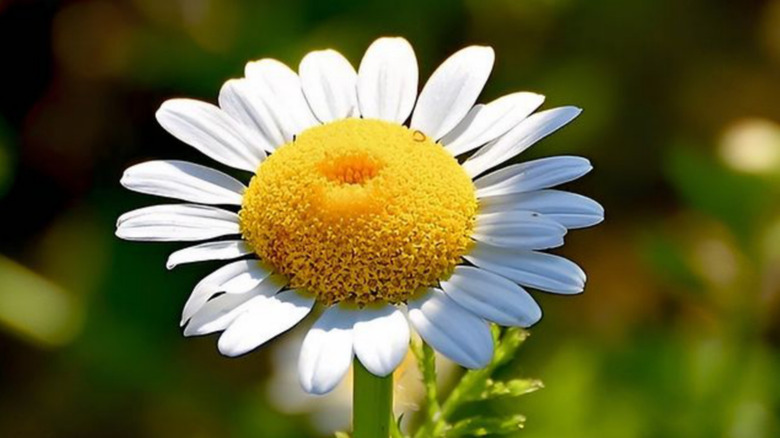
A low-growing perennial herb, Roman chamomile (Chamaemelum nobile) is hardy in zones 4 through 9. It spreads gradually to form mats of aromatic foliage and small flowers in the daisy family. Dividing it in early spring can prevent patches from becoming overly dense and encourage fresh growth. Carefully lift a section of the plant and separate rooted pieces before replanting them. Chamomile prefers well-drained soil and plenty of sun. Choose a spot where water won't linger around the roots.
Sage
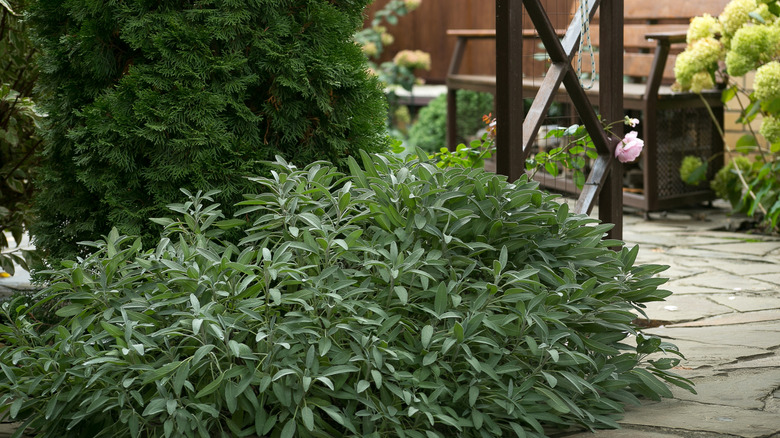
Sage (Salvia officinalis) is another common culinary herb that grows in zones 4 through 8 and develops woody stems as it matures. While some gardeners propagate it through cuttings, established plants can also be divided in early spring if they've formed multiple stems at the base. Lift the plant gently and separate sections that have roots attached. Replant these pieces in sunny locations with excellent drainage. Sage dislikes overly wet soil, so you'll want to avoid planting divisions in areas that remain damp.
Salad burnet
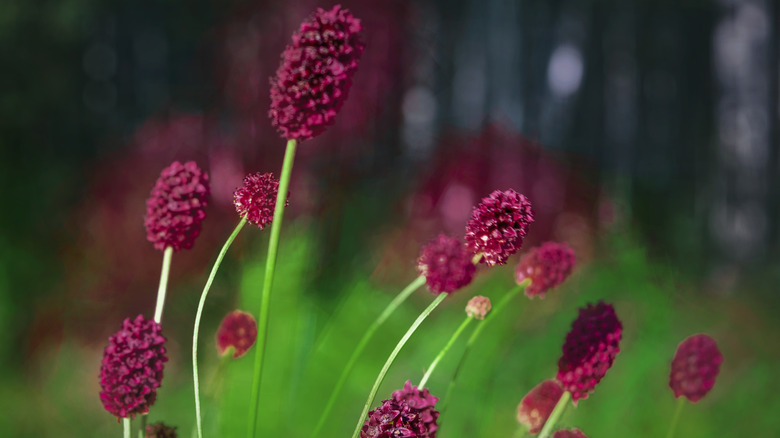
A delicate herb that should be handled with care when dividing is salad burnet (Sanguisorba minor), which thrives in zones 4 through 8. The delicate leaves have a mild cucumber flavor. Salad burnet can be propagated through division, but only once every five years or so. Dividing it in the spring helps maintain healthy growth and keeps the plant compact. Carefully, dig up the clump and separate it into smaller rooted sections, then replant them in well-drained soil. Salad burnet is a fairly low-maintenance herb once established, because it tolerates poor soils and dry conditions.
Sorrel
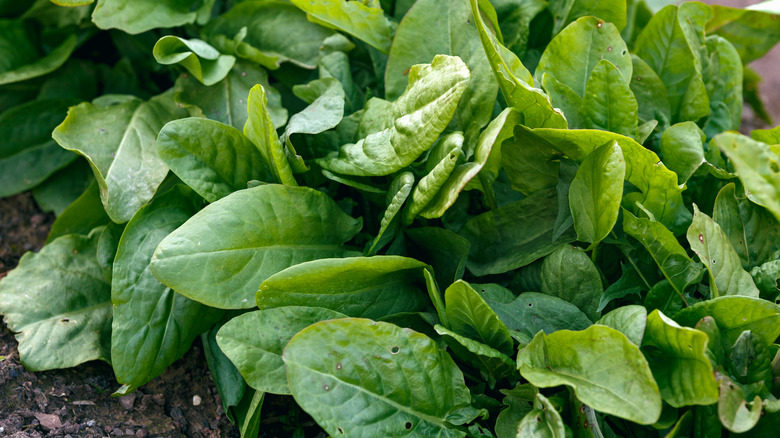
Sorrel (Rumex acetosa) is valued for its tangy, lemon-flavored leaves and grows well in zones 3 through 7. The plant forms leafy clumps that become dense over time. Dividing sorrel in early spring can reinvigorate older plants and create additional harvestable patches. Spring is also the best time to encourage faster recovery. Lift the clump and separate it into sections with roots and shoots attached, then replant them immediately. Select a spot with moist, fertile soil, and water new divisions regularly to help them settle in. It is considered invasive in many areas of the U.S. so check with your local agricultural extension before planting.
Sweet cicely
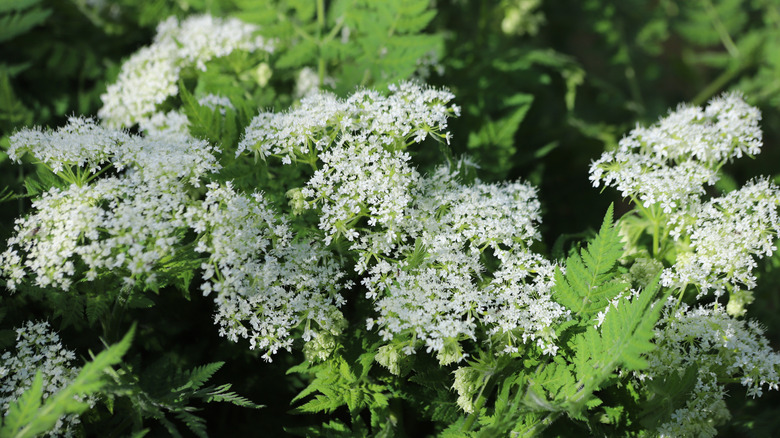
Sweet cicely (Myrrhis odorata) is a perennial herb that is commonly recognized for its fern-like foliage and anise-scented flavor. Mature plants form clumps in zones 3 through 7 that can be divided in early spring to propagate new ones. Carefully dig up the root mass and separate it into sections with healthy roots and shoots. Replant divisions quickly in rich, moist soil. This herb often prefers partial shade, so placing new plants in a sheltered spot can help them establish more easily. It is not widely considered invasive, but can grow aggressively, so be careful where you plant this herb.
Sweet woodruff
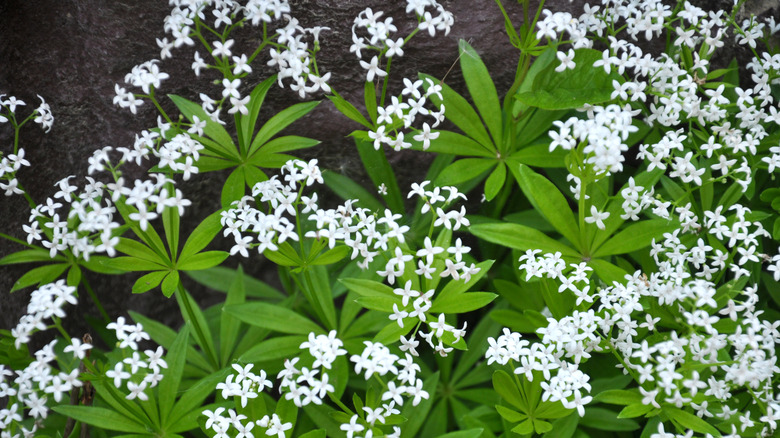
Sweet woodruff (Galium odoratum) is a shade-loving herb that spreads through creeping roots to form ground-covering mats. It grows best in zones 4 through 8. Because of this spreading habit, dividing it in spring is an effective way to control its growth or expand it into other shady areas. Lift a section of the plant and separate rooted pieces before replanting them. Sweet woodruff prefers consistently moist soil and shade, so selecting a location with these conditions will help new divisions settle in quickly. Be cautious where you plant this fast-growing and sometimes aggressive herb.
Tarragon
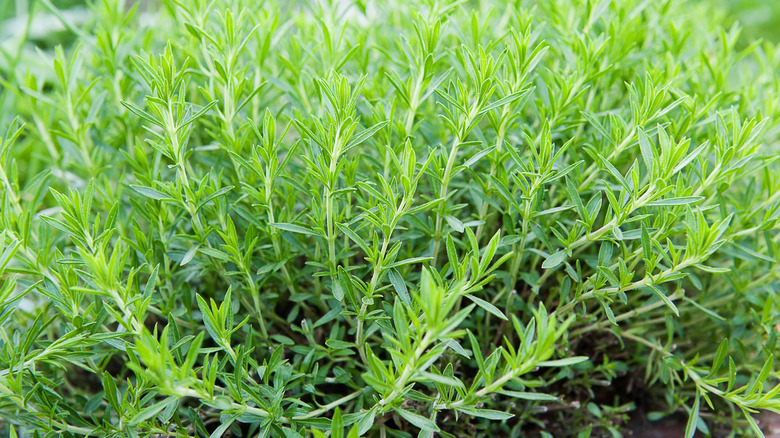
Tarragon (Artemisia dracunculus) is a common culinary herb that grows in zones 3 through 8. This classic herb features narrow, aromatic leaves. Mature plants can become less productive when left alone for more than three or four years, which makes division helpful for promoting healthy growth. In early spring, dig up the plant and gently separate the root ball into several sections with healthy shoots. Replant them promptly in well-drained soil. Tarragon prefers full sun and relatively dry conditions, so avoid overly wet planting sites.
Thyme
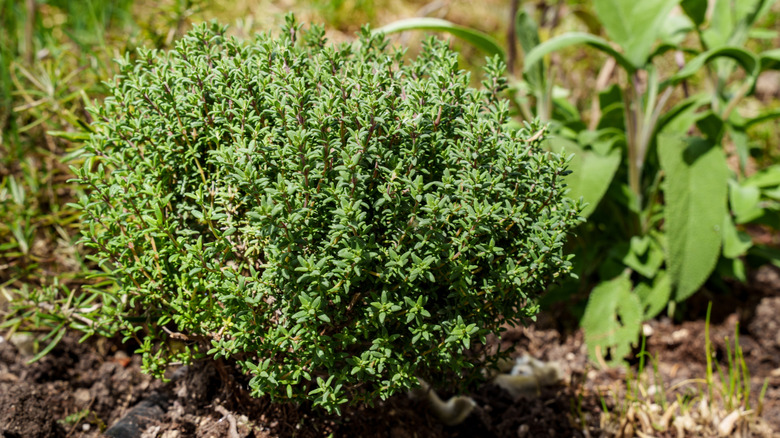
Thyme (Thymus vulgaris) Thyme is an easy to grow plant that is perfect for gravel gardens and is hardy in zones 5 through 9. It forms low, woody mounds of aromatic foliage. As plants age, the production begins to decline. Dividing thyme in spring helps rejuvenate growth and produces additional plants. Lift the clump and separate the younger outer sections with roots attached before replanting them. Because thyme thrives in sunny locations with excellent drainage, rocky or sandy soil often works well for new divisions.
Valerian
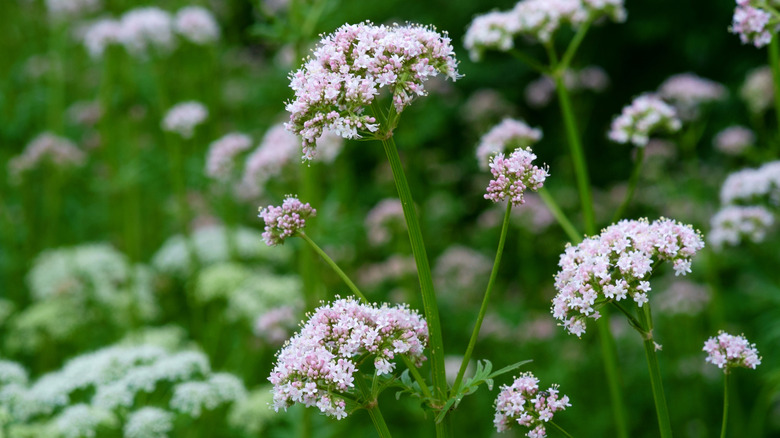
Valerian (Valeriana officinalis) is a well-known medicinal herb that grows in zones 4 through 7 and produces clusters of fragrant white or pink flowers above lush foliage. The plant forms thick root systems that can be divided in early spring before new growth accelerates. Do not harvest roots during division, roots are best harvested in the fall of year 2 for medicinal use. Dig up the clump and split it into several pieces with roots and shoots attached. Replant the large divisions quickly and water them well. Small divisions can be replanted in pots to encourage root establishment for young plants. Note that this herb is considered a noxious weed in Connecticut and Wisconsin and should not be planted there.
Winter savory
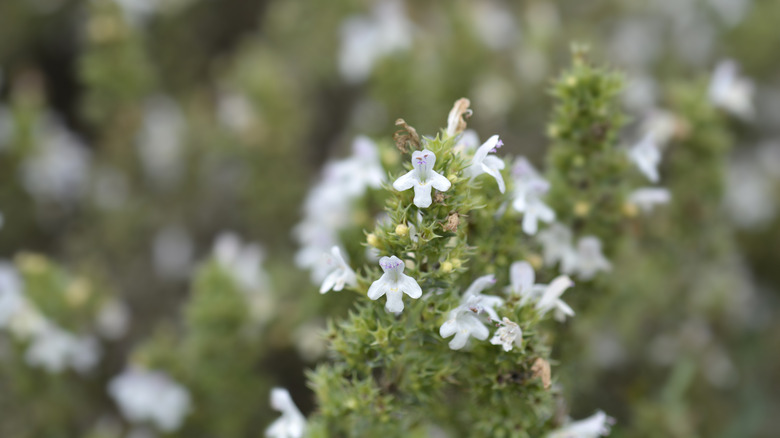
Winter savory (Satureja montana) is a perennial herb hardy in zones 5 through 10. Over time, plants may become dense or woody at the base, which is a sign you may want to consider spring division to help refresh them. Carefully lift the plant and separate smaller rooted sections before replanting. It is important to do this while it is still cold so the roots can establish properly. You may need to start the divisions in pots to keep them in a cold frame. Providing well-drained soil and full sun will help the divisions thrive.
Yarrow
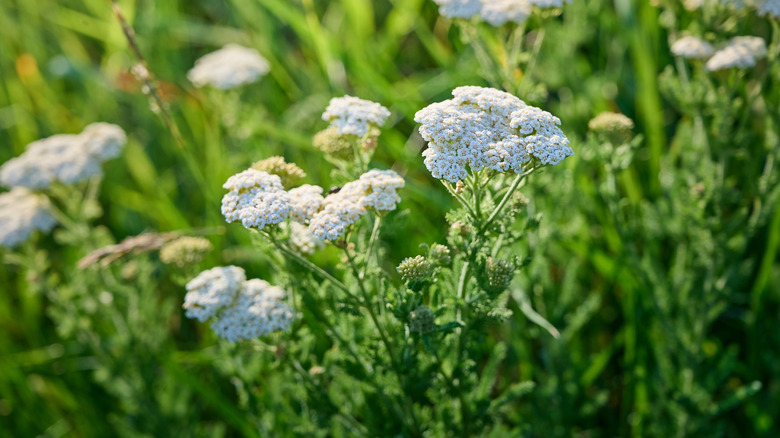
Yarrow (Achillea millefolium) grows in zones 3 through 9 and is valued for its feathery foliage and clusters of flat flowers. The plant spreads through rhizomes and can form dense colonies if left unchecked. Dividing yarrow in early spring not only keeps the plant healthy and prevents overcrowding, but also controls the spread so it doesn't take over your garden. Dig up the clump and separate the outer portions with healthy roots, then replant them in sunny areas with well-drained soil. Regular division every few years helps maintain strong flowering and tidy growth.