

Always Check Vintage Pottery Before Getting Rid Of It, It Could Be Valuable
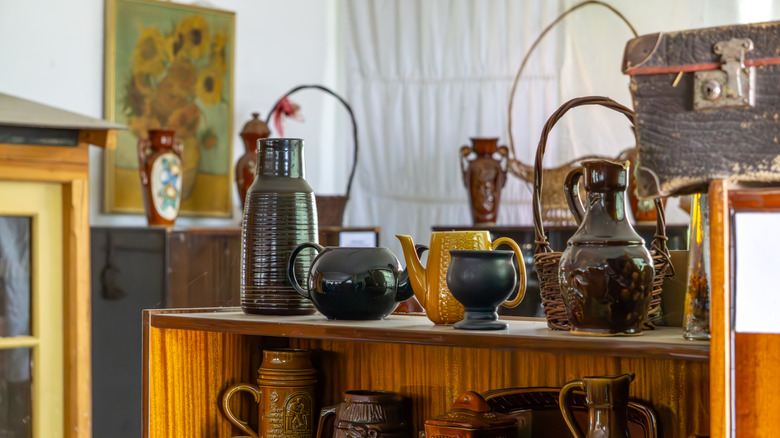
Perhaps you've cleaned off your display shelves or picked up a pile of vintage pottery at the thrift store that just didn't fit your style once you brought it home. It may seem pointless to keep it, so you have to decide if you want to gift it to a friend, donate it, return it, or throw it away. Before you do anything, it's wise to check if it's valuable, and if it is, you may want to sell it instead. Is it an adorable pencil holder made as a school project, or a rare Chinese vase worth millions? Even if you're not a collector, knowing how to determine the value of vintage pottery before you get rid of it could result in an unexpected financial windfall. Or it could at least keep you from sending something to the landfill that someone else might cherish.
There are several ways for laymen to determine a piece of vintage pottery's worth, but because so many pieces are unique, you may never get anything more than a well-educated guess, even from experts. Sentimental value aside, the only way to know the bottom line on true monetary value is learning what someone will, or has, actually paid for it. Appraisers are skilled in determining what a piece of pottery might sell for, but auction records and sales catalogs will log their actual sale price. Before you dive into research, you'll need to take a close look at your pottery piece.
Identifying valuable maker's marks and other clues
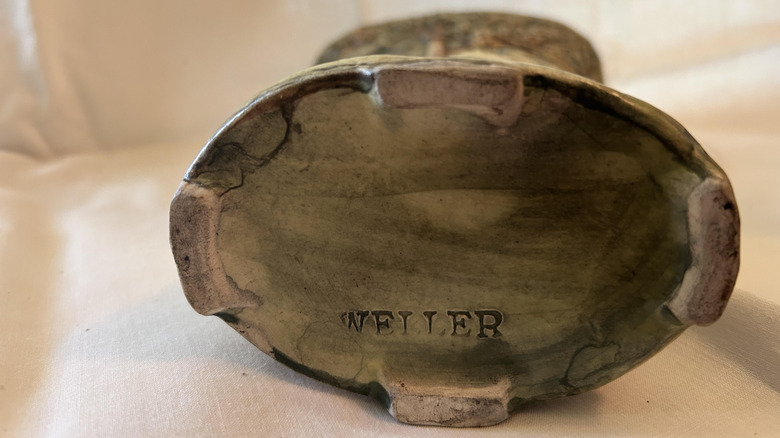
Don't let your excitement over potentially having something of value cloud your judgment when you're learning how to identify authentic vintage pottery. First, inspect your piece for flaws; damage decreases the value. Check the craftsmanship and look at the glaze. If the item is well-made and free of damage, check for a maker's mark, usually on the bottom. Maker's marks are a clue to who created the piece, whether it's one-of-a-kind, or if it's one piece in a production of many. Maker's marks are often the artist or company initials. The Teco company mark, for instance, has a distinctive letter T with the letters e, c, and o cascading down the right side of the T. Early Roseville pottery is marked with a circle with the words "Rozane Ware" in the center. Use one of the many resources available online like The Marks Project, a crowd-sourced database of maker's marks, to learn more about who or what company created your vintage pottery.
Not all pottery has a maker's mark, and what might look like a maker's mark at first could simply be the initials of a kid who made the piece for art class. There are also fakes in the world of pottery, just as in the rest of the art world. These are of lower quality, and thus less valuable. Roseville and Van Briggle are two pottery lines that are frequently copied and falsely sold as authentic. Generally, fakes will have a uniformity that's absent in authentic pieces, and the glaze may seem too perfect.
What to do with valuable vintage pottery

While not everything is a valuable find, there are cases where a small investment turned into a major reward for some shoppers. Collectible pottery pieces by companies like Rookwood, Grueby Faience Company, Shearwater Pottery, and Newcomb command especially high prices. One TikTok creator, Elizabeth Bleier, found what she thought was just a fun coffee mug at a thrift store. She paid $2.50 for what turned out to be a piece that was made by Shearwater Pottery and listed online for nearly $200. In another case reported by CNN, a $3.99 vase picked up at a Virginia Goodwill was an authentic Carlo Scarpa piece, valued at $30,000, although it sold at auction for $107,000.
Once you've collected as much information as you can about your pottery, delve into catalogs and auction records. If that doesn't help, try an online appraiser, or send an email inquiry to a museum that features pottery exhibitions. If you believe you have a valuable piece after you've done your research, approach an auction house about adding it to an upcoming sale. Their experts will tell you what they think your pottery will sell for. If you learn that your vintage pottery is a rare, historical, or incredibly valuable brand and you change your mind about getting rid of it, consider taking out an art insurance policy.