

28 Stunning Types Of Lantana Plants That Give Your Garden A Burst Of Color
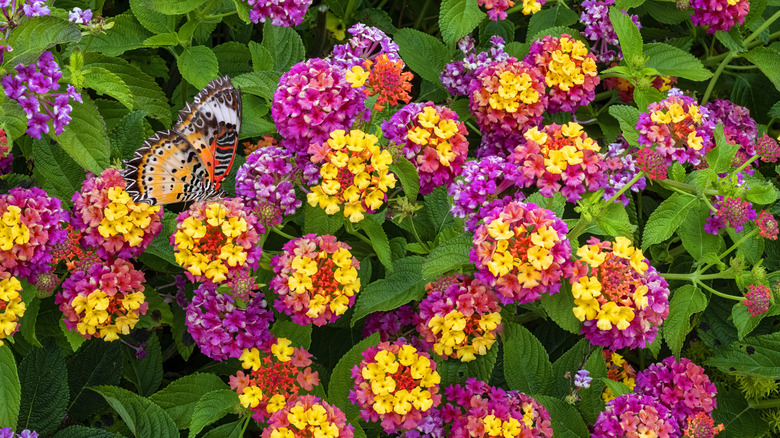
Lantanas have long been popular in home gardens for their ability to bloom through scorching summers when most other plants call it quits. They often feature multiple hues bleeding over each other, thus creating a splashy mosaic of color that deepens over time. Besides their beauty, they're also valuable for their tendency to tolerate dry conditions and salt. For this reason, they're a standout addition to arid gardens and around pathways. You can even plant them in borders or near the perimeter to dissuade deer and rabbits. The best part, though, is that pollinators find them irresistible.
To get you started, we've discussed 28 lantana varieties that will have your garden bursting in beautiful color in no time. They include a mix of native plants, such as veinyleaf lantana, buttonsage, and Texas lantana, as well as hybrids from the Luscious, Bandito, Lucky, and Bloomify series. It is important to note that largeleaf lantana (L. camara) is invasive in some warm-weather states, including Florida, California, and Georgia. Contact your local extension service to see if these species are safe to plant in your area. Also be aware that parts of lantana plants are toxic to children, cats, and dogs, so pick their location wisely.
Veinyleaf lantana
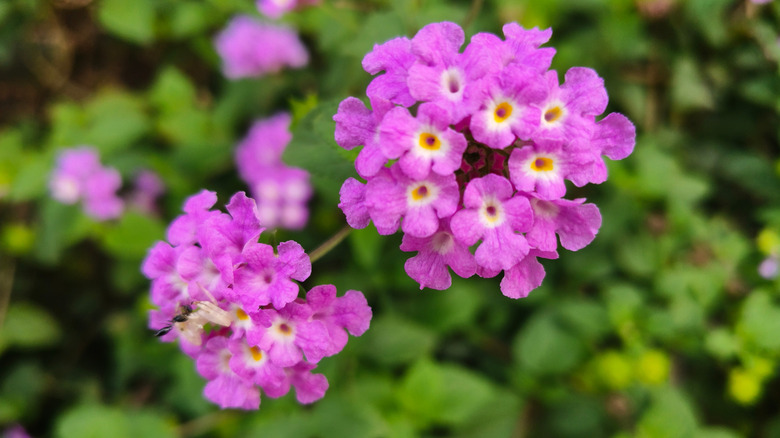
Prevalent in the wild in Texas, Arizona, and New Mexico, veinyleaf lantana (Lantana achyranthifolia) or brushland shrubverbena is a deciduous ornamental shrub that can grow about 6 feet tall and half as wide. Flowers tend to change their colors, running the gamut of white, yellow, orange, and purple throughout the season. Their best blooms appear in spring, with multiple waves after rainfall, which extends their blooming season through November. Eke out a space receiving morning sun, as the intense afternoon heat in the summer can force dormancy. Use them in dry areas, as they survive on little watering.
'Luscious Marmalade'
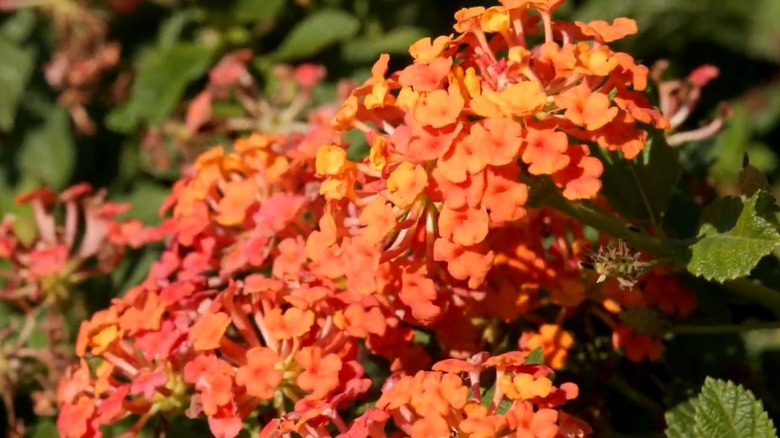
'Luscious Marmalade' lantana is a stunning plant that will thrive in containers in full sun. Or, if you live in zones 9 through 11, you may grow it as a perennial landscape shrub. From planting through frost, its mound is covered in yellow-speckled, orange flowers that bees and hummingbirds find attractive. It thrives even without supplemental watering, come drought or heat spells. However, if you notice any slowdown in flowering, a small mid-summer fertilization boost will bring the plant back up to speed. The University of Florida classifies it as a sterile cultivar.
'Confetti'
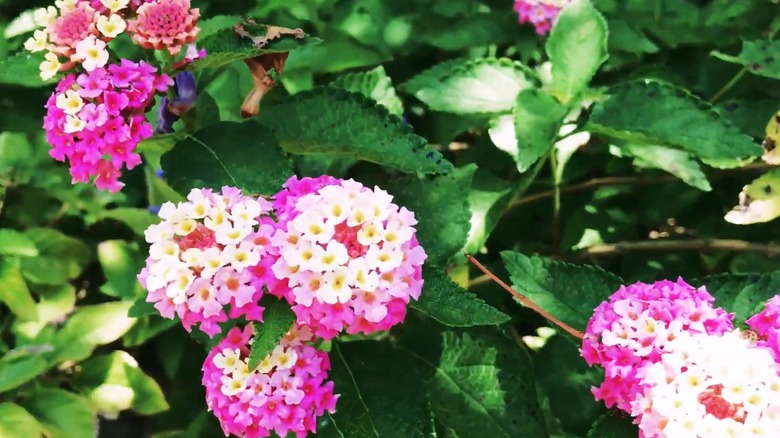
Are you looking to soften a fence, spruce up a deck, or set up a topiary to define beds? Train 'Confetti' spreading lantana over them. This hummingbird-friendly annual (evergreen in zones 9 to 11) blooms a mix of magenta and yellow flowers all spring and summer long, striking up an enchanting display. It loves full sun exposure, well-drained soils, and requires little supplementary irrigation after establishment. However, you must water and fertilize it regularly if planted in containers.
'Hot Blooded'
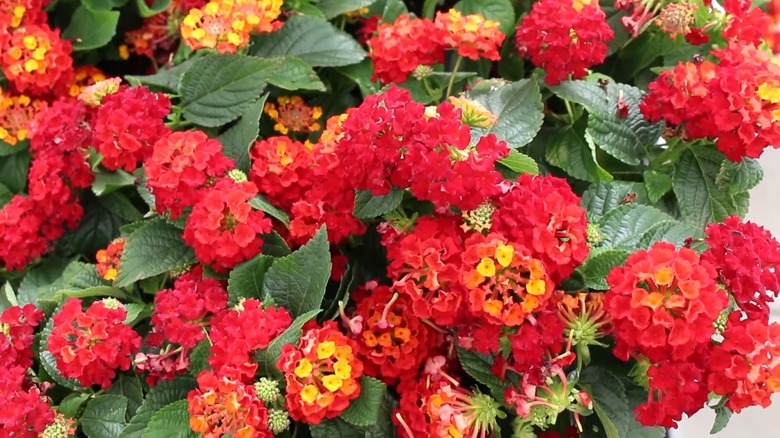
Nothing tops 'Hot Blooded' lantana when it comes to imbuing your garden with a sizzling, tropical flair without much maintenance. All summer long, its foliage is smothered in yellow-highlighted, fiery red flowers — if you live in zones 10 and 11, you can enjoy them for even longer. 'Hot Blooded' is sterile and can be safely planted in urban gardens to attract pollinators, on slopes to check erosion, or in coastal gardens exposed to salt sprays. It can even handle heat reflected off hard structures, making it suitable around driveways and sidewalks.
'Luscious Berry Blend'
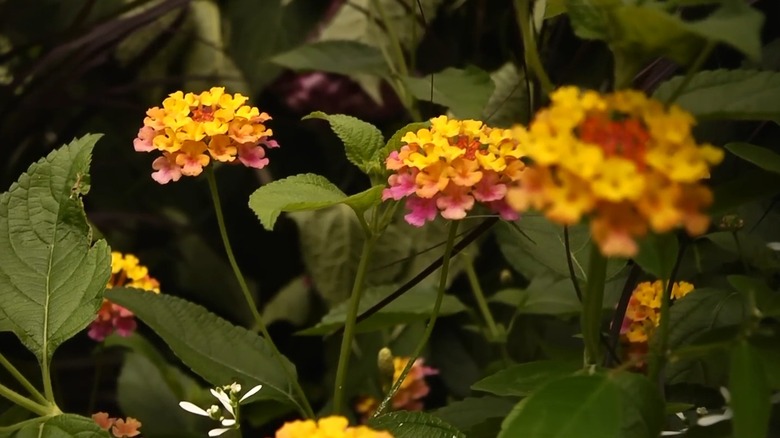
Ever since its introduction, 'Luscious Berry Blend' lantana has won hearts and awards (24 at the latest count). After establishment, it produces non-stop waves of fuchsia, yellow, and orange blooms until a killing frost puts it out of business. But if you're in zones 9 to 11, where it successfully overwinters, you can enjoy fresh blooms all over again come spring. Give it a place in the sunniest location. It's a trooper when it comes to surviving heat. Unless you notice the plant forming excessive berries, you don't have to deadhead it.
'Teenie Genie'
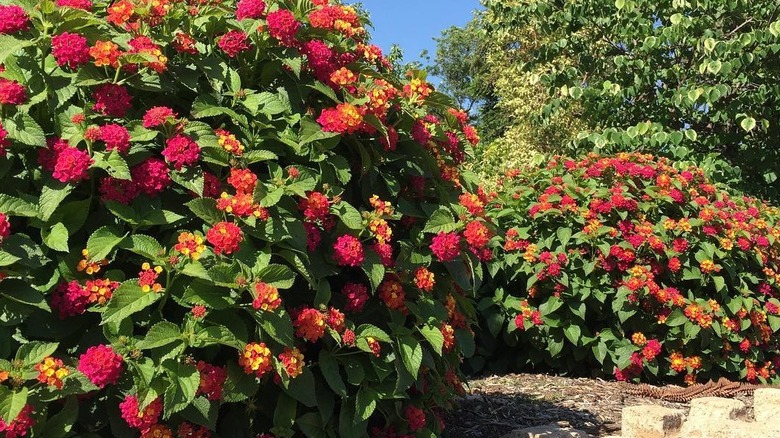
'Teenie Genie' compact lantanas are landscape stars in small gardens. They naturally retain a full form that maxes out at 30 inches up and across. So, you don't ever have to worry about pruning these beautiful garden plants. Until they're frost-killed, they profusely bloom multi-hued, yellow and fuchsia flowers all year long and may even retain their foliage and bloom again in zones 9 through 11. Use them in borders to offer some resistance to deer or on slopes where you wish to prevent leaching, beautifully.
'Firefrost'
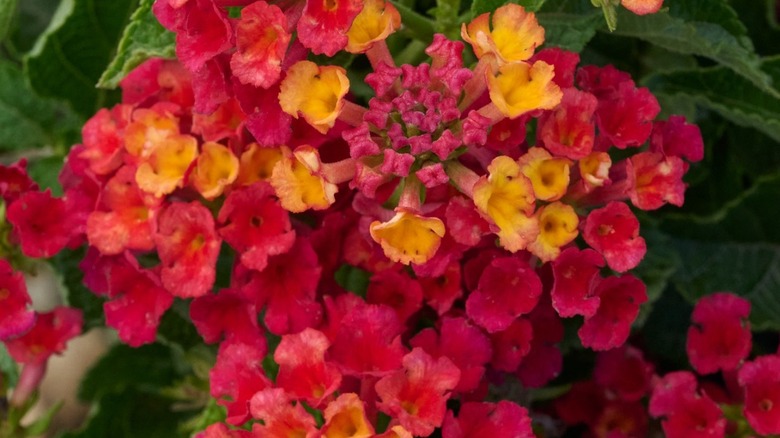
'Firefrost' lantana stands out from the crowd because of its cold hardiness. Its roots can survive temperature drops to 0 degrees Fahrenheit, ensuring reliable return year after year in zones 7 through 11. Aside from that, you will love them for the ornate interest and attention they garner from the local bees and hummingbirds with their deep red flowers (with occasional bronze yellow blooms thrown in for a change). Keep in mind that they tend to spread. So, plant them where you can let them expand — just be sure that the area receives ample sunlight.
'Miss Huff'
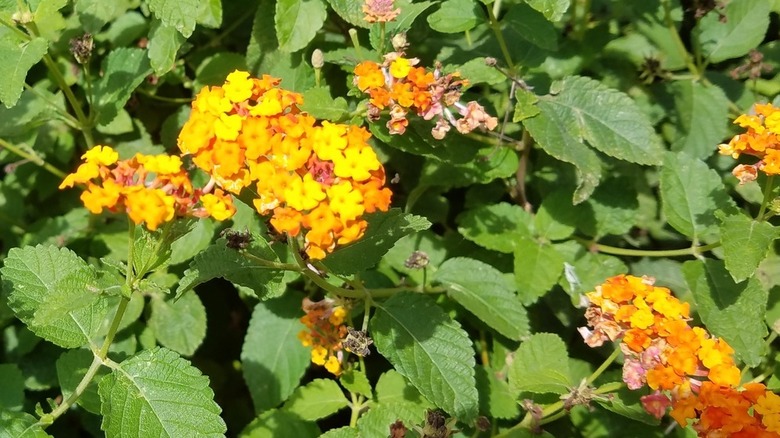
'Miss Huff' lantana is — to date — the most cold-hardy lantana variety, as both roots and foliage can survive zero-degree temperatures. Besides, it huffs out clusters of pink and orange flowers throughout the growing season until frost. This makes it an excellent addition in cooler areas, including hillsides, located in zones 7 or warmer, looking to add a tropical touch to their staid landscapes. The best part, though? It grows fast. So you can swiftly cover a large patch, as a single plant can be nearly 6 feet wide (and just as tall) by maturity.
'Luscious Goldengate'
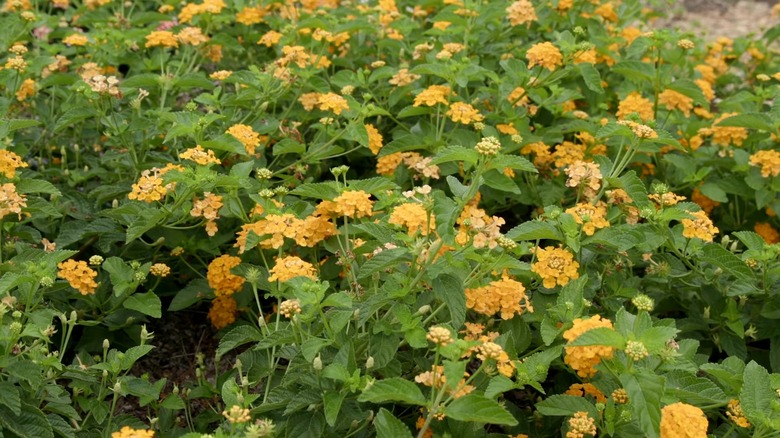
Another award winner, 'Luscious Goldengate' lantana is a heat and drought-tolerant annual you can grow in hanging baskets or landscape beds. It takes freezing temperatures to kill this plant, making it a perennial in zones 9 to 11. Butterflies and hummingbirds love its golden yellow flowers. Plant it where it receives at least six hours of direct sunlight. Although it generally tops out at 3 feet, in warmer climates it may exceed its stipulated mature size. But you can prune back the plant hard to the desired size and encourage a fuller form.
'Bandito Rose'
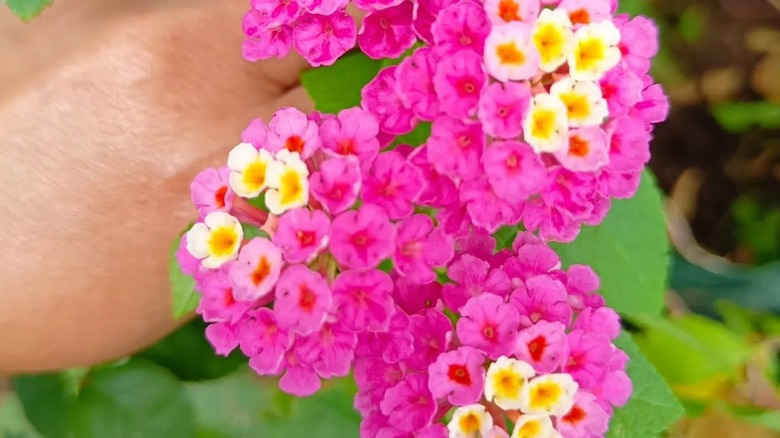
A part of Sygenta's patented series, 'Bandito Rose' lantana caters to the extremely hot and humid conditions of southern climes, ensuring gardeners can enjoy a constant wave of rosy-pink blooms from mid-spring through summer. They form a tidy, compact mound that's about 14 inches tall and wide, making them perfect for patio pots, hanging baskets, and gap fillers in beds. Plant them in an area where you would like to attract butterflies and hummingbirds. Those who maintain water-wise landscapes will also find this variety valuable. They're typically grown as annuals, as they're cold-hardy only up to 25 degrees Fahrenheit.
'Purple Potion'
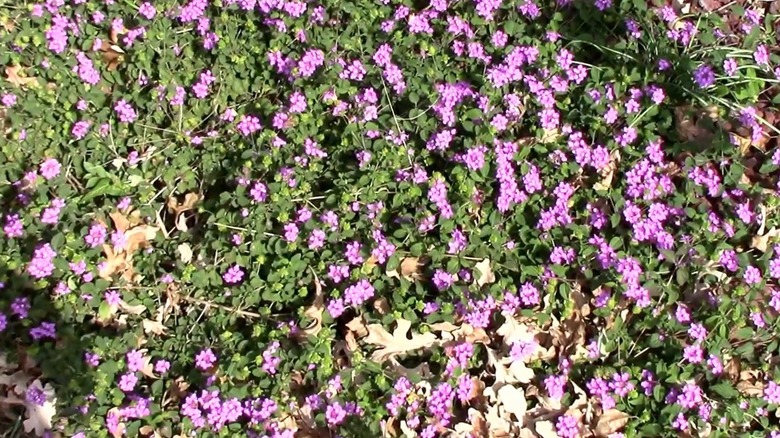
If you're looking for a low groundcover to lay down on a slippery hillside or decking up a sun-drenched patio in hanging baskets, consider adding 'Purple Potion' trailing lantana. Spreading nearly 6 feet wide but growing no higher than 1 foot, this trailing lantana variety can quickly carpet bare spaces in purple or violet blooms. Pollinators are drawn to them but luckily, deer are not. 'Purple Potion' is evergreen in frost-free climates of zones 9 through 11, but annual elsewhere. Team it with plumbago or princess flower in a mixed border.
'Spreading Sunset'
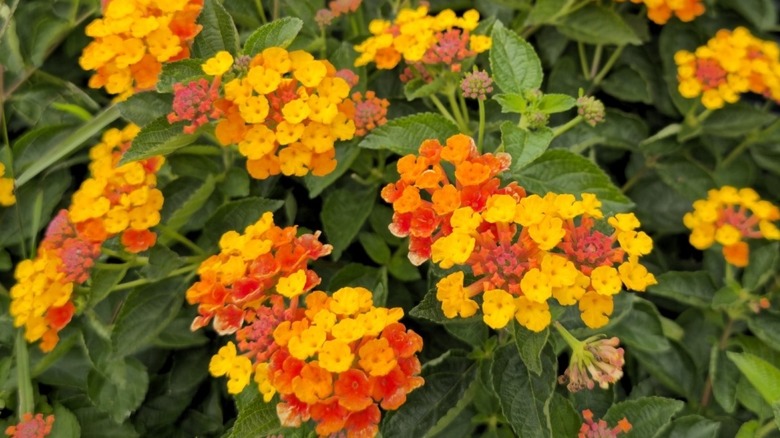
'Spreading Sunset' lantana is a low-growing, heat-tolerant groundcover you can let loose for year-round blooms in zones 9 through 11. Elsewhere, use it as a flowery annual to blanket the ground in a mass of orange-red flowers during the summer. It can take a bit of salt drift, too. Alternatively, to minimize its spread, pop it in containers housed on sun-kissed patios and decks. Through deadheading, you can encourage the plant to rebloom until frost. This may prolong the time butterflies spend in your garden.
'Ham and Eggs'
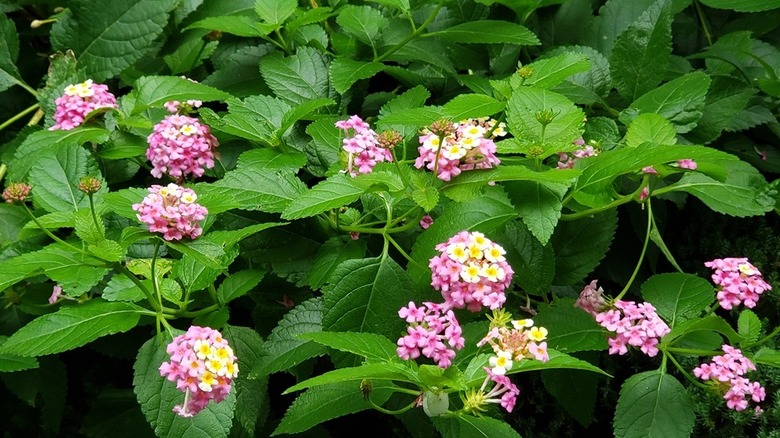
'Ham and Eggs' lantanas initially produce creamy yellow florets in the spring that later age into ham-colored pinks, thus explaining their name. Luckily, they don't produce as many fruits as standard specimens, which limits their spread and the risk to pets who may become curious about them. Still, it's best to plant them beside a hard structure to limit their spread. 'Ham and Eggs' can tolerate partial to full sun. They do not overwinter beyond 28 degrees Fahrenheit. Even in zones 7 through 11, where they're perennial, their foliage may die back but return in the spring.
Trailing lantana
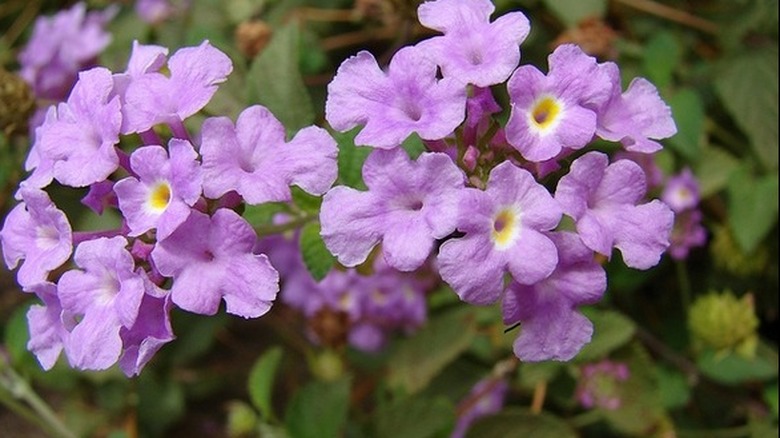
Also known as weeping lantana and pole-cat geranium, trailing lantana (Lantana montevidensis) is a fast-growing, bushy vine that can spread nearly 3 feet wide. As it holds on well to the soil, it's grown as a flowering groundcover on hill sides prone to erosion. Some prefer cascading it down in hanging baskets, from the walls, or in ornate pots. Unfortunately, in frost-free climates, including Florida and southern California, it has a history of escaping into the wild and becoming an invasive weed. So, gardeners in these areas should avoid planting it. It won't survive the winter in zone 7 and colder.
'New Gold'
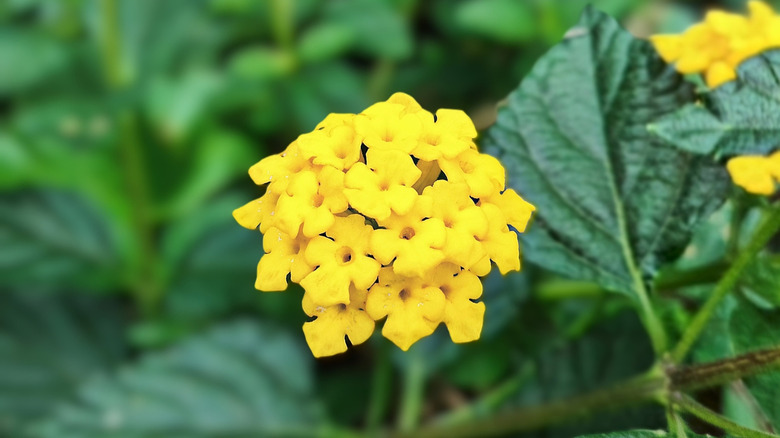
'New Gold' lantana truly shines when most other plants and humans think the summer charm has worn off, and now it's just uncomfortably hot. Even in those temperatures and without any supplementary irrigation, this plant blooms its head off, producing unending waves of golden flowers. Mass plant them in a sunny, well-draining site to grab the attention of butterflies. Luckily, 'New Gold' is nearly fruitless and is unlikely to spread. Beyond zone 8, it's an annual unless dug out and overwintered inside. Alternatively, you may take cuttings to propagate new plants.
Texas lantana
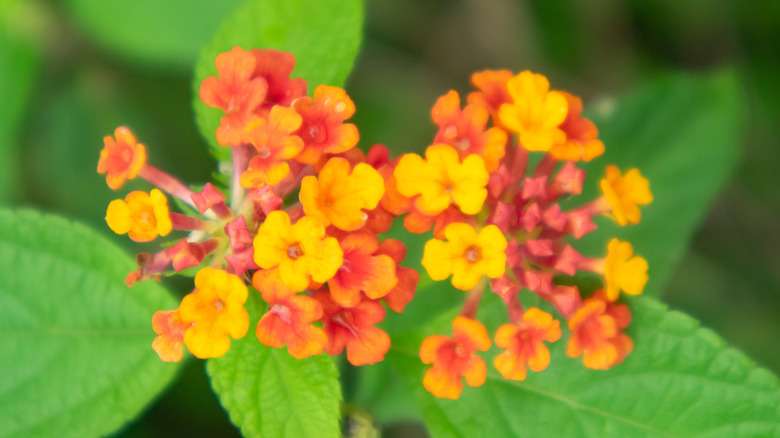
Texas lantana (Lantana urticoides) or calico bush is an ornamental shrub that's native to the swamps and gravelly flats of Texas, Arizona, and New Mexico. The blooms, which appear from April through October, feature orange, red, and yellow tones, putting out true summer interest. Texas lantanas are heat-tolerant and don't require much water, save for occasional soaks during prolonged dry spells. Plant them in unfertilized beds, or their performance will suffer. Consider harvesting their seeds from your garden and replanting to create a massive butterfly-friendly, but deer-proof patch. Keep in mind, they become thorny with age.
Three leaved lantana
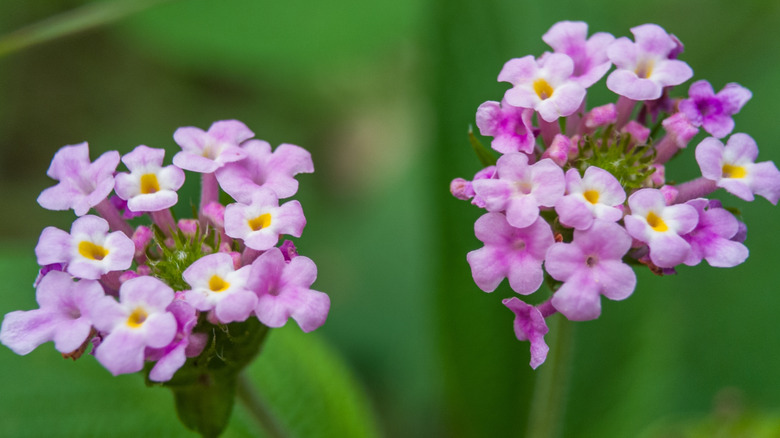
Three leaved lantana (Lantana trifolia) or shrub verbena was named so for its propensity to produce dark green leaves in swirls of three. From spring through fall, lavender blooms pop out from this foliage, which are followed by popcorn-shaped, purple fruit spikes. Butterflies enjoy the nectar, birds love the fruit, and some small insects use it for cover. It's evergreen in zones 8 to 11. Those in colder climates can overwinter the plant or its cuttings inside until the ground thaws and it can be replanted.
Buttonsage lantana
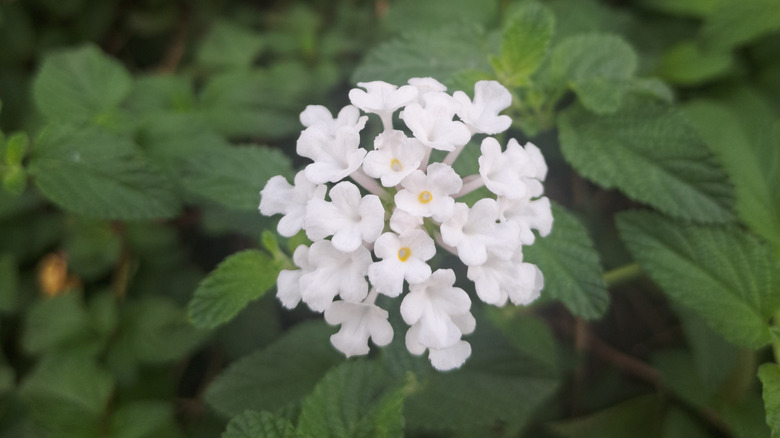
Native to the coastal counties in south and central Florida, buttonsage (Lantana involucrata) is another stunner you can grow in your garden to attract a bevy of butterflies. In frost-free regions, it produces sprays of white flowers and purplish-black fruits year-round. Leaves emit a spicy smell, much similar to a sage plant, which is why deer tend to ignore it. Buttonsage can handle drought and heat for extended durations. It can also withstand hurricanes, making it useful as a flowering hedge. By maturity, it's about 5 feet tall and wide. Sandy soils and full sun exposure are a must.
Gold lantana
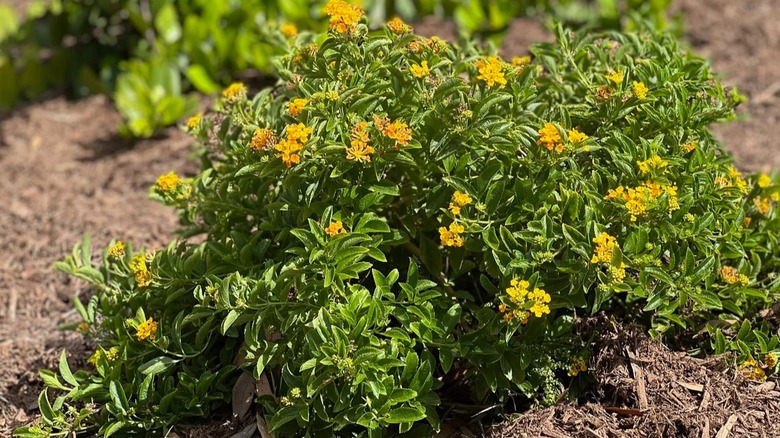
If you're into native gardening and are from Florida, consider growing gold lantana (Lantana depressa var. depressa). A rare variety, gold lantana is a long-lived, evergreen perennial that produces several flushes of bright yellow flowers and purple fruits throughout the year. It likes alkaline, sandy soils sitting in a full-sun site, and can tolerate some salt spray and wind. Unfortunately, it has become endangered over time due to cross-hybridization with L. Strigocamara, which is an invasive variety. Due to this, you must propagate it using cuttings (rather than seeds), and ensure you purchase the plant from a quality nursery specializing in local natives.
'Bandana Cherry Sunrise'
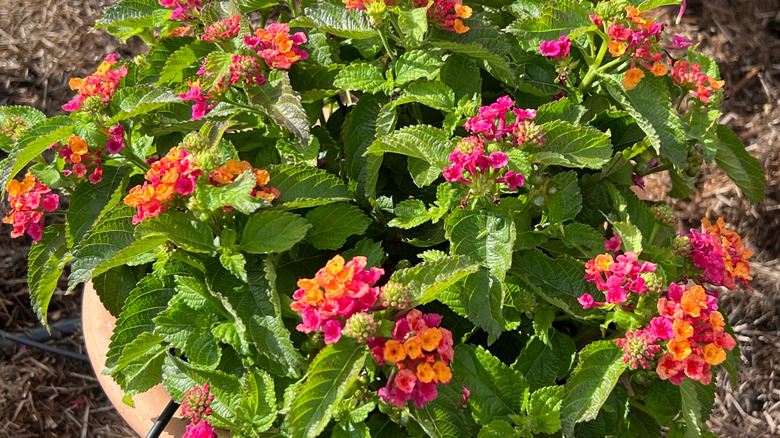
If you're looking to spruce up your front yard planters, fill them up with 'Bandana Cherry Sunrise' lantanas. The foliage is aromatic and they work wonderfully in containers when given plenty of sun and a well-draining medium. Until frost (or year-round in zones 9 to 11), their dark green foliage is laced with blooms, featuring a mix of sunrise colors, like fuchsia pink, orange, and sunny yellows. Butterflies adore them, while birds visit them later for drupes. They have a uniform habit and mature to about 2 feet tall and wide.
Gem Compact 'Yellow Topaz'
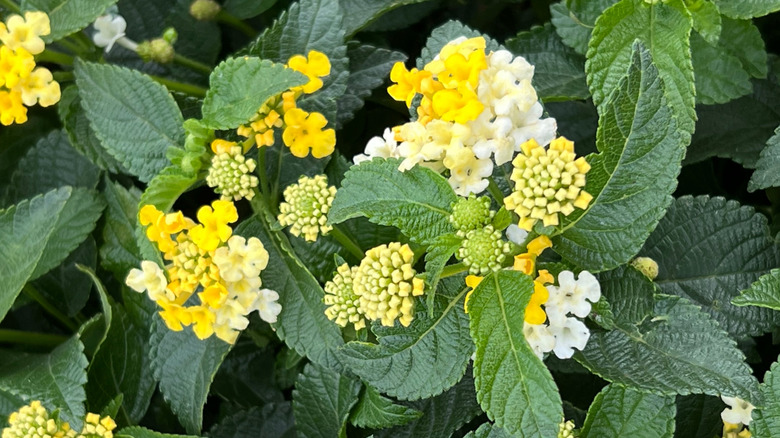
Bred by Danziger Flower Farm, Gem Compact 'Yellow Topaz' lantana was rated one of the best annuals at Penn State's 2025 flower trials. It holds on to its compact, dense form throughout the growing season, while offering reliable color through its yellow flowers. Use it in hanging baskets or pots where you can enjoy pollinators having a go on its nectar, or plant it in foundation beds where ornamental interest is non-negotiable, no matter how hot the summer and little the rainfall.
'Mary Ann'
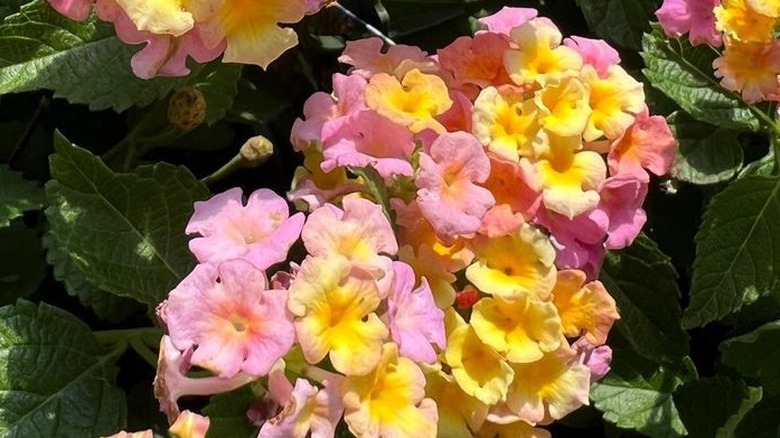
Monrovia's exclusive introduction, 'Mary Ann' lantana is a tough variety you can plant alongside driveways, pavers, fences, or foundation beds. Since it's heat-tolerant, it can put up with roasting temperatures common around these hard surfaces due to the heat island effect. Featuring yellow, orange, and pink flowers through late fall, 'Mary Ann' offers a stunning pop of color to containers and landscapes alike. Some also like to shape it into a flowering topiary. It is perennial in zones 7 through 11.
'Bloomify Red'
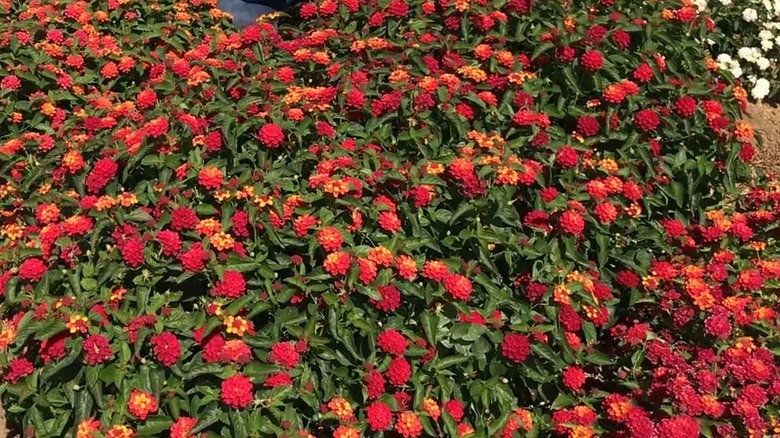
'Bloomify Red' lantana is a completely sterile variety. As its resources aren't wasted on seed production, it expends all energy into producing a spectacular show. From June through October, its compact mound is swathed in clusters of red, gold, and orange flowers, which pollinators find attractive. In fact, it's one of the best red flowering shrubs to attract hummingbirds all spring or summer long. Beyond zones 9 through 11, it's grown as an annual. However, if you have the space, consider moving it indoors during winter. Since it's patented, propagating new cuttings is illegal.
'Landmark Citrus'
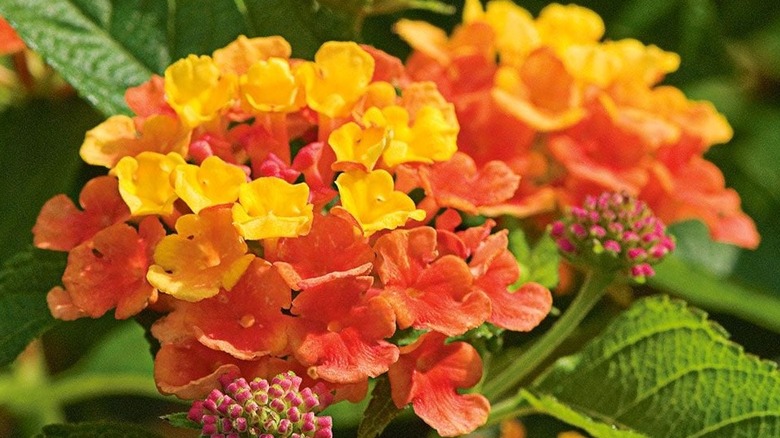
Bred by Ball Flora Plant, 'Landmark Citrus' lantana is sure to wrap your garden in a sunlit glow with its precious clusters of tangerine-lemon petals. The flowering season starts in late spring and ends when frost kills the plant. 'Landmark Citrus' can flourish in the hot, humid, and dry conditions of southern gardens, though it has shown its best performance when potted in small containers. It can grow about 20 inches high and slightly wider. Be sure to give it lots of sun, or it risks contracting powdery mildew, which can affect its appearance.
'Lucky Lemon Glow'
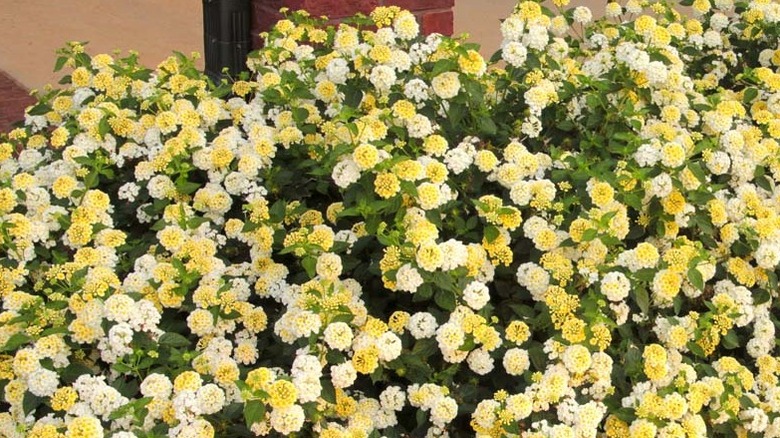
'Lucky Lemon Glow' lantana promises a long blooming season, running through late spring to frost. Sprays of lemon-white flowers complement the wrinkled green leaves, gaining traction from butterflies and hummingbirds. Since they don't produce many drupes, which contain seeds, they focus their resources on flower production, ensuring a bountiful display atop a tidy mound. They max out at 2 feet up and across, and can be used to fill in small gaps or mask the dying foliage of early bloomers in mixed beds and borders. In zones 9 and cooler, they're grown as annuals.
'Shamrock Rose Gold'
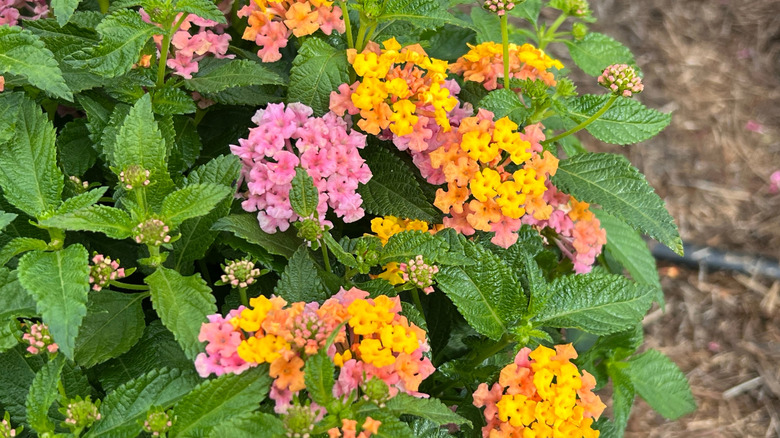
One of the top 10 performers in UMN's 2024 annual flower trials, 'Shamrock Rose Gold' lantana is another excellent addition for sunny containers and baskets. Throughout the growing season, it retains a well-branched, uniform habit, sans the use of pruning shears. Butterflies and hummingbirds visit the stunningly ombre rose gold flowers emerging from the scented foliage during the summer. They don't require much watering, though they benefit from regular fertilization (to maintain their vigorous display) when potted up. They die back when temperatures slip below 32 degrees Fahrenheit.
'Dallas Red'
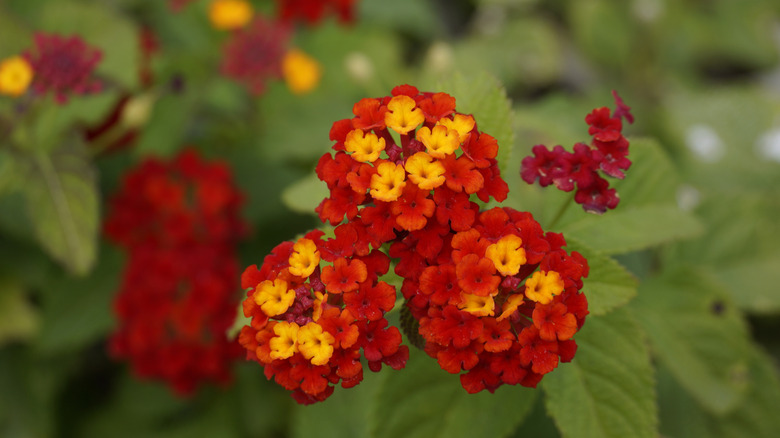
Struggling to grow flowers along a west or south-facing wall during the summer? With 'Dallas Red' lantana, you won't have to, as it thrives in intense summer heat. Blooms initially turn up as orange and age into red, though they soon take on the form of two-toned flowerheads. Although they're perennials in zones 9 and warmer, you can extend their range into zone 8. For that, lay down winter mulch and retain the dead foliage so the roots are protected from the cold. You can cut back the plant in early spring before new stems and leaves emerge.
'PassionFruit'
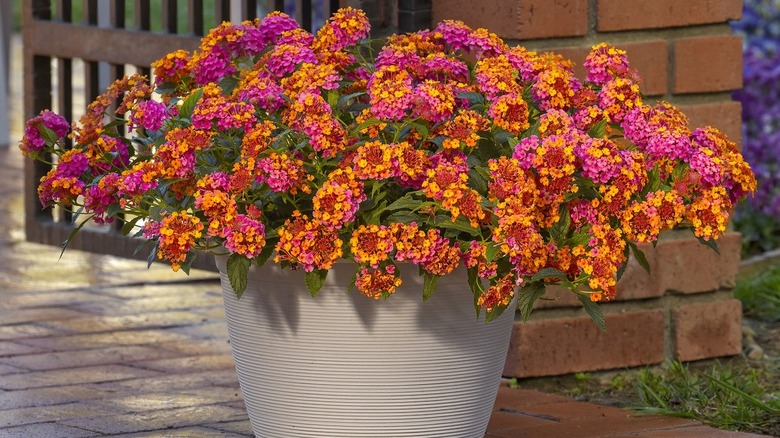
Want more color in your hanging baskets but can't seem to nail the contrast? Just grow 'PassionFruit' lantana. From June through October, the trailing stems are clothed in a mass of blazing yellow, pink, and orange blooms that garner lots of buzz from bees and butterflies. At 1 ½ feet, the mound remains compact and tidy without much upkeep. 'PassionFruit' can tolerate drought, heat, and salt, and is usually unbothered by pests, including deer. If desired, you may also grow it as a perennial groundcover in zones 9 through 11. It can take light shade, but performs best with full sun.