

Does Your Spider Plant Have Broken Or Bent Leaves? Here's What You Should Do
We may receive a commission on purchases made from links.
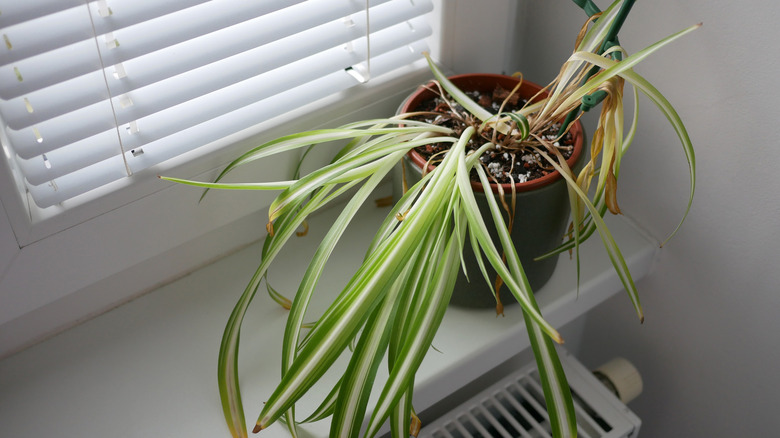
We know what a healthy, beautiful spider plant should look like. A plant in good condition has bright green or striped white leaves and can grow up to 3 feet long. They emerge gracefully from the center of the plant, forming a gentle arc as they cascade downward like a fountain. Occasionally, however, you may see leaves that, simply put, don't look right. They may be bent to the point where you can feel a crease in them or they may have broken off completely.
This is not a houseplant issue to take lightly. Bent leaves may indicate damage to the plant's vascular tissues, which can affect photosynthesis and how the plant transports water. Fortunately, it's not that difficult to work out the cause of bent or broken leaves and make sure it doesn't happen again. First, diagnose the problem, then remedy it, and finally, remove the damaged leaf.
Bent and broken spider plant leaves are usually the result of improper care. Even if you think you've learned everything you should know before planting a spider plant, there are likely gaps in your knowledge. One issue typically tops the list — watering problems. Before we get into the full diagnosis process, you need to rule out physical damage. For example, bending or breaking can occur if a leaf gets trapped underneath the pot or if the pot takes a tumble. Repotting your spider plant into a hanging planter is a good preventive measure in both cases.
Watering issues top the list of possible causes of bent and broken leaves
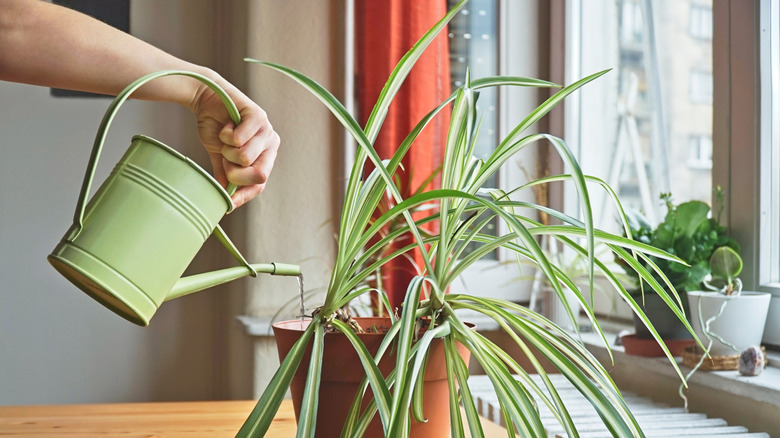
If you've ruled out physical leaf damage, it's time to look at underwatering and overwatering as possible causes. A close inspection and even feeling the leaves of your spider plant can help you diagnose the issue. If the leaves are bending and yellowing, overwatering may be the problem. Cut back on watering, irrigating the plant only when the top 2 inches of soil feel dry. Also consider buying a moisture meter. You may really need one for your houseplants. An Xlux Long-Probe Deep-Use Soil Moisture Meter Sensor costs about $17. If the leaves feel dry and crackly, underwatering is probably the culprit, especially if the soil also feels dry or there is a gap between the pot and soil. Water immediately, and monitor the plant with your moisture meter going forward.
Bent or broken leaves can also be caused by crowded or rotting roots or improper lighting. Soft or mushy leaves often indicate roots in a similar condition. The best way to treat root rot on spider plants is to repot the plant after drying out the root ball. It may or may not recover. If a green, healthy plant is bending toward the light, the site might be too shady. Low humidity can cause bent or broken leaves, too. Set up a humidifier in the room or pop the pot on a pebble tray to add moisture to the air. Nutrient deficiency is another possible cause. Fertilizer bolsters foliage strength and should keep your spider plants happy and healthy. Use a water-soluble fertilizer with an NPK ratio of 10-10-10 or 15-15-15.
Cut off damaged leaves since they don't repair themselves
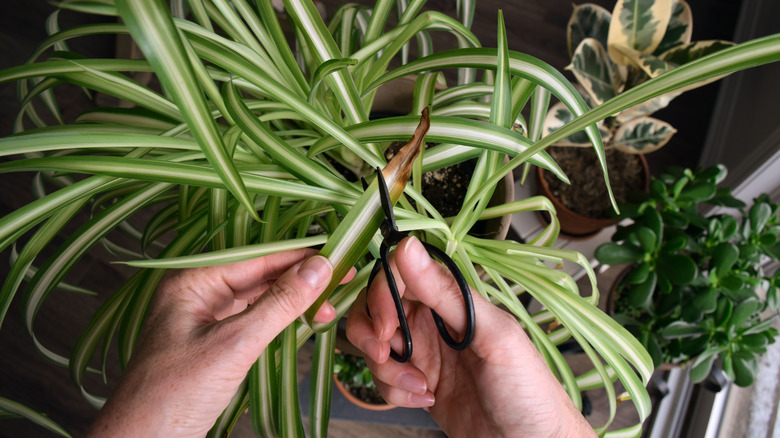
Once a spider plant leaf is bent or broken, it won't keep growing or fix itself. Cut off the entire leaf at the base using Fiskars Indoor Gardening Detail Snippers or similar small pruners. If the plant is otherwise healthy, it will quickly grow new foliage to patch the gap left by the leaf — or leaves — you just removed. Inspecting your spider plant regularly with both your eyes and your hands is key to fixing and preventing problems with broken and bent leaves.
By becoming familiar with how your houseplant looks when it's at its healthiest, you will be able to spot funky-looking foliage right when the deterioration first begins. You also need to be aware of any recent changes to your spider plant care — they could be causing foliage concerns. Garden journals aren't just for outdoor plants: you can keep one for your houseplants, too. Buy a Lilly & Alexia Plant Care Journal for about $7 or download an online template on a productivity platform like Notion.
If you've tried this fix and addressed any of the aforementioned issues and still have bent or broken leaves, it's time to dig deep into other, more serious causes. Have you recently repotted your plant? It could be suffering from repotting stress. Exposure to common household chemicals, a pot that's the wrong size, or a pot that doesn't have drainage holes could be the cause, too.