

From Plumbing To Pest & Diseases, This Tree Comes With Many Downsides
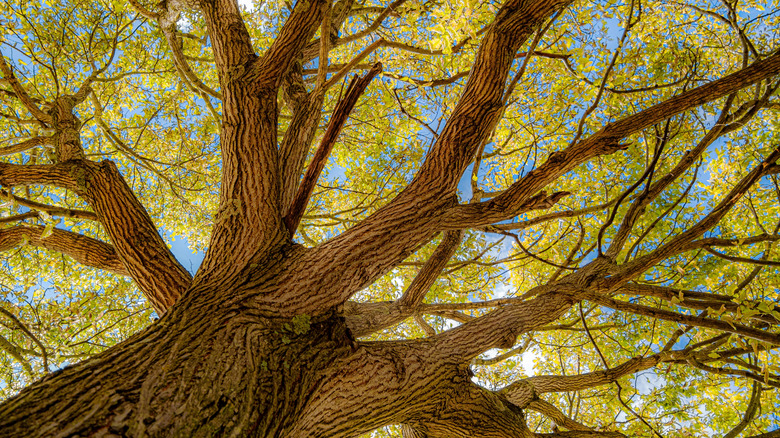
Summertime shade might be the most obvious benefit trees provide, but they also improve air quality, cool the air, and increase property value. Research shows that trees improve mental and physical health, and over their lifetime, they return two or three times the investment of time and effort it takes to maintain them. The tall trunks, arching branches, and serrated leaves of elm trees (Ulmus spp.) make them a tempting choice for yards, but the downsides might give you second thoughts about introducing them into your landscape. Intrusive roots, tree-killing diseases, and susceptibility to a host of pests require a little extra diligence on your part to maintain a healthy tree.
Despite their drawbacks, fast-growing, long-lived elm trees were a common sight across the North American landscape until the introduction of Dutch elm disease in 1931. The disease killed millions of trees, but efforts are under way to control it in existing trees and develop disease-resistant cultivars. Elms, found in zones 3a to 9b, can grow 100 feet tall and spread 80 feet wide. The roots of elm trees grow rapidly and can damage underground pipes and sprinkler systems. While the roots don't break the pipes, they find cracks or bad joints to grow into. Once inside, they continue to grow and clog the pipes, causing backups. A large elm tree too close to your home can cause the foundation to settle. If you choose to plant elm trees, make sure there is at least a 5 to 10 foot buffer between the tree and underground pipes.
Controlling elm diseases and pests
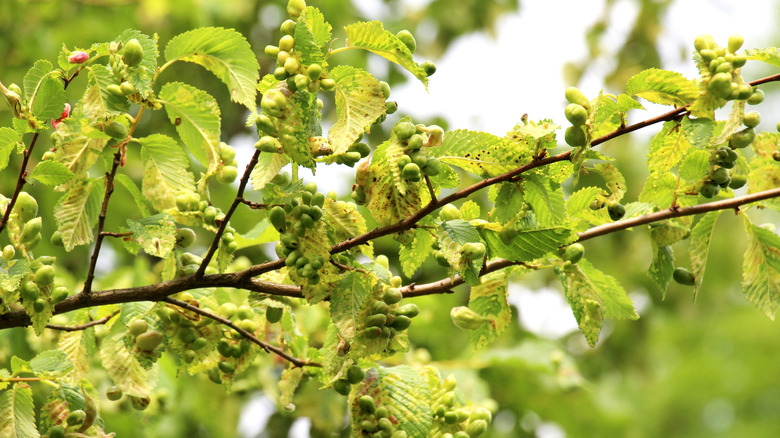
No American elm is resistant to Dutch elm disease, though some have tolerance and can survive attacks by the fungal pathogen that kills trees. Identify Dutch elm disease by looking for leaves turning yellow, wilting, browning, and dropping from the tree, it could be a sign of Dutch elm disease. Highly susceptible trees may die within the first year. If you think you have an affected tree, send a diseased sample to your county extension office to confirm the disease, then prune the elm tree, focusing on the affected branches. If the disease is widespread, you should probably remove the entire tree. There is a fungicide that can be effective against the Dutch elm disease that's spread by beetles, but it has to be injected by a professional and treatments have to continue for the lifespan of the tree. Elms are also susceptible to a number of other diseases like anthracnose, canker diseases, and verticillium wilt that can be successfully treated if they're caught in time.
In addition to diseases, elm trees suffer from a number of pests, including leaf borers like Japanese beetles and fall webworms, sap feeders such as mites and aphids, galls, and borers. Treatments for pest infestations range from physically removing beetles by hand to insecticides. Keeping the tree healthy with proper watering, fertilization, and pruning boosts its ability to ward off disease and pests. Introducing natural predators like ladybugs can help reduce the amount of insecticide you need to use on pests like aphids. Inspect your elms regularly for signs of distress like excessive leaf drop or sticky substances on the leaves, and act quickly to nip problems in the bud.