

Keep Your Pots And Pans Clean With A Tip From Martha Stewart's Housekeeper

We may receive a commission on purchases made from links.
If you've ever caught a glimpse of Martha Stewart's kitchen at The Bedford in Las Vegas, you know it's a masterclass in organization and polish. The expansive collection of pots and pans there hangs like functional art, free from any sign of the dull tarnish or crusty buildup that usually plagues well-used cookware. While most of us struggle with stubborn rainbow stains or white mineral spots from hard water, Stewart discovered a secret weapon for them — or rather, her longtime housekeeper, Enma, did. In an Instagram post, she revealed that the key is a product found at almost any local hardware store: CLR Calcium, Lime, & Rust Remover. That's right, the cleaner used to tackle the toughest toilet bowl stains will also work wonders on your pots and pans.
The magic of this particular tip lies in the chemistry of the cleaner. Most dish soaps are designed to cut through grease and oil, but they can't permanently get rid of mineral deposits left behind by boiling tap water or high heat. These deposits — usually called scale or limescale — can damage home appliances and make even the most expensive pans look old and neglected. That's where an acidic cleaner like CLR comes in. The professional-grade acidic cleaner that will dissolve those nasty mineral deposits quickly. This tip from Enma — and by extension, Stewart — is a great insider hack that proves you don't need to spend hours scrubbing if you have the right cleaning formula in your cabinet. Talk about working smart, not hard!
How to use CLR on your pots, pans, and other cookware
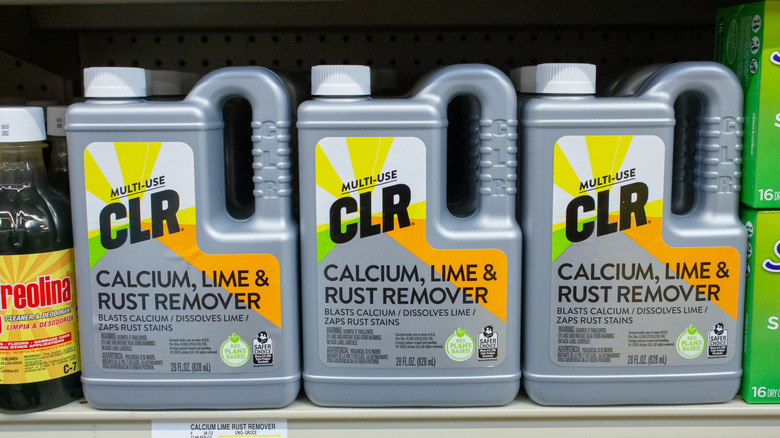
It might be tough to know when your stainless steel pans need a deep clean, but getting them Martha Stewart-level clean is easy. Per her post on Instagram, all you need to do is "Follow the directions , make sure you wash well with soap and rinse , and your equipment will look like new in a very short time!!!!!!" For light mineral spots, the standard 1:1 ratio of CLR and warm water works fine. If there's a ton of heavy buildup, use more CLR and then scrub away using a sponge or microfiber cloth.
Regardless of how much CLR you decide to use, all you need to do is let it sit for two minutes so it can break down that buildup. Once the gunk looks like it has dissolved, go ahead and rinse it off right away with cold water. Do note that CLR is not safe on all surfaces, including laminates, natural stone, and anything cracked. The manufacturer recommends doing a small spot check on a hidden area first before going big, just to be sure it doesn't affect the finish.
With CLR, you won't have to worry about disposing of your old pots and pans; a few minutes of soaking and they'll regain the like-new shimmer that'd make Stewart (and Enma) proud. To make sure you're staying safe when working with an acidic cleaner like CLR, Stewart recommended wearing gloves to protect your skin. You should also work somewhere with good ventilation. Avoid using steel wool or other harsh abrasive pads with it, since they can damage your pan's finish.