

Avoid A Major Cooking Hazard By Reading This Important Extension Cord Advice
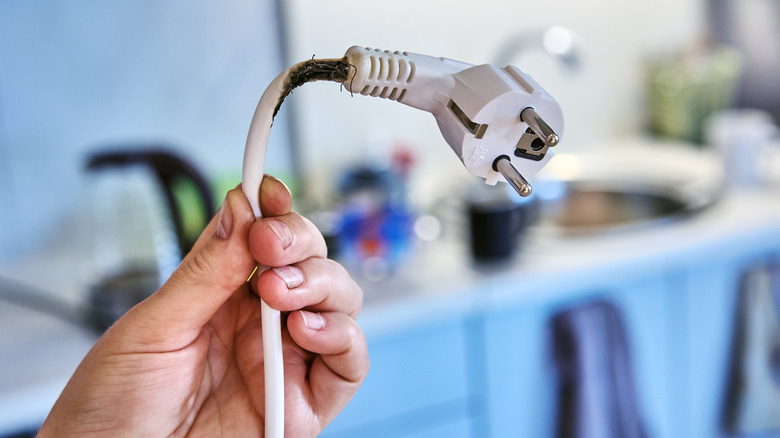
As helpful as they can be around the house, there are a few places you should never use extension cords. One of the most risky locations is the kitchen. It may be tempting to utilize an extension cord while cooking to plug in your handy kitchen tools, like your air fryer or slow cooker, especially if you don't have a ton of wall outlets or countertop space handy. However, this can be a huge safety and fire risk. Most kitchen appliances are actually pretty powerful and need a large amount of energy, which your extension cords are not typically designed to handle. This means your cords can easily become overloaded, causing them to overheat and potentially catch on fire. In general, you want to avoid using extension cords as permanent wiring, and only plug them in when needed.
Kitchens tend to see a good amount of water and moisture, two things extension cords should not be used or stored near. Depending on the layout of your kitchen, chances are you have a few outlets near your sink or dishwasher. If extension cords come in contact with water, even when not in use, and especially if the cords are very used or frayed, they could cause an electric shock.
Also note that an extension cord is different from a power strip, which contains multiple outlets. While a power strip allows for several appliances to be plugged in at once for longer periods of time, extension cords are intended for non-permanent use. Extension cords do not typically contain the safety features of a power strip, including surge protection. (There are also items you should avoid plugging into a power strip.)
Don't plug these appliances into extension cords
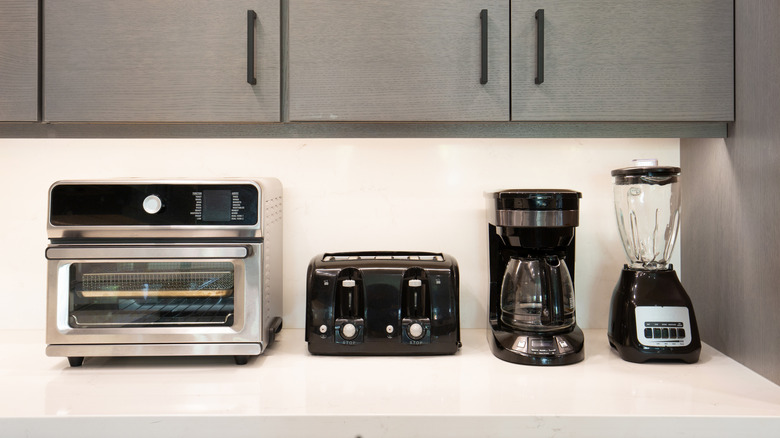
When cooking or using your kitchen in any way, remember that plugging certain appliances into an extension cord can be a major fire hazard. Instead, they should be connected directly to a wall outlet. Items like air fryers, toasters, toaster ovens, microwaves, and slow cookers are not meant for extension cord use. These appliances require more power than extension cords are designed to handle. Try sticking by a general rule of thumb: If an appliance requires over 1,800 watts, you should always utilize a wall outlet.
When an extension cord gets overloaded, like it could with one of these appliances, it can grow extremely hot, making it painful to touch. The plastic of the cord itself can melt and even expose the live wires. A few ways to tell if your extension cord is overloading are that it's hot to the touch, it has turned a different color, or the lights in your home flicker when you use it.