

Every 1970s Yard Had This Feature - Now Homeowners Love It For Its Sustainability
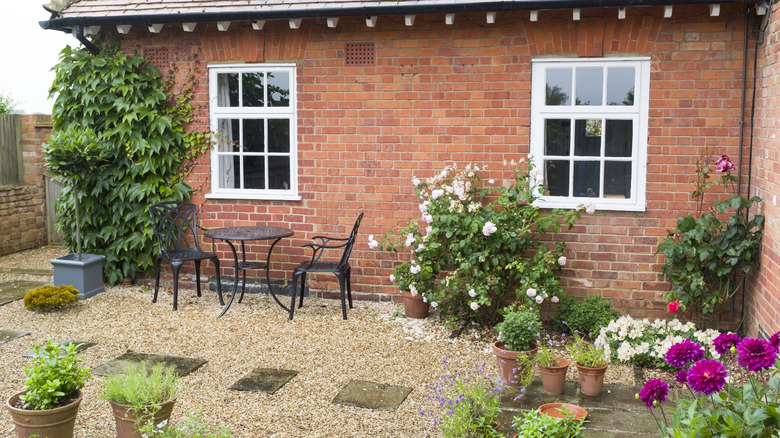
Like all fashions, yard trends tend to come and go. Back in the 1970s there was far less concern about eco-friendly gardening ideas and sustainability, yet there is a feature that was popular from way back then that has now come full circle. Homeowners are once again loving gravel patios.
There are some very good reasons for this revival. Gravel is more affordable than other patio materials, easier to work with, and low maintenance. Yet while it might seem like a simple material, there are some stunning gravel ideas to transform your outdoor space. Ever-increasing watering restrictions in many areas are causing lawns and borders to suffer, making gravel an efficient, drought-tolerant alternative. Succulents and cacti are obvious companions for gravel. There is a huge range to choose from, including flowering varieties, depending on your climate. There are also other beautiful plants that grow well in gravel that will attract birds and butterflies to your yard.
Gravel has other sustainability benefits. It is a natural product and easier to produce than concrete pavers, for example, so it has a lower carbon footprint. It's permeable, so rainwater drains more easily than through many other patio materials. That also means it returns to the groundwater system more quickly, benefiting the environment in general.
Practical and sustainability considerations when installing a gravel patio
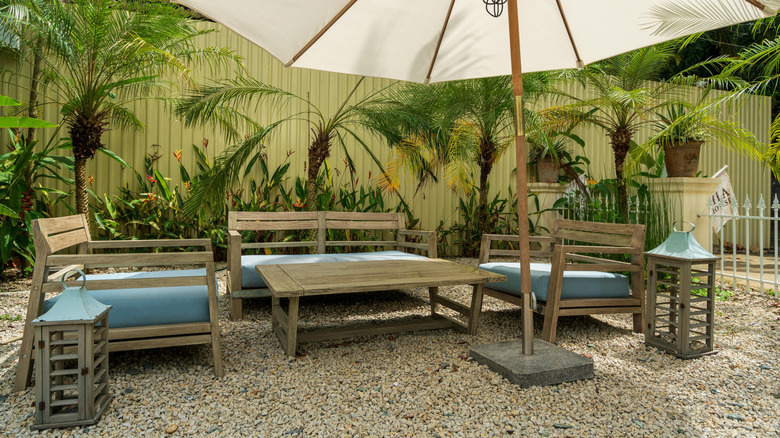
If you thought gravel was just dull grey or brown, think again. There are many different types of gravel to consider, so you have a surprisingly large color palette to choose from. Concrete and glass can also be crushed and recycled as gravel.
When laying a paver patio, there's a lot of work involved in digging down to create a stable sub-base (which often uses gravel) and then ensuring the surface is level. However, even when done well, pooling water can be an issue. Gravel is much easier and more forgiving, but weed growth can be a nuisance, so it's a good idea to lay down some kind of membrane first. Landscape fabric is popular but normally made from polypropylene, which relies on fossil fuel production and is not biodegradable. Fortunately, burlap is a natural alternative to keep weeds at bay so the whole project can stay as sustainable as possible.
If you really want to max out on your sustainable credentials, buy gravel that's produced as locally as possible. It cuts down on delivery miles and supports your local economy. That said, you should also check that the supplier follows environmental extraction guidelines that minimize damage to ecosystems. Some have land rehabilitation plans to return old workings to a natural state. Members of the National Stone, Sand, and Gravel Association (NSSGA) also receive assistance with sustainable initiatives.