

Martha Stewart Reveals The Storage Error That's Ruining Your Fine Silverware

Your fine pieces of silverware deserve love, and this does not just refer to washing them regularly, or even preventing tarnish by cleaning them by hand, like how Martha Stewart takes care of her shiny flatware pieces. Proper storage — the kind that will not scratch, damage, or ruin them — is a must. Sure, you can breathe new life into dull silverware with a cleaning solution, but you wouldn't have to put so much elbow grease into keeping the family heirloom spick and span if you had stored the pieces the right way. According to Stewart, one major storage error that's ruining silverware is stacking the pieces together, which makes sense, since they will bump and rub against each other, and the friction will cause them to scratch or even dent.
So what does Martha recommend to preserve the silverware's integrity? She says silver flatware should be kept in a drawer lined with fabric, and the pieces should never be stacked, but instead arranged in a single layer. There's no need for dividers in the drawer, as this will just eat up space and decrease the flat area intended for the pieces. Additionally, Stewart specifically recommends tarnish-controlling flannel or 100% cotton fabrics with an anti-tarnish chemical, such as zinc carbonate. "Shallow drawers lined with tarnish-controlling flannel provide the right environment for silver," she quipped (via her website).
How to implement Martha Stewart's silverware storage solution in your kitchen
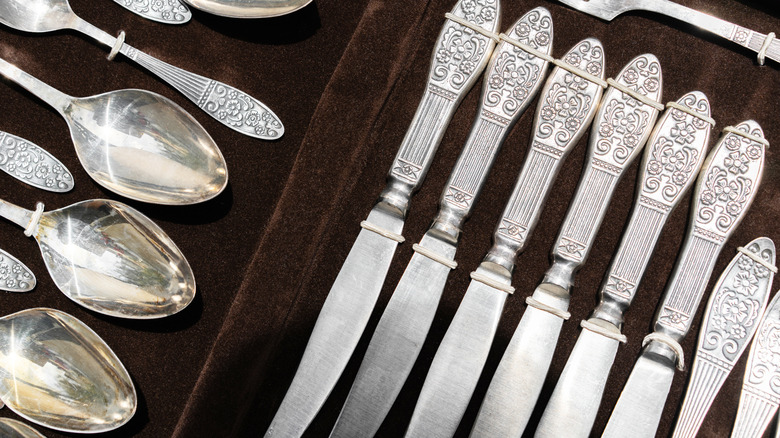
Martha Stewart's storage tricks are lifesavers, and her tip to counter the storage error that's destroying fine silverware is no different. If you want to preserve your flatware and spare it from unnecessary damage caused by stacking, you need to fully commit to the homemaking expert's recommendation. Start by designating a drawer in your kitchen as the storage space for your silver cutlery. If one is not enough to accommodate all your pieces, add a second drawer instead of using stackable trays to force all of them into one compartment. Next, measure your drawer, ensuring that the tarnish-controlling flannel can perfectly line its base. Any crumpling will lead to stacking, which, again, you should avoid for the safety of your silverware.
Now, it's important to point out that your silverware collection should be stored separately from your everyday utensils. Regular forks, knives, and spoons are mostly made of stainless steel instead of silver. As such, you can store your everyday cutlery in a separate drawer with organizers and dividers to keep things tidy. There's no need to worry about them stacking or scratching each other, as they tend to be way more affordable than actual silverware, and they're more durable and low-maintenance, too.