

What You're Doing Wrong That's Preventing Your Spider Plant From Flowering
We may receive a commission on purchases made from links.
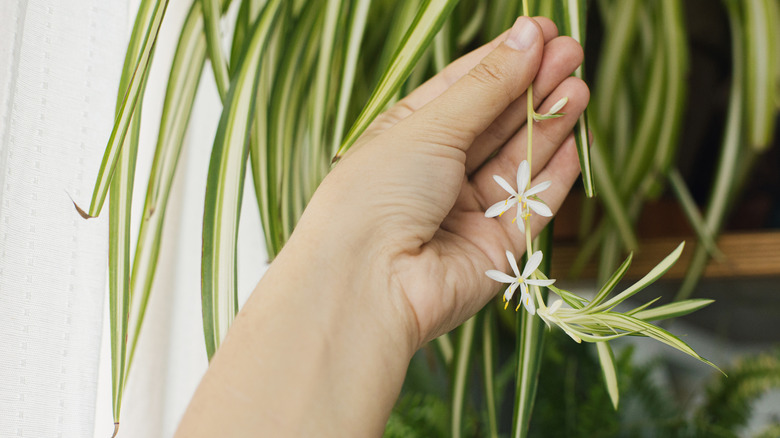
A spider plant (Chlorophytum comosum) can look healthy with plenty of bright green leaves while refusing to produce trailing babies and tiny white flowers. Many people assume that as long as their plant isn't wilting or turning brown, it's doing great. However, if a spider plant is refusing to bloom, it's a sign that something is missing in its environment. We're all guilty of holding our spider plants back by underestimating their needs, likely because they're so resilient.
For example, while these houseplants are famous for surviving in any dimly lit corner of a room, they won't bloom if they're experiencing a lack of light. To grow flowers, a spider plant needs bright, indirect light (not direct sun) for at least six hours a day. If it sits in a spot with weak light, it focuses all its energy on maintaining its existing leaves. It simply can't produce the long stems the flowers grow on.
Even with perfect lighting, other factors like age and the size of the container play a role. A young spider plant needs a few years before it's even capable of blooming, and if the pot is too large or the plant is over-fertilized, it will focus on growing leaves over blooming. Chilly temperatures can play a part in a lack of blooming, too.
Moving your spider plant to a warmer spot may encourage blooming
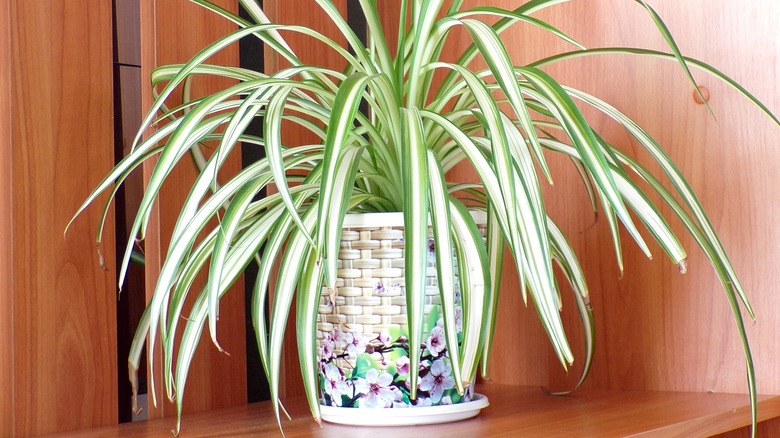
Temperature plays a significant role in the flowering cycle of a spider plant, and a chilly room can be a key reason why it's not blooming. Outdoors, these perennials thrive in USDA Hardiness Zones 9 through 11; when kept indoors, they prefer temperatures that stay between 65 and 75 degrees Fahrenheit during the day. If your spider plant is sitting near a drafty window in the winter or under an air conditioning vent in the summer, the fluctuations in temperature can prevent flowering. Consistent warmth signals to the plant that it's spring or summer, when it attempts to reproduce. If the air is too cold, the plant enters a dormant phase, where it saves its strength for basic survival.
Soil temperature also matters. Cold water straight from the faucet can chill the root ball, which stresses the plant. It's better to use room-temperature water. The type of pot you use also affects how much heat the roots hold. Unglazed terracotta is porous and moisture evaporates quickly, which can pull heat away from the soil, chilling the roots. Keep your spider plant happy and healthy and the soil in its pot warm by keeping it away from cold window glass or floor drafts. You can also group it with other houseplants to create a bubble of warm, humid air. When the air is both dry and cool, the plant has to work so hard to stay alive that it won't bother with flowering.
Changing your fertilizer and pot size can help a spider plant produce flowers
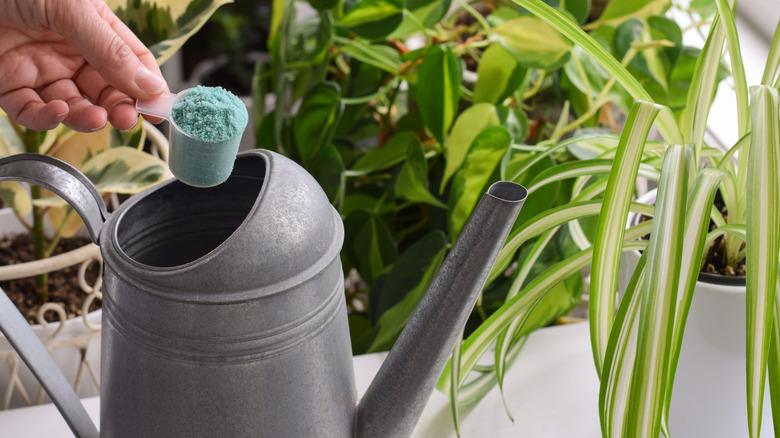
Even with the right light and heat, your spider plant still might not flower if it's sitting in a container that's too large or if it's getting the wrong nutrients. Spider plants prefer to be slightly root-bound to produce flowers and baby plants. A snug fit in a smaller pot creates a bit of stress that often triggers the plant to send out runners in search of more root space. Many people also use a standard high-nitrogen fertilizer to keep houseplant leaves green, but nitrogen promotes foliage growth at the expense of flowering. Fertilizer salts can also encrust the soil, burning root tips and blocking phosphorus uptake. Switching to a bloom-boosting fertilizer with a higher phosphorus content, like Miracle-Gro Blooming Houseplant Food, can give the plant the signal it needs.
The age of the plant is another factor, since spider plants typically won't bloom until they are at least a year old. A young plant is still focused on establishing its roots and won't have enough stored energy to grow flower stalks. The type of soil also dictates how the plant manages its energy and how often to water a spider plant so it lives happily for years to come. If the soil is too dense or drains poorly, the roots become waterlogged, leading to rot. An unhealthy plant won't flower. Using a well-draining potting mix allows the roots to store water without suffocating. Repotting your plant into fresh soil and a new but relatively small pot every few years will support and encourage better blooming.