

10 Stunning Wildflowers That Bloom In March
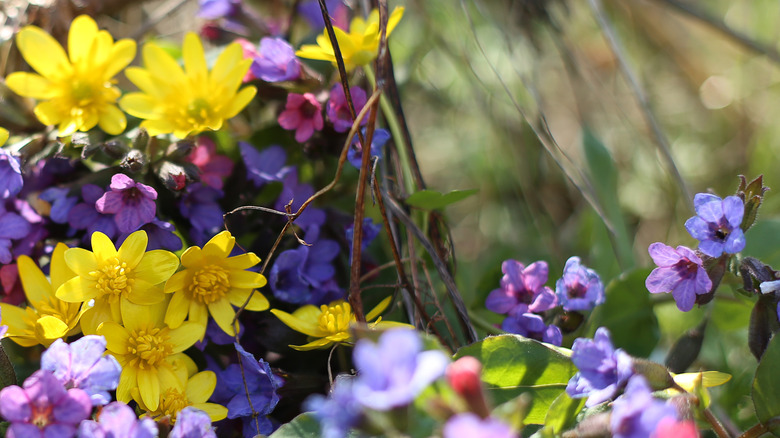
By late winter, many of us gardeners are getting anxious for signs of spring, and some may start looking for the slightest hint of color in the landscape. That's why, when early spring wildflowers begin to bloom, it is a hopeful sign that warm days are soon approaching, and we can finally allow ourselves to get excited. Some of the most stunning wildflowers that bloom in the month of March are Virginia bluebells, bloodroot, and the striking dwarf-crested iris, just to name a few.
You may want to consider adding a few of these to your own flower garden. Many varieties of wildflowers are just as beautiful and interesting as cultivated garden flowers. They also play an important role in the ecosystem — especially March-blooming varieties. They provide a much-needed food source for pollinators returning after a long winter. In their natural habitat, they can also improve soil quality and help prevent erosion. Planting a patch of wildflowers in your lawn is a wonderful way to support your local pollinators.
You could even consider intentionally transplanting colorful wildflowers into your garden for a touch of charm. Perennial wildflowers growing on the edge of your property can be divided and transplanted into your garden while they are dormant, while annual wildflowers can be grown from seed heads collected in the fall. It's not a good idea to transplant wildflowers from just anywhere, however, as this can sometimes be illegal. It's best to stick to the wildflowers you find around your property. You should be able to find them in yards, along fence lines, under or near trees, and often along streams.
Virginia bluebell
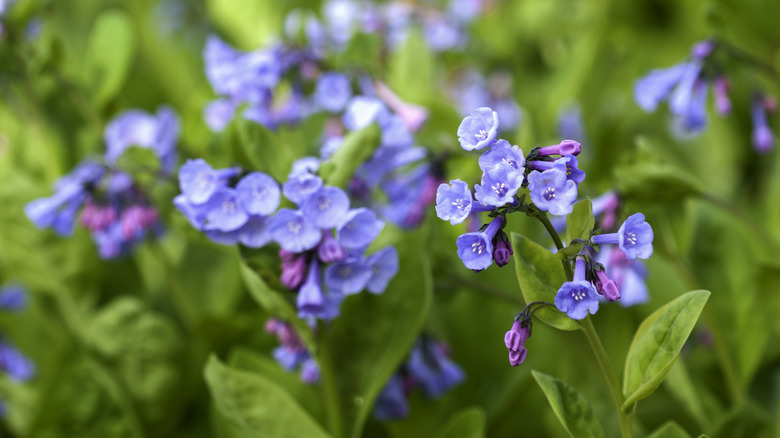
Virginia bluebells (Mertensia virginica) are lovely wildflowers that grow up to 2 feet tall and have clusters of trumpet-shaped blooms that go from pink to blue once fully open in March. They prefer moist, wooded areas and would be best transplanted near a water feature in a shady spot of your garden. They are hardy in USDA Hardiness Zones 3 through 9. Because they prefer not to be disturbed once established, it is best to plant these wildflowers in your garden as seeds or seedlings.
Bloodroot
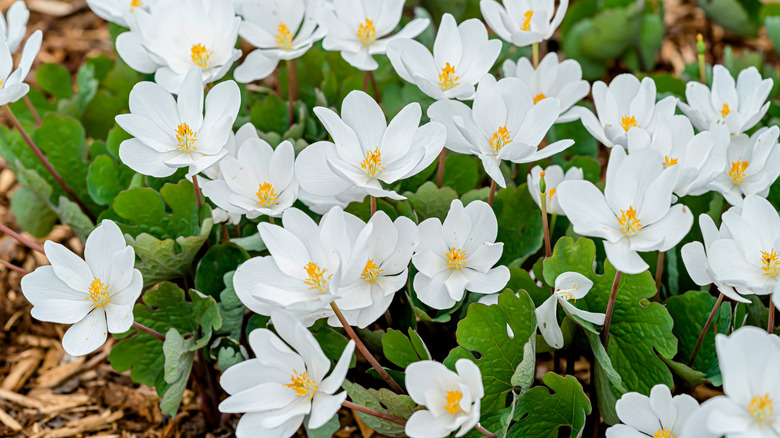
Bloodroot (Sanguinaria canadensis), while having lovely, large white flowers, gets its name from its blood-red sap. Bloodroot is native to the eastern U.S. Sadly, this is one March-blooming wildflower on our list that has been over-collected and shouldn't be taken from the wild. If you would like to grow bloodroot in your garden, buy seeds from a trusted source. It does well in similar conditions to the Virginia bluebell. Plant in an area with moist, well-draining soil and good shade. You should also be aware that this wildflower should never be consumed, as it is toxic to humans.
Dwarf-crested iris
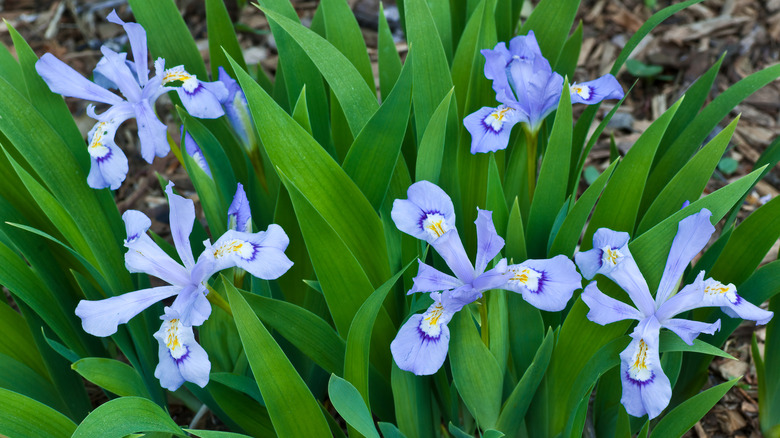
The dwarf-crested iris (Iris cristata) is a dainty, native version of the common garden flower. It comes in a range of stunning colors, including lavender, yellow, and white. This flower would make a perfect addition to a garden border for a pop of March color. Because it's a dwarf species, it only grows 4 to 9 inches tall. It's right at home in gardens within zones 3 to 9. It is an herbaceous perennial that grows from rhizomes you can purchase and plant in your garden, or that can be propagated by division in the fall. This wildflower prefers to grow in regular, well-draining soil that is not overly rich.
Dutchman's breeches
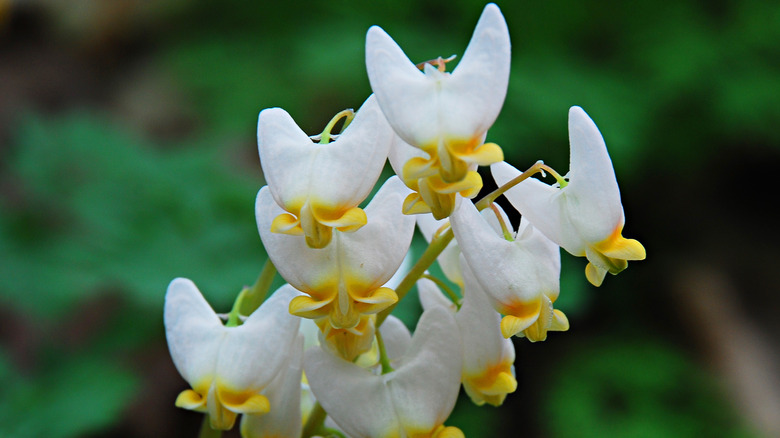
One of the more interesting-looking wildflowers on our list is Dutchman's breeches (Dicentra cucullaria). The name for this stunning perennial comes from the shape of its white and yellow flowers, which look like upside-down pantaloons. You can propagate this wildflower by division in the spring. Dutchman's breeches do well if grown in humus-rich soil in zones 3 to 7. You can add it to a wooded area with moist soil and shaded from harsh sun. Pollinators will come flocking to enjoy the blooms. Keep in mind that this plant is toxic to humans if ingested.
Common blue violet
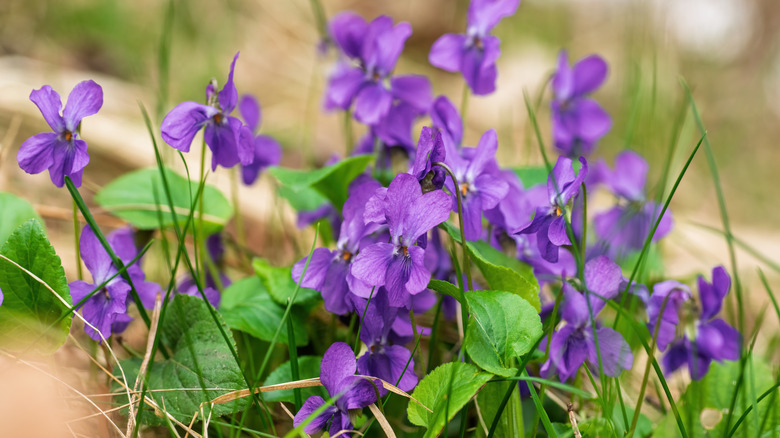
The common blue violet (Viola sororia) is generally found in the central and eastern U.S. in zones 3 to 7. It's a sure sign of spring's arrival when you spot these beautiful blueish-purple flowers popping up all over your yard. The common blue violet is an herbaceous perennial that is generally self-seeding, but you can propagate it through division in the spring or fall. These make an excellent ground cover or colorful border for a garden. While they prefer moist, shady soil, they are very adaptable.
Desert marigold
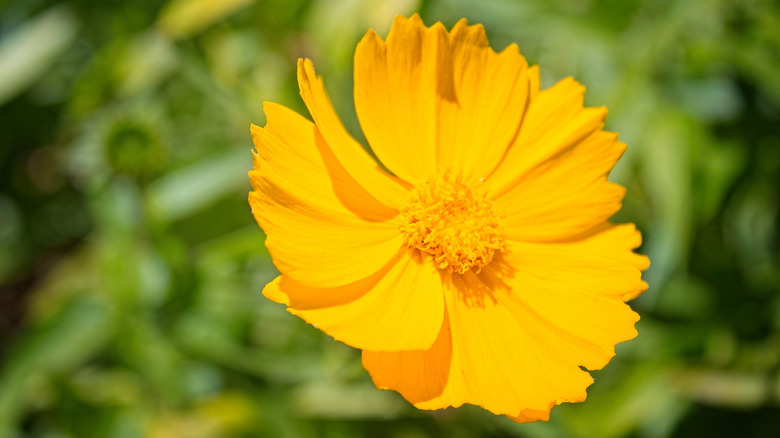
The desert marigold (Baileya multiradiata) is a cheery, tall, yellow wildflower with striking 2-inch blooms. This plant is native to the southwestern U.S. (making it an excellent choice for desert gardens) and does well in zones 7 to 10. The desert marigold is a self-seeding biennial or short-lived perennial, but you can collect seeds in the fall to be planted in early spring. Because of its adaptation to desert regions, the desert marigold is drought-tolerant and thrives in full sun.
Red trillium
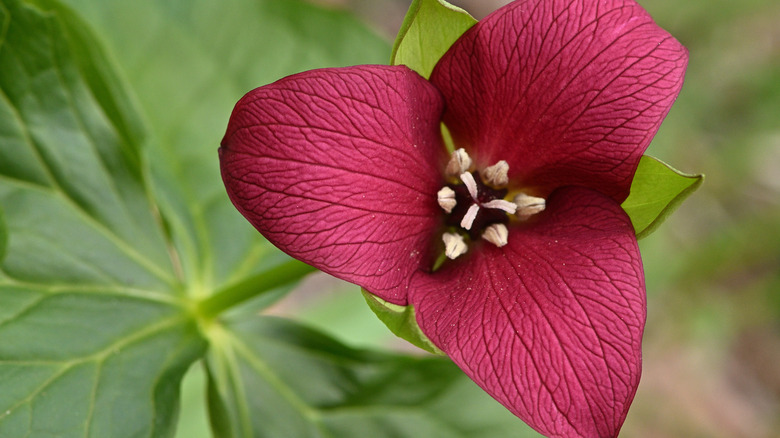
A stunning wildflower, the red trillium (Trillium erectum) can be a dramatic addition to a wildflower garden, with its deep red blooms, which can pop up as early as March. It's an herbaceous perennial that thrives in a variety of soil types in zones 4 to 7. This wildflower does well in shady areas of the garden with only partial sun and moist, well-draining soil. While it has beautiful blooms, it does not have a pleasant odor. Plant it by division or seed in an area where you can admire it from afar.
Spring beauty
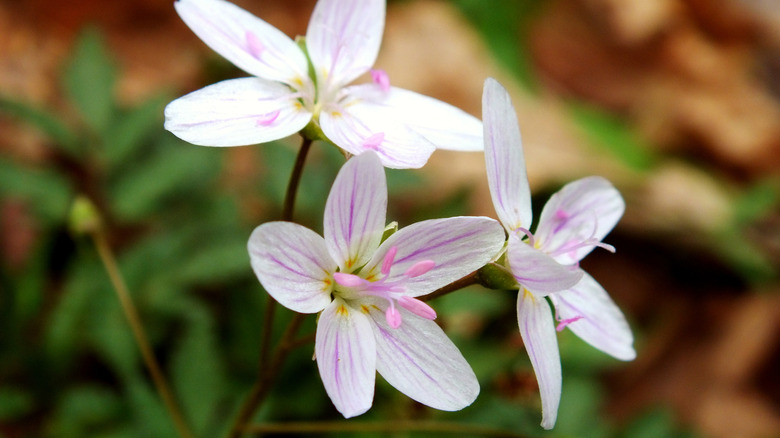
The spring beauty (Claytonia virginica) is a small plant that grows to just under a foot tall in zones 3 to 8. Its large white flowers (1 inch wide) often have a pinkish hue or stripes that are quite dramatic for such a small perennial plant. It grows from tubers that can be propagated in the fall for use in a wildflower garden border. The spring beauty should be planted in well-draining soil with plenty of organic matter in a location with partial shade.
Pasque flower
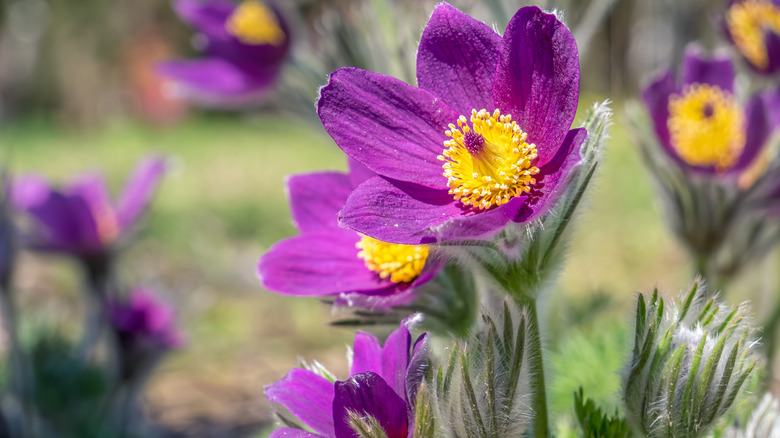
The pasque flower (Pulsatilla vulgaris) is generally one of the first flowers to bloom in the spring, making a dramatic entrance with its large, violet blooms. This wildflower thrives in humus-rich, well-draining soils and full sun in zones 4 to 8. In warmer regions, you will need to keep it watered frequently. The pasque flower is a shorter wildflower (6 to 12 inches) that would do well as a border plant for your garden. You can propagate this herbaceous perennial by seed, root cuttings, or division, but once established, it likes to stay where it is.
Round-lobed hepatica
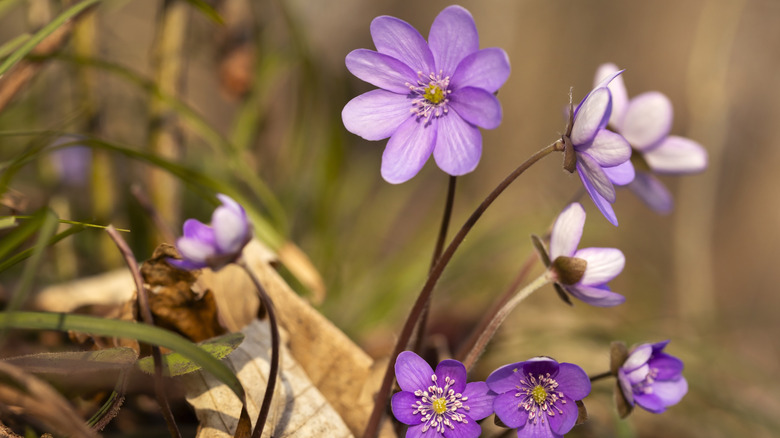
The round-lobed hepatica (Hepatica americana) is one of the shorter wildflowers on our list (just 9 inches in height) with stunningly large purple, pink, or white flowers for its size. It's native to woodlands in zones 3 to 8, which means it does well in rich, moist soil in partial or dappled sun. This perennial can be propagated through seed or division. If you want to try division, wait until after it is done blooming.