

How To Turn A Simple Spider Plant Into A Stunning Bonsai
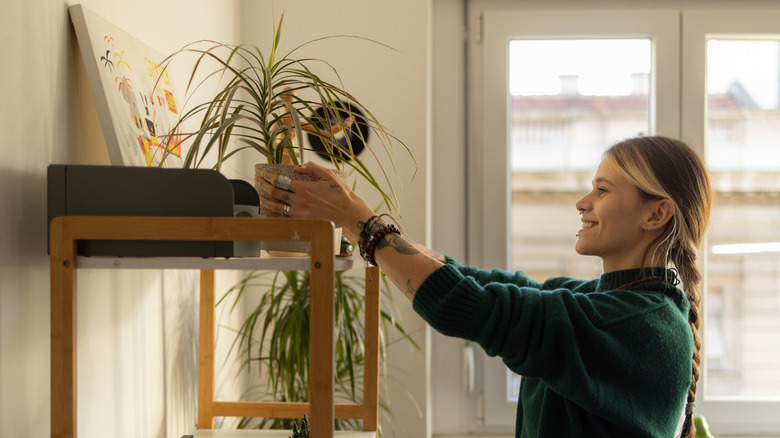
Spider plants (Chlorophytum comosum) are a popular indoor plant, loved for their arching, variegated leaves and easygoing nature. While we usually see them spilling out of hanging baskets, they can also be transformed to have a bonsai-style look. Even though spider plants lack the woody tree trunks and branches that traditional bonsai rely on, the plant offers something unique that works just as well: thick, fleshy tuberous roots. These white, sculptural roots can be trained to mimic the aged, weathered trunk of a bonsai tree, giving the plant a cool-looking silhouette. Turning any variety of spider plant into a bonsai is an ingenious way to create some unique plant decor without dealing with the years of painstaking maintenance that's required by traditional bonsai. Here's how.
To get this look, you need to intentionally raise and expose the root system over time. Instead of keeping the roots buried, you gradually raise them above the soil line during each repotting session. You'll know it's time to repot when the roots start popping out above the soil line or through drainage holes at the bottom; that typically happens about once every two years. During these sessions, you'll wash away the old soil and set the plant in its new pot and soil slightly higher than you did last time around. Raising the plant and exposing its roots to light and airflow helps create a bark-like appearance. By regularly pruning any babies and runners, you tell the plant to focus its growth elsewhere, like its roots.
How to grow your bonsai with the plastic bottle method
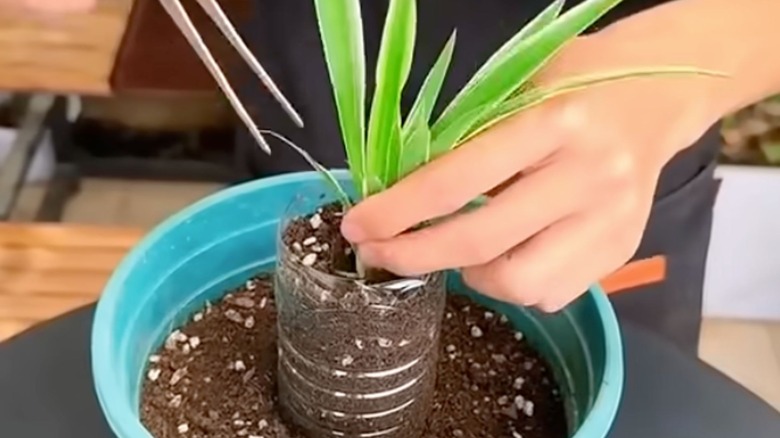
For more dramatic results, the plastic bottle method is commonly used to train the plant's roots into a tall column. Start by cutting the top and bottom off a clear plastic water bottle to create a hollow cylinder. Then, place it in the center of a pot and fill only the inside of the bottle with loose, high-quality potting mix. Plant your baby spider plant in this tube. As the plant grows, its roots are forced to travel straight down in the narrow bottle to reach the moisture at the bottom of the main pot. This technique creates that long, organized bundle of thick white roots you need that wouldn't naturally form in a regular, more open pot.
After about one month of growth, once the roots have established, carefully cut away the plastic sleeve to reveal a stunning, pillar-like root structure. At this stage, you can begin the transition into bonsai territory and prune away any lower leaves to keep the "trunk" looking clean and intentional. If the roots aren't quite thick enough to support the plant yet, it's fine to leave the bottle in place for another few months and evaluate them then. There are also budget-friendly tips to make your spider plant bushy and healthy up top, so your plant looks amazing overall. This is a fun and fascinating DIY project for both plant and decor lovers, since you end up with a plant that looks decades old in just a fraction of the time.
Choosing an appropriate pot and top-dressing for your bonsai
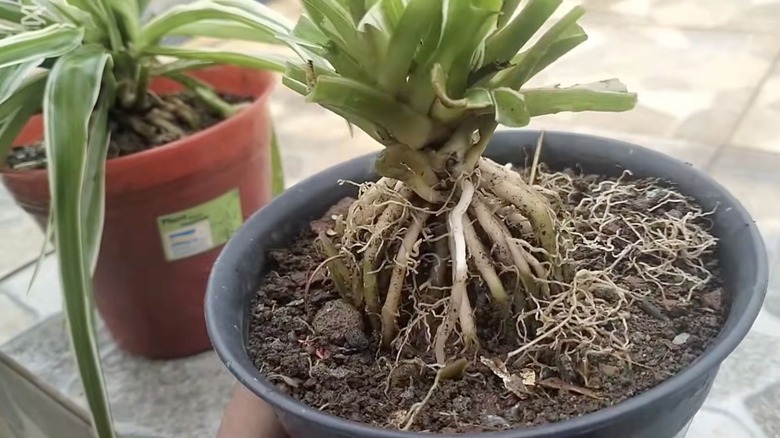
Once you've started sculpting the form of your spider plant, the wow factor comes down to how you choose to dress it up. A plastic nursery pot can detract from the bonsai aesthetic. So to stay true and respectful to the bonsai tradition, go with a shallow vessel; ideally, choose one with an unglazed finish or a neutral tone that won't overshadow the plant. A shallow container helps you better control the plant's growth, which is essential for maintaining that miniature tree look; just make sure it has plenty of drainage holes.
The finishing touch is the top-dressing, which is necessary to hide all the messy potting mix. We recommend avoiding colorful aquarium gravel and instead opting for fine pea gravel, dark river stones, or even a layer of dried forest moss to keep the eye focused on the roots of your bonsai. This type of surface provides a clean, high-contrast backdrop for your spider plant's white roots and striped leaves, making the plant look like a curated piece of art.
Maintenance for a spider plant bonsai is simple, yet specific. Because the soil volume is low, you're going to need to check the moisture levels more often. Additionally, keep it in bright, indirect light to make sure its leaves stay crisp and variegated. Your unique new spider plant bonsai will become the coolest plant in your living room in a matter of months. And even though we know why bonsai trees are so expensive, now you can have one of your own for only a few bucks and without the high-maintenance fuss.