

Are Your Seedlings The Wrong Color? Here's How To Fix It
We may receive a commission on purchases made from links.
Starting seeds indoors is an incredibly exciting endeavor. While the land is still covered in a coat of snow, it gives you hope that spring is right around the corner, as are beautiful blooms and delicious crops. But when seedlings come up discolored, rather than robust, luscious, deep green, it might be time to revisit your care schedule. Even if your seedlings are being watered correctly, the soil drains well, and they receive optimal light, they may still be suffering from a nutrient deficiency.
Most seed-starting, soilless mixes rightfully run low on nutrients. This partly has to do with the fact that seeds already contain sufficient nutrients to produce roots and the initial pair of leaves (cotyledons). This, in turn, allows manufacturers to keep their mixes heavy on ingredients that promote proper drainage and aeration so plants can thrive. However, if you leave your seedlings in their trays for an extended period of time without feeding them fertilizer, they soon run out of nutrients and become stressed. They show their dissatisfaction by changing their leaf color: yellowish-green for nitrogen and purple for phosphorus.
Signs your seedlings require more nutrients
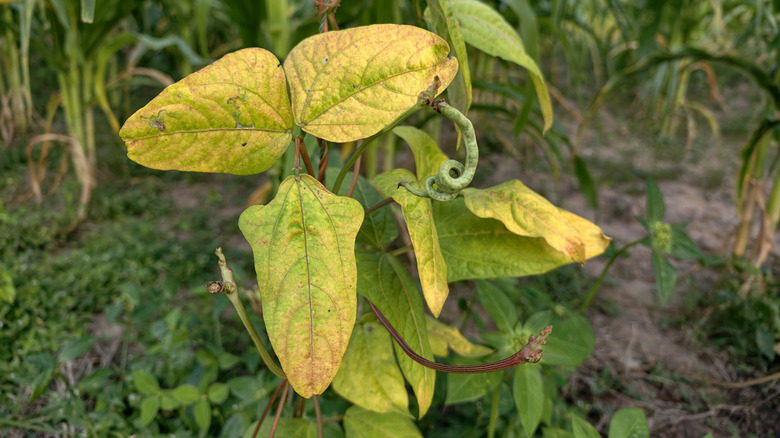
Nitrogen is a major component of chlorophyll, and plants require lots of it to produce food through their leaves. However, when its supply is limited, its effects show in the oldest growth, with the leaves turning yellowish-green or pale yellow. When the situation remains unaddressed, it starts affecting new leaves, which emerge sickly yellow, weak, and relatively small. That being said, be sure to look for symptoms on true leaves and not seed leaves. Also called cotyledons, seed leaves (the first pair of leaves) turn yellow and fall out after they've served their purpose, and pose no concern.
In contrast, if the discoloring leaves show reddish or purple veins on their undersides or develop violet margins, they may be running low on phosphorus. Although less common than a nitrogen deficiency, many vegetable seedlings, including tomatoes and cabbage, face this issue. Sometimes, this may happen after seedlings have been transported into the ground. If the soil is too cold, nutrients get locked up. Inadequate root growth and underwatering also interfere with the plant's ability to absorb nutrients.
Fixing and preventing nutrient deficiencies in seedlings
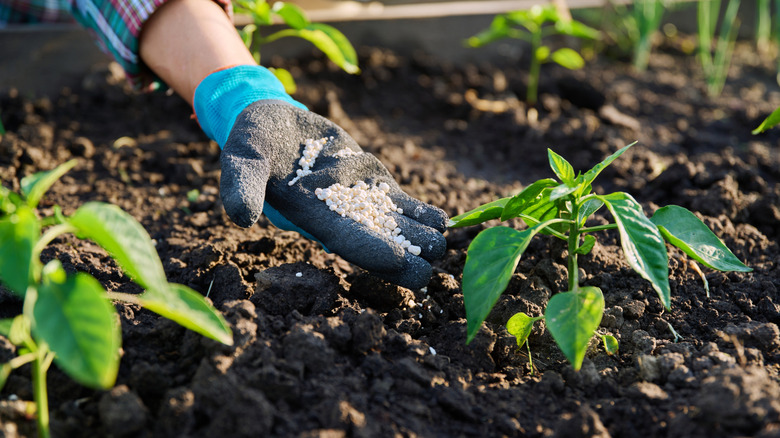
Although discolored leaves are unlikely to green up, you can still save your seedlings by encouraging the production of new, healthy foliage. To treat nutrient deficiencies in plants, you must first understand what NPK fertilizer really means. On their labels, fertilizers use three-digit codes that indicate the concentration of nitrogen (N), phosphorus (P), and potassium (K) in the overall mix. In such cases, you must feed the seedlings a water-soluble, general fertilizer with a balanced concentration of all nutrients. For instance, Espoma's Organic Grow! Liquid Concentrate Plant Food has a 2-2-2 formulation, ensuring all plant needs are adequately met. Follow label instructions and dilute the fertilizer before application to avoid burning the roots. Most gardeners find it easier to combine fertilization with their watering schedule.
Ideally, you should fertilize the seedlings every two weeks until they fully recover and are transplanted to their final location. But if you don't notice much improvement, you may fertilize them more frequently or look for a product with a higher NPK concentration. For transplanted seedlings continuing to showcase phosphorus deficiency, you may treat the soil with organic options like fish meal or compost tea. Going forward, when you start seeds, improve the potting mix with compost to ensure a steady supply of nutrients. While you can use homemade compost, bagged options are better, as they're heat-treated to destroy seeds and pathogens that can negatively affect new growth.