

What's That Bird Singing In Your Yard This Spring? Here's How To Tell

Waking up to the sound of birdsong is a great way to energize yourself for the day. In fact, one study featured in The Royal Society Publishing scientific journal suggests that hearing the sound of singing birds could be beneficial to general human well-being. But the calming, satisfying effects of listening to the birds chirping away in your garden can sometimes be overshadowed by frustration if you are struggling to figure out which bird species they actually are.
If you have made adjustments to your property to help attract a variety of birds to your yard, such as planting nut-bearing trees and low shrubs for shelter, then it may be difficult to spot your local feathered friends because they are hidden away in the foliage. As such, one of the best ways to identify the birds in your area without needing to actually see them is by listening out for their call. From Black-capped Chickadees who sing a short, catchy melody in late winter and early spring to the Chipping Sparrow, which has a unique, stuttering call, there are plenty of distinctive birdsongs that you can learn to help you differentiate them from one another. So, as you venture out of doors in the warming weather this spring, take a look at how to identify the following common birds found in the U.S. to see if any of them are hanging around in your own yard.
Common Grackle
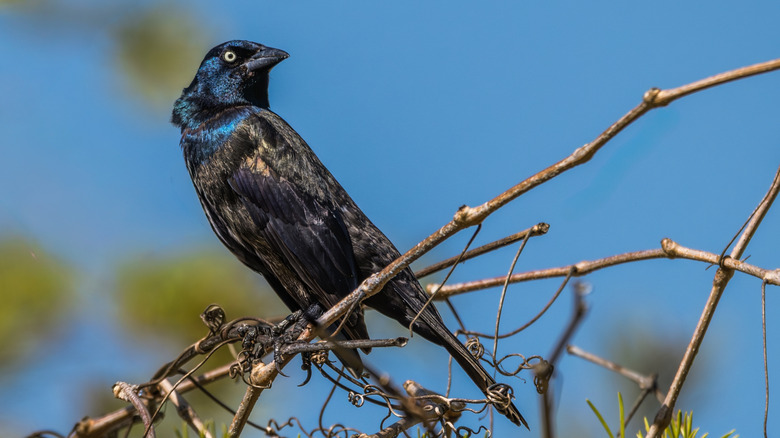
While these black, yellow-eyed birds are commonly mistaken for crows or ravens, they can be identified by their iridescent feathers, which give off a shiny, multi-colored glimmer when hit by the sun. However, if you are unable to see these birds or have only caught glimpses of them in your yard, you can also identify them by their long screech, which has often been compared to the sound of a rusty hinge or gate as it opens. The screeches are also sometimes interspersed with shorter high-pitched clucking sounds from their usual haunts in the foliage of dense trees.
Mourning Dove
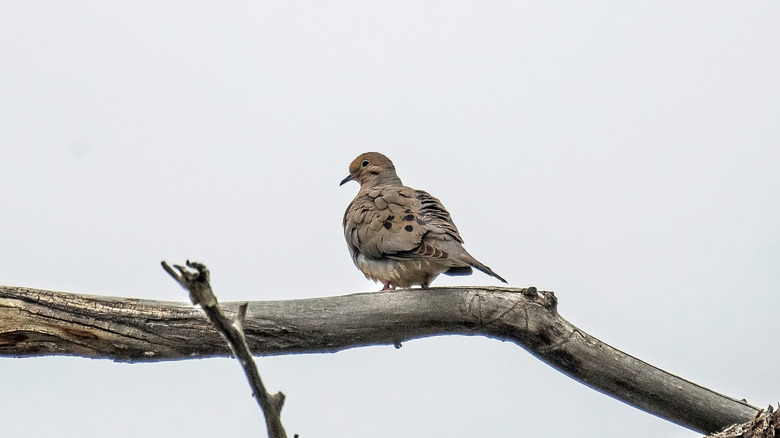
Another bird that is frequently misidentified — this time because of its call — is the Mourning Dove. This gray-brown bird emits a long, low coo-coo sound that is often mistaken for the classic "hoot" of an owl. However, there are a few ways to tell them apart. The Mourning Dove's call is longer and melancholic, like its name suggests, rising in pitch halfway through. In contrast, owls tend to use a shorter, more succinct call that stays largely on one pitch. In addition, a Mourning Dove's wings also make a distinctive whistling sound when it takes to the air.
Black-capped Chickadee
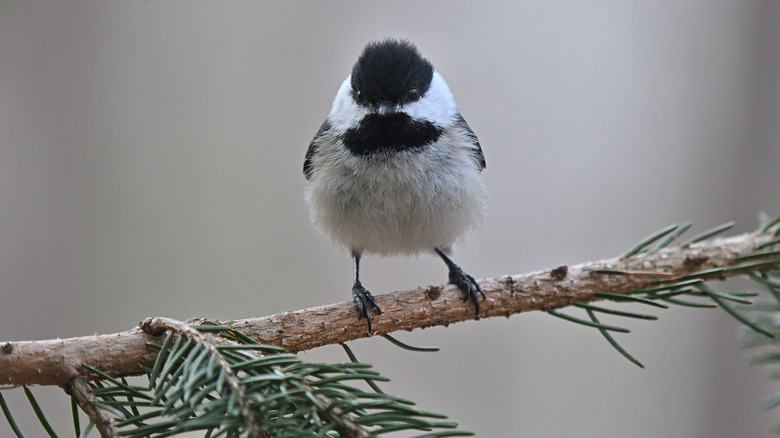
The males of the tiny Black-capped Chickadee can be identified in early spring by the distinctive, lyrical song they begin singing in January. This song has multiple names designed to help you remember and identify it. It has three parts, almost like syllables, so it is often termed "hey sweetie" or "cheeseburger" because the three notes resemble the sounds in those words. The Black-capped Chickadee can mostly be found in northern U.S. states, but if you hear this call in southern states, it could actually be the Carolina Chickadee, which is actually able to learn the same song.
Chipping Sparrow
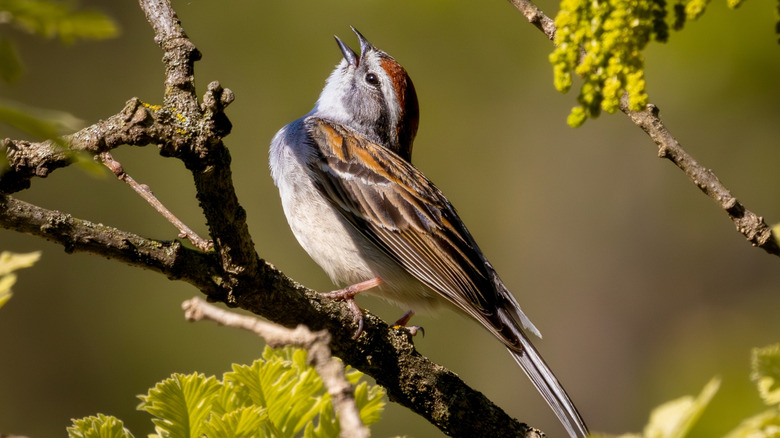
While not one of the most colorful birds you can attract to your yard in the U.S., the grey-brown Chipping Sparrow can be found all over the United States, particularly during breeding seasons in fall and spring. Its call is a series of rapid chirps which sound almost mechanical, like the drone of a tiny drill or jackhammer. You may hear that noise at different speeds, from ultra-fast to a slower, more spaced-out version. It also has a distinctive start-stop call for the morning and a high-pitched chirp reserved for alerting other sparrows to the presence of predators.
American Robin
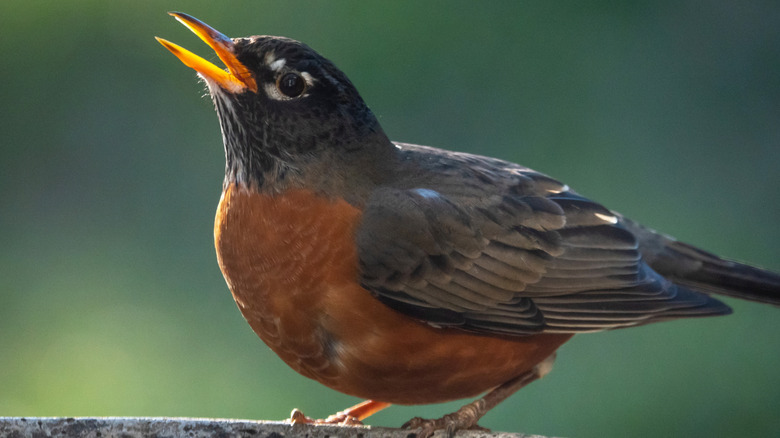
Robins can often be spotted all over the mainland states of the U.S., perching in gardens and on patios, windowsills, and fences. However, if you haven't been able to spot this rust-bellied bird in your own yard, you may still be able to identify it by its characteristic song. Often described as sounding something like "cherrily, cheer-up", this call is typically used by the males of the species to entice mates and outline the boundaries of their territories. Robins also have a few specific sharp squeaks or shouts for when they spot nearby predators such as hawks.
Gray Catbird
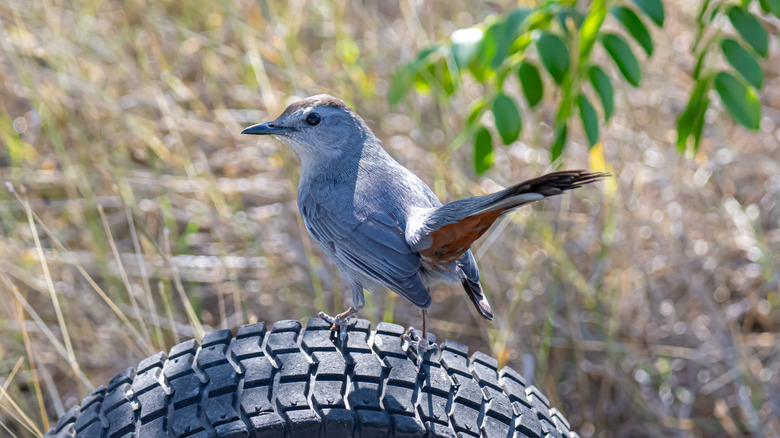
The name of this bird might give you a clue as to what its unique call sounds like and help you identify it next time you hear it. While catbirds can emit a series of chirps, whistles, and squeaks, it is their fascinating cat-like "mew" call that really helps them stand out. Sometimes interspersed with clucks or cackling, this mewing sound closely resembles the high-pitched whine of a kitten. So, the next time you think you hear a cat in your yard, keep your eye out for a smooth, gray bird with a black hat and reddish under-feathers.
Blue Jay
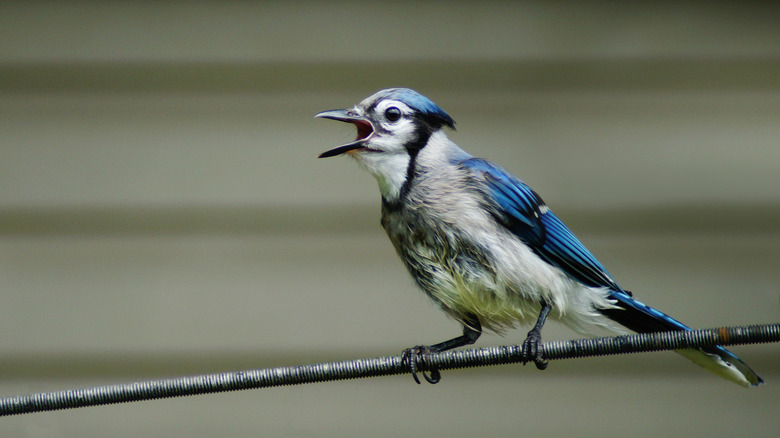
If you've been taking steps to attract more songbirds to your yard, such as providing nutritious, varied food, a place for them to bathe, and cover to make them feel safe, then you may have been treated to some of the loud, varied notes of the Blue Jay. There are a few different calls that can help you identify a Blue Jay. First, their "piping" noises, which are clear, high-pitched notes that sound a little like a flute or piccolo. They also have a classic nasal call which comes in ones or twos on the same medium pitch.
American Goldfinch
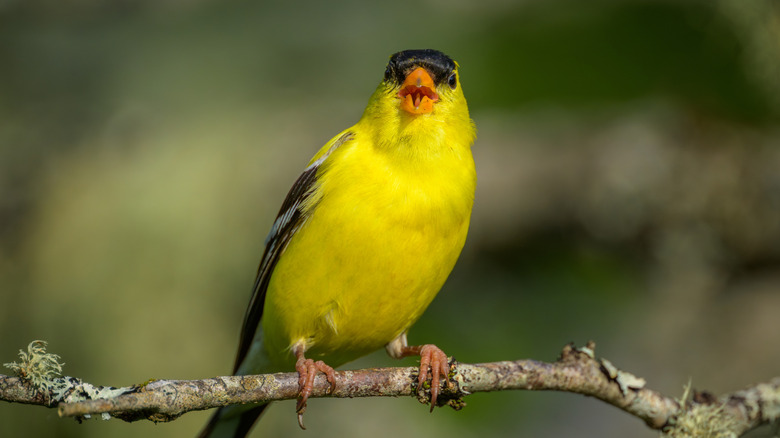
The bright yellow color of the American Goldfinch makes it slightly easier to spot than some other brown or gray species. However, if you have caught glimpses of gold in your yard and aren't sure if what you saw was an American Goldfinch, listen out for their calls. Found throughout the mainland U.S., they often sing a bright, cheerful song which is known as "per-chick-o-ee". In addition, and perhaps more memorably, they also make a sound while they are flying, which some people have identified as sounding like they are saying "potato chip" over and over.