

Spring Tasks To Ensure A Healthy And Luscious Spider Plant At Home
We may receive a commission on purchases made from links.
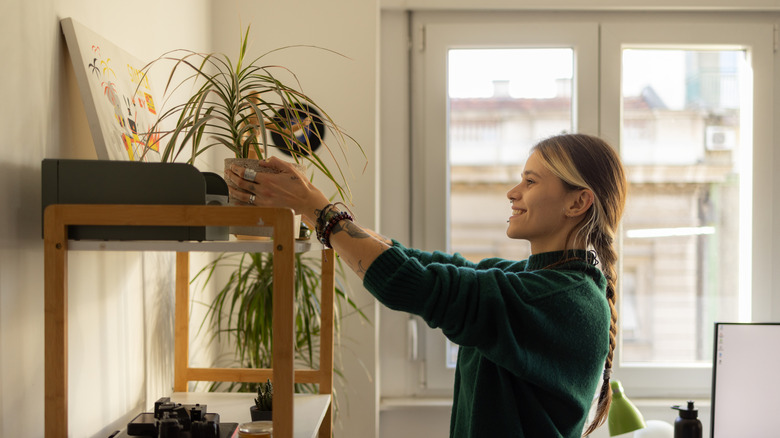
For the most part, spider plants (Chlorophytum comosum) are low-maintenance. They don't need much in the way of pruning, don't mind staying in the same pot for a few years, and they thrive on a little bit of abandonment. They do, however, need some care on occasion to keep them thriving. Spring, especially March, is an ideal time to do most of the work your plant needs for the year, so it gets a bit of a refresh before the growing season starts. Thankfully, even this yearly reset doesn't require much work. It essentially boils down to inspecting your spider plant for problems with pests or pot size. You'll also want to check whether it needs to be relocated as the sun patterns in your house change with the seasons.
As noted, early spring is an ideal time to do your yearly spider plant maintenance — or most houseplants, for that matter. It's just before the plant starts actively growing, and spider plants, like most houseplants, tend to bounce back from trimming, repotting, and relocations better during the growing season. They have extra energy to invest in healing, which is not the case during winter dormancy. As you go about spring cleaning and rearranging your furniture and décor for the coming year, check your spider plant, too. Examine its leaves, its soil, its pot, and its surroundings carefully. If you can catch problems early, you can fix them right away instead of leaving them to get worse.
Spring is the ideal time to repot your spider plant
Start by inspecting your plant's foliage. Dust each long leaf, wiping off any debris that's built up over the winter with a damp cloth. Look for signs of pests at the same time: leaf discoloration and speckling, webs, frass, and honeydew or sooty mold. Trim away dead leaves using the stem shears from the Fiskars Indoor Plant Care Three-Piece Set or a similar tool. If foliage looks lackluster, employ a smart watering tip to keep your spider plant from browning going forward — use rainwater instead of tap water.
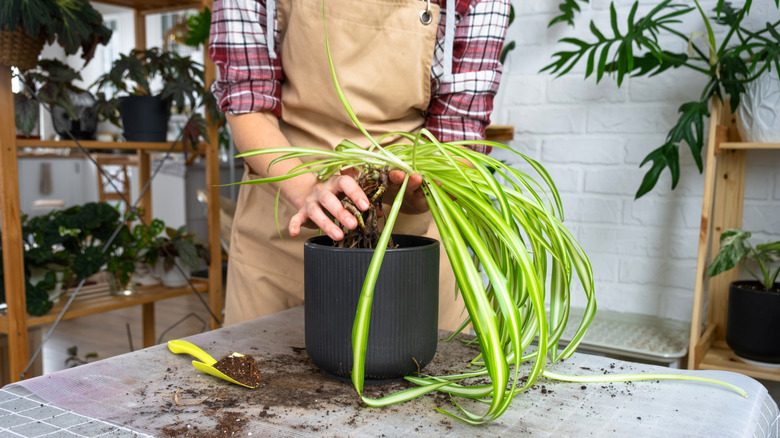
You should check the pot at the same time. Spider plants don't need to be repotted every year since they enjoy being a little tight in their container. However, if their roots get too wrapped up inside the pot, they can start to suffer. As the roots search for more space, they can plug the drainage holes, causing water to collect in the pot longer than it should. If your spider plant's roots stay perpetually wet, it may start to wilt or develop root rot.
To see if your spider plant needs repotting, give it a good once-over in early spring — ideally in March. If it has yellowing leaves or you see roots peeking out from the bottom of the pot, it's probably time to give your plant a new home. Other warning signs include lackluster growth, poor soil quality, and wilting. While transplanting a houseplant into a new container can feel intimidating, thankfully, it's fairly easy to repot a spider plant so it thrives all year. You'll know if it's adjusted well to the change when it starts growing new foliage and looks lively again.
Make sure your spider plant is getting the right amount of sun
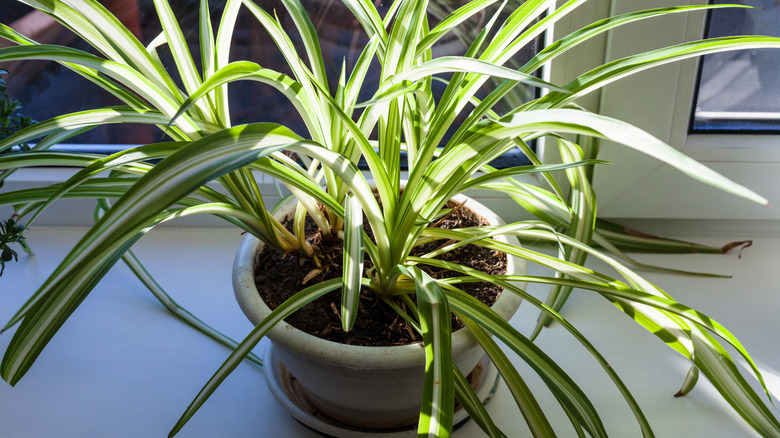
Spring is also a good time to consider moving your houseplants to take best advantage of changes in indoor sun patterns. The way the sunlight enters your home shifts slightly throughout the year, and plants that may have been safely out of direct light in winter could now be in the sun's path. As spring shifts into summer and the days grow hotter and sunnier, your spider plant could start to wilt or even burn if it's in the wrong spot. Spider plants are tropical and enjoy a lot of heat and light. However, they don't do well with a lot of direct sunlight. They can handle some morning sun, but afternoon sun beams or sitting in a south-facing window can cause them to grow more slower or burn their leaves.
Keep an eye on the way the light moves around your home as you do your regular chores, paying particular attention to wherever your potted spider plant sits. If the location receives too much direct sunlight, look for other places where your houseplant will be a little more protected. For example, if you want to grow it on a windowsill, choose a window that faces west or east. Spider plants enjoy bright conditions, but will also tolerate light shade, so don't be afraid to move them away from the window if needed. After all, too much light might be one of the reasons your spider plant is dying. Additionally, you can grow spider plants in artificial light — use 6000K to 6500K temperature bulbs.