

The Bird Feeding Method To Avoid At All Costs During The Avian Flu Outbreak
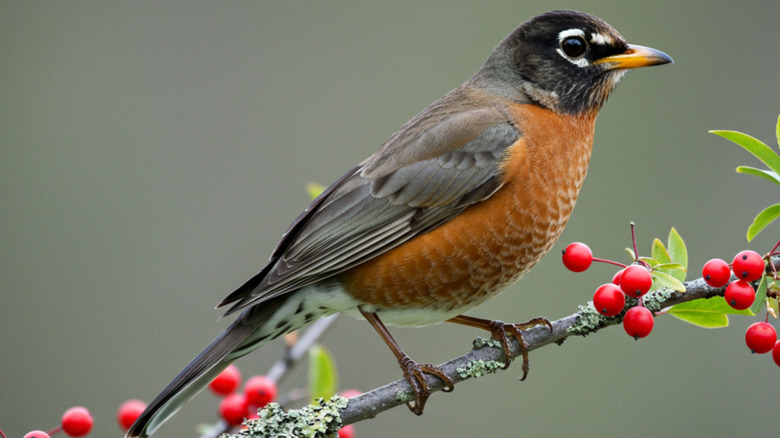
With cases of bird flu appearing in the news again, you should consider changing the way you feed the birds that visit your backyard. Known as H5N1, or highly pathogenic avian influenza (HPAI), has caused numerous deaths in wild bird species and poultry across the United States. While chances of songbirds contracting bird flu is low, it does still occur. Due to the risk of avian influenza to waterfowl and other bird species, it's best to stop scattering seeds in your backyard to feed your feathered friends and consider alternatives such as long-blooming native plants.
The first waves of this bird flu began in 2022, though the illness isn't new. Researchers discovered a new H5N1 variant in 2020. This particular variant, HPAI, saw increased cases in 2022, impacting thousands of birds and wild mammals, and is still present in 2026. Bird flu is highly contagious and often spreads through saliva, mucus, and droppings. An infected wild bird can be asymptomatic, eventually passing on the disease to other susceptible birds when gathering. Encouraging large groups of various types of birds in your yard, both songbird and wild, increases chances of sick animals spreading the bird flu. This is particularly dangerous if you raise chickens in your yard, as poultry are highly vulnerable. Exposure to HPAI may cause serious illness or even death within your flock. Instead of scattering seed on the ground, you can try these other ways to feed the birds.
How to feed birds instead of scattering seed
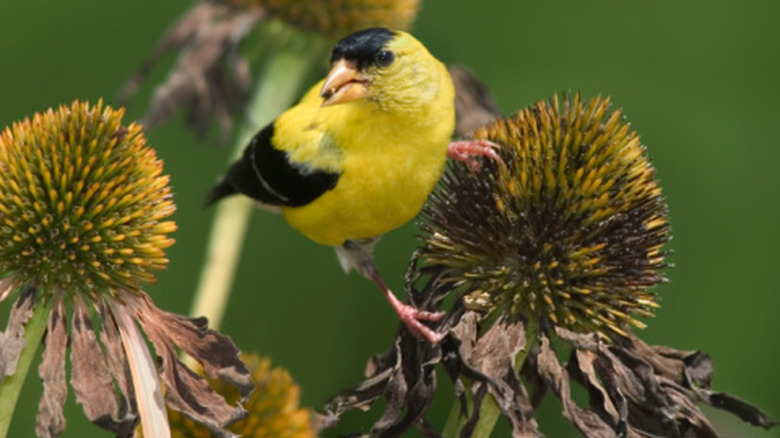
While scattering seed isn't recommended as bird flu persists, you don't have to stop feeding the birds altogether. If you do raise backyard chickens, however, remove your feeder completely. Otherwise, continuing to use your bird feeder is fine, provided you follow proper cleaning practices. For those without chickens, having a feeder is less risky because chances of songbirds contracting bird flu remain very low. Keeping your feeder clean is crucial to cut chances of infection spreading, so wash your feeder completely at least every two weeks, ideally with a bleach and water solution. Don't forget to clean the area around it as well, sweeping up hulls and dropped seed from underneath the feeder.
Adding native plants is a great way to feed birds without encouraging them to gather en masse in your yard. The Audobon Native Plants Database can help you identify suitable species for your area. Native plants are great sources of nectar, seeds, and insects for birds, allowing you to still feed them, just in a safer way than scattering seeds. Planting native species creates insect habitats so they can help support other members of the food chain. If possible, add berried plants to your garden, as these plants can significantly help birds as a food source. Look for options such as dogwood (Cornus), serviceberry (Amelanchier spp.), and American elderberry (Sambucus canadensis) for your yard.
In addition, attractive flowering native plants like coneflower (Echinacea) or cosmos are also good choices. Whatever you plant, keep groups of native plants spaced apart as much as possible to discourage birds from congregating too closely together to reduce contact with droppings.