

The Low-Maintenance Onion Variety With Stunning Yellow Flowers That Pollinators Love

When planning out that show-stopping garden that you just know your local pollinators are going to love, onions probably aren't at the top of your list for plant picks. However, by choosing the right species — such as this ornamental variety with stunning yellow flowers — you can start a pollinator-friendly garden that thrives even in those less-than-ideal areas throughout your yard.
Also known as golden or yellow garlic, lily leek (Allium moly) is a perennial flowering plant that's native to the Mediterranean and as durable as it is eye-catching. This onion variety blooms with star-shaped yellow flowers in the spring and summer that are equally fragrant and long-lasting. As a result, planting lily leek opens up the opportunity to attract pollinators like butterflies while also creating a garden for humans to enjoy. Along with being visually appealing, its tolerance to challenging conditions like drought makes it low-maintenance and thus a perfect plant for beginner gardeners looking to liven up their outdoor space.
Although lily leeks can be easy to grow, familiarizing yourself with the optimal care needed gives you the best chance at seeing this plant thrive in your garden year after year. And to start, you'll want to learn how to identify the best spot in your yard to plant lily leeks, along with how to care for them once they're established.
How to grow lily leek
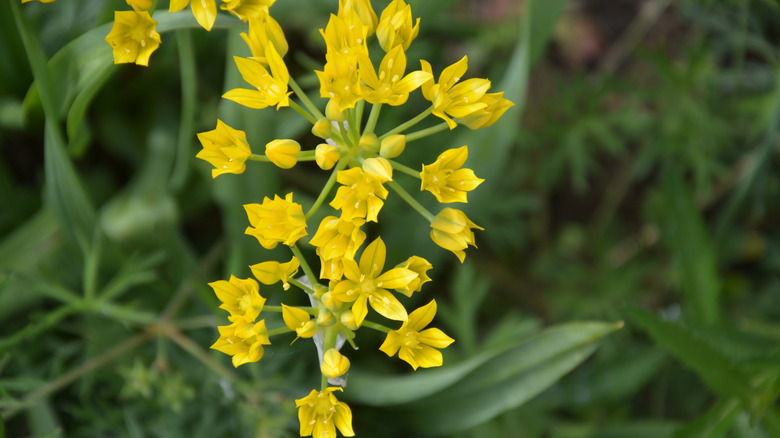
If your goal is to grow lily leek as a perennial in your pollinator garden, then it's important to know about USDA growing zones. These determine where a plant can survive the winter, thus making the difference between a short-term plant to enjoy while the weather's warm or a long-term, low-maintenance flowering onion that returns each year. The lily leek will thrive in USDA Hardiness Zones 3 through 9. When planting, you'll also want to pay attention to sunlight. Lily leeks require full sun for the best results, which means at least six hours of sunlight each day. Try to avoid planting lily leek in any spots with heavy shade or limited sun exposure, such as along a north facing fence. Instead, save these spots for those shade plants that attract pollinators, like phlox.
Overall, once they're established in your yard, lily leeks are fairly low-maintenance. They need soil that is well-draining and water only as needed, but they can handle the occasional dry spell, with a tolerance for drought. They also hold up well to grazing animals like deer and rabbits, making them perfect for featuring just about anywhere in your yard, including woodland spots where wildlife seems to linger. Lily leeks also grow well alongside other plants. This allows you to build a thriving pollinator garden filled with color thanks to its many vibrant companion plants. You can even grow lily leeks around black walnut trees, where many other plants fail to thrive.