

11 Groundcover Plants That Will Thrive In A Muddy Backyard
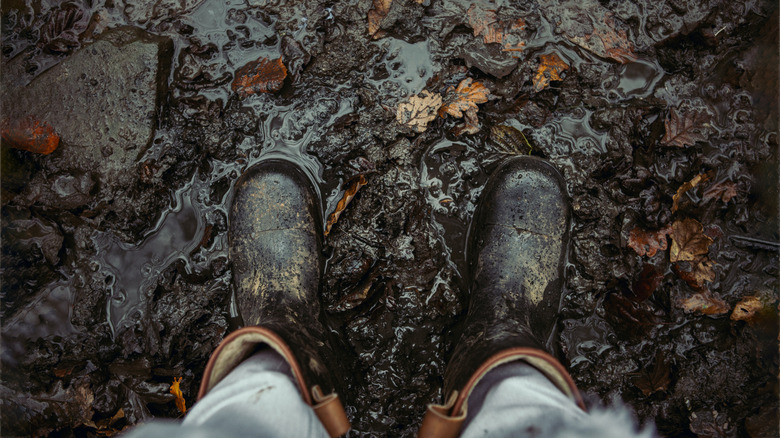
Having a mudpit for a backyard is no fun. Mud is slippery, messy, and a total eyesore. As with most things, knowledge is often key to discovering a solution. Knowing why your yard is muddy, and understanding what strategies will have the biggest impact in your particular situation, are the first steps to fixing the problem.
Muddy backyards can be caused by numerous factors. Drainage issues, for example, can often cause water to pool instead of sinking into the ground. Soil composition is a factor as well — clay soil doesn't drain well and holds water instead of absorbing it, creating a sticky, muddy mess. Some areas are just naturally soggy, thanks to a high level of water underground. Bare patches of dirt in your yard also tend to stay wet longer, and to make matters worse, many plants won't grow in mud. Fewer plants means no roots holding soil in place — and even more mud.
Fortunately, there are plenty of moisture-loving groundcover options that thrive in soggy soil, like ostrich ferns and palm sedge. The roots of these plants provide stabilization, keeping dirt in place and preventing erosion. The roots can also help prevent compaction and improve soil drainage, allowing water to soak into the ground rather than creating runoff and a muddy mess. Meanwhile, the dense foliage slows and softens the fall of rain directly on the ground, eliminating splash erosion and helping water to disperse evenly. While they don't work quite like a sponge, the plants themselves also directly absorb some of the water in the ground through their roots.
Make a statement with elegant ostrich ferns
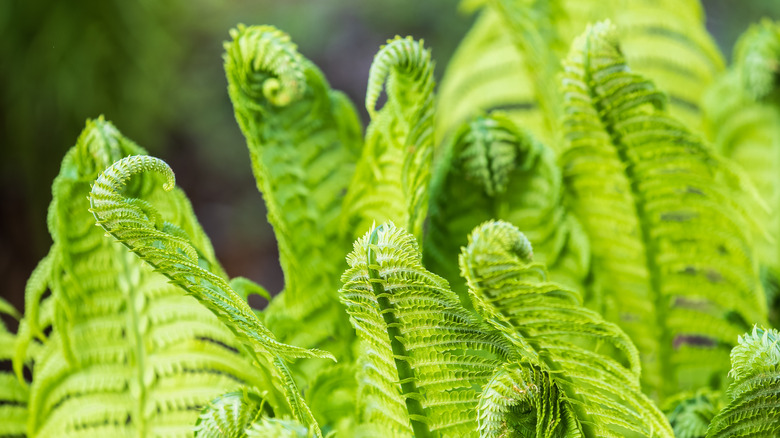
The ostrich fern (Onoclea struthiopteris), also known as the fiddlehead fern, grows wild in the floodplains and swampy woodland areas of the central and eastern United States and is native to Eurasia. This particular fern needs medium to wet soil that should not be allowed to dry out. The plant gets its name from its long, feathery fronds, which are reminiscent of ostrich plumage. It grows in dense colonies that spread quickly through underground rhizomes. In garden environments, the ostrich fern tends to grow to around 2 or 3 feet tall. In the wild, however, it can grow even taller, often reaching up to 6 feet in height. The plant's shallow rhizomes are great at trapping and holding soil, making ostrich ferns a good choice for erosion control. The broad, reaching fronds also slow and disperse rainfall, helping to prevent pooling and reduce runoff.
There are plenty of good reasons to add an ostrich fern to your garden. Beyond being excellent soil stabilizers, the tall and stately fronds of an ostrich fern colony work great as a natural privacy screen. The young fiddleheads are even edible, with some chefs likening the texture and flavor to asparagus. As with most ferns, these plants love shade. They should be planted in partial to full shade, though they can acclimate to full sun if given plenty of water. Ostrich ferns grow best in rich, slightly acidic soil with plenty of organic material. They are deciduous and can start to look a bit tattered by the end of the growing season. They can also be aggressive spreaders in the right growing conditions.
Use grass-like palm sedge to control erosion
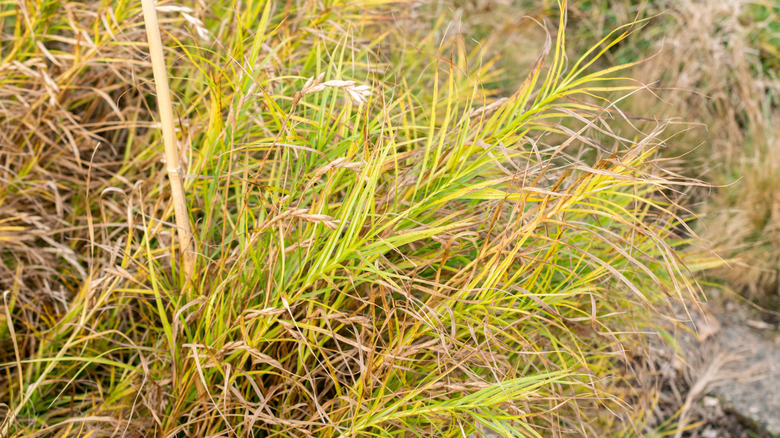
Palm sedge (Carex muskingumensis) is a type of sedge that is native to the midwestern U.S., where it grows in lowlands and on floodplains. It is a perennial plant that looks almost grasslike, though each stem has leaves branching off of it like palm fronds. Like ostrich ferns, palm sedge spreads through underground rhizomes, but it also produces spiky brown seeds that add visual interest and attract birds. It typically grows 2 to 3 feet tall and turns golden yellow in the fall. Palm sedges grow very well in compacted, clay-rich soil, and can help slow down runoff and reduce erosion.
Palm sedge is a great addition to rain gardens, woodland gardens, or as ground cover in moist beds. It also works well on the borders of ponds and in riparian areas, where it improves water quality by trapping sediments, filtering pollutants, and absorbing excess nutrients. Palm sedge needs to be planted in a moist to wet site, and can grow in acidic, rich, or sandy soil. It prefers full sun to partial shade. Though it spreads slowly, this plant can become a nuisance if not maintained, so cut it back or hand-pull as needed.
Drape your yard with moisture-loving creeping Jenny
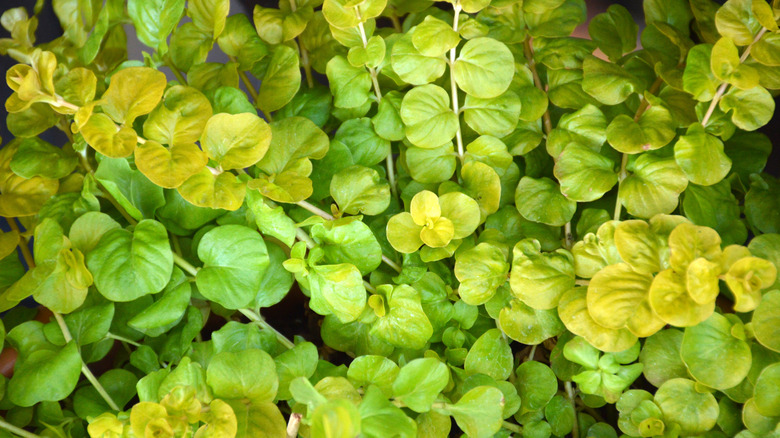
Creeping Jenny (Lysimachia nummularia) is native to Europe and temperate Asia, where it grows in wet meadows, swamps, and along the banks of streams and ponds. It is a moisture-loving plant that prefers consistently moist to wet areas, though it can tolerate some dryness once established. Creeping Jenny has round, yellow-green leaves that trail and spread into a dense mat around 4 inches high. It sometimes grows small yellow flowers in the summer, though this is rare. The plant spreads by rhizomes and seeds, as well as by rooting where the leaf nodes contact the ground. Creeping Jenny helps to prevent soil erosion and mud with its trailing stems and roots that hold the soil in place.
Creeping Jenny thrives in muddy soil that would kill most other groundcovers and even tolerates some foot traffic. It can also regulate water temperature and reduce algae growth when planted near ponds and other water features. Though it can be genuinely helpful in many situations, this common, beautiful groundcover can also create chaos in your yard if not planted with care. It is considered invasive in several states, including Pennsylvania, Connecticut, and Wisconsin, and it can spread aggressively. Because it can be so hard to control, it shouldn't be planted near lawns or other areas you don't want it to spread into. Some sources do claim, however, that the plant is easy to pull up when it grows into unwanted areas.
Add splashes of gold with yellow marsh marigold
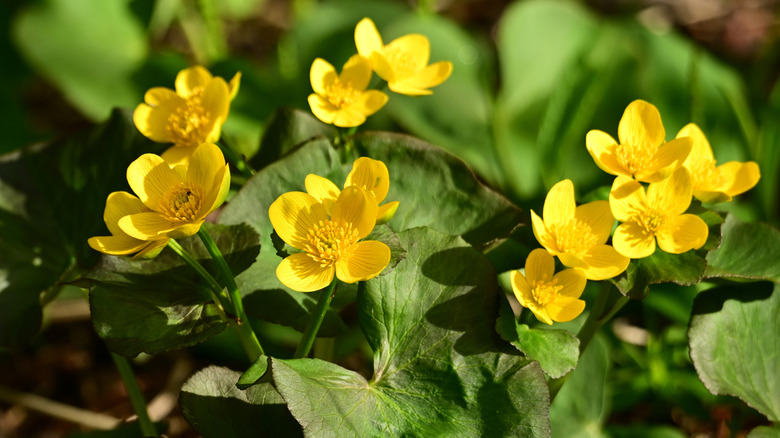
The marsh marigold (Caltha palustris) is a groundcover that thrives in truly muddy, bog-like conditions. It is native to the wetlands of Europe, Asia, and North America, and loves moist meadows, boggy swamps, and — as its name suggests — marshes. These plants like to be wet and will even grow in shallow standing water. They grow 1 to 2 feet high with glossy, yellow flowers, and spread to form loose colonies. Their root system is great for stabilizing wetland soil, or the muddy soil in your backyard, and can help to prevent erosion.
This pollinator-attracting perennial makes a great groundcover. Marsh marigolds are more than just beautiful; they are also a native species that is incredibly important to the environment. Beyond reducing erosion, they are a critical species for many pollinators and provide food to several types of caterpillars. The marsh marigold is a good choice for rain gardens and the borders of ponds or other water features. It also works well in locations that frequently have standing water, like near your irrigation spigot. Marsh marigolds should be planted in full sun to part shade and prefer acidic soil. Though they are poisonous, the stems, leaves, roots, and flower buds are edible when cooked.
Plant American sweet flag in place of ornamental grass
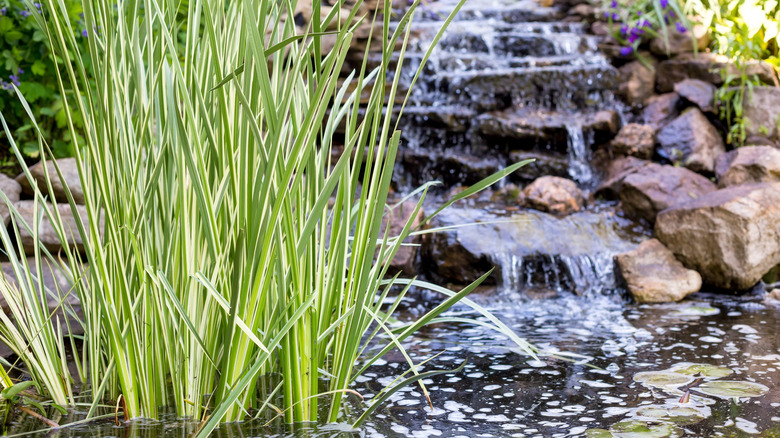
American sweet flag (Acorus americanus) is a groundcover that grows natively in northern North America, as well as Siberia, and loves muddy soil. It's an aquatic plant that does best in wet areas and can even tolerate standing water up to 9 inches; it thrives in consistently moist gardens. A grass-like plant, American sweet flag spreads slowly via underground rhizomes. It has long green leaves that can be tinged reddish or pink at the base and boasts small, dense flowers in the spring and early summer. It is often confused with cattail, and even has a cattail-like spadix that adds visual interest and charm in the home garden. Its rhizomes make it a good candidate for soil stabilization projects (less erosion means less mud, after all).
American sweet flag is both deer- and rabbit-resistant. It is also low-maintenance when provided with consistent water, and it provides valuable habitat to wildlife like salamanders and frogs. The foliage releases a pleasant smell when crushed — often described as being similar to cinnamon or citrus. Though not technically a grass, sweet flag is often classed amoung the many stunning ornamental "grasses". Plant it in the boggy spots of your yard, in a rain garden, or near the edge of a pond. Sweet flag prefers full sun, making it ideal for exposed muddy areas where other plants may struggle.
Cover the ground with native wild ginger
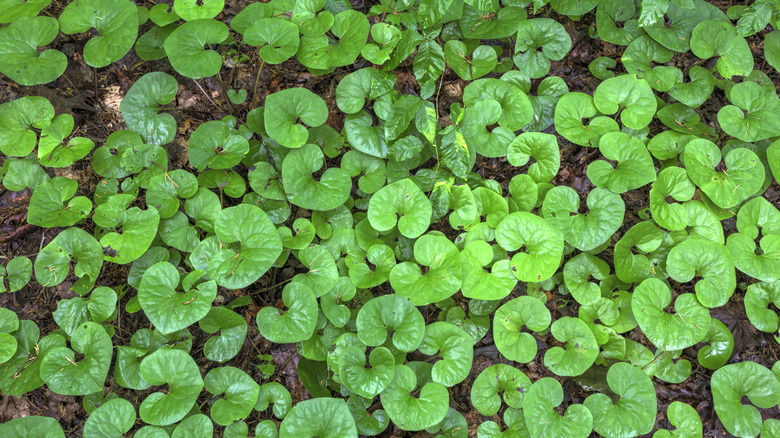
Wild ginger (Asarum canadense) is a native, green groundcover that's perfect for shady areas of your yard and garden. It is native to the eastern and central United States and Canada, where it grows wild on the moist forest floor. While this plant does not like standing water, it does need to stay moist. Wild ginger grows to be approximately 1 foot tall, with dark green, heart-shaped leaves. Its small, brownish purple flowers are often covered by foliage and difficult to see. Wild ginger is evergreen in most of its natural range and spreads slowly yet densely. It's a good choice for dealing with mud because its rhizomes lock the soil in place, and its dense leaves form a thick carpet that covers exposed soil.
Wild ginger works well for erosion control on slopes or planted as a groundcover around shrubs. It thrives in moist, rich, acidic soil and needs plenty of shade. It is great for the tricky spots in your garden that are too challenging for many other plants. There is, however, a toxic downside you should know before growing wild ginger. Despite the name and its ginger-like smell, wild ginger is not related to culinary ginger and shouldn't be eaten, as it contains a carcinogen that is toxic to your kidneys.
Enjoy a beautiful carpet of blooming blue phlox
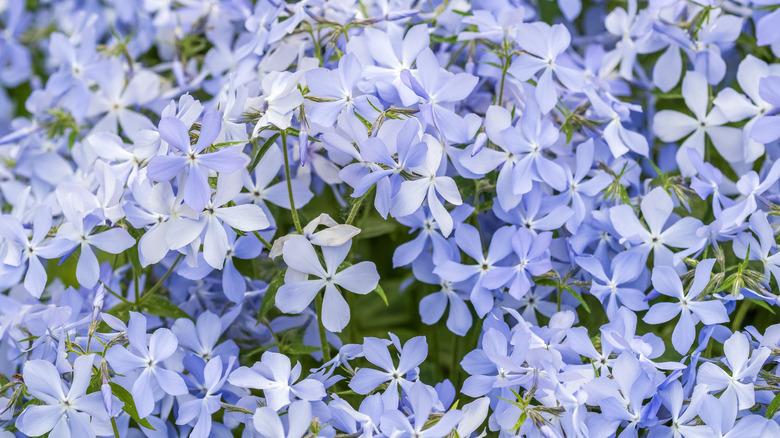
Blue phlox (Phlox divaricata), also known as woodland phlox or wild sweet William, is native to eastern North America, where it grows in the dappled shade of woods and meadows and along stream beds. Blue phlox does best in consistently moist, well-draining soil, though it is adaptable and can tolerate wetter clay-based soil or mild droughts. It has hairy leaves and delicate flowers that range from blue to lavender, pink, or white. This plant spreads well and forms a dense mat, which makes it great at preventing erosion from rain and wind.
Blue phlox is a beautiful and fragrant addition to your garden and attracts butterflies, hummingbirds, and other pollinators. Plant it along a path or seated area to enjoy the fragrant blooms, in rock gardens, or along the edge of water features, or mix it in with other shade-loving plants. Blue phlox thrives in soil that is rich in organic matter and prefers partial shade, though it can survive in full sun if the climate is cool enough. This plant spreads slowly and not aggressively. If it ends up in places where you don't want it to grow, it is easy to pull up.
Add a dash of whimsy with delicate foamflower
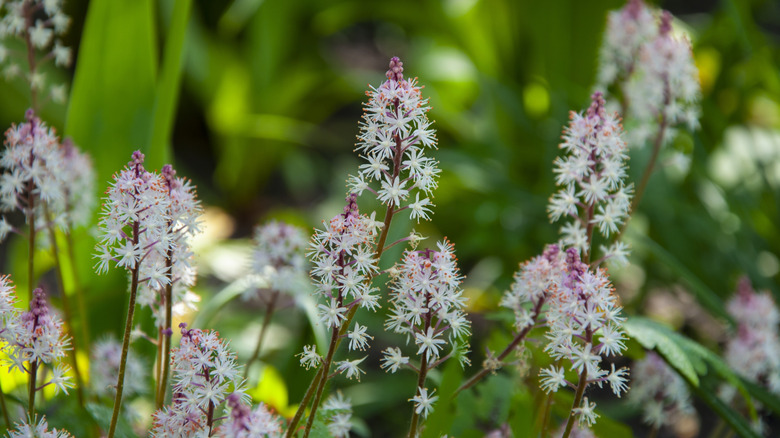
Foamflower (Tiarella cordifolia) is native to the moist forests, coves, and bottomlands of the Eastern Seaboard. It is not tolerant of drought and needs to be grown in spots that stay continuously moist. It is a perennial that features beautifully delicate, white and pink blossoms. These flowers are spiky and bloom in early spring. When spring is over, deep green leaves that are almost maple-like in shape make this plant interesting throughout the rest of the growing season. Foamflower can help reduce mud by preventing erosion with its extensive root system.
Foamflower is an underrated companion groundcover that provides a lot of other benefits to the garden, too. This plant can help to improve soil structure and enhance moisture retention. The flowers attract birds, butterflies, bees, and other pollinators. With its frothy, whimsical blossoms, foamflower can make your backyard feel like a cottage garden or a fairy glen. Plant it as a groundcover in pollinator gardens, or use it in deeply shaded parts of your yard. Foamflowers thrive in deep to partial shade and can grow up to 1 foot high. They do best in neutral to slightly acidic soil.
Dress your yard in periwinkle blue
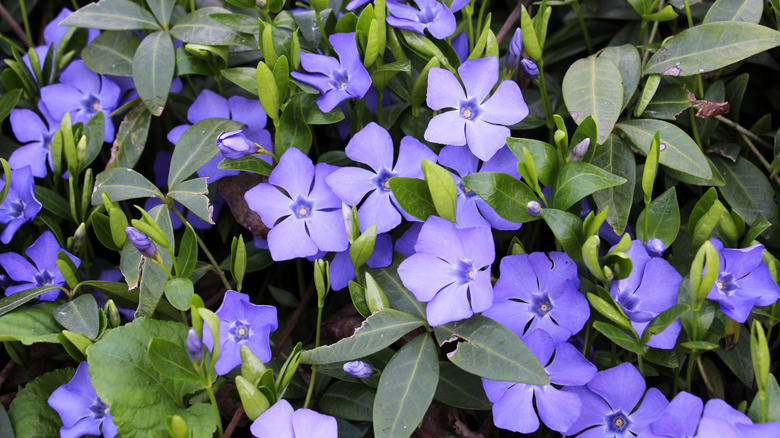
Periwinkle (Vinca minor) is a perennial evergreen that is native to shady, fertile areas in Europe. It grows well in moist soil and in partial shade, though it will tolerate full sun when it has plenty of water. Known for its trademark blue-lavender color, periwinkle is a popular choice for erosion control because of its vigorous roots and dense growth.
In the right locations, periwinkle can be extremely effective at preventing erosion and mud. It is often used on slopes and tends to be favored by gardeners because of its striking flowers, dark green foliage, and low care requirements. Given enough moisture and the right lighting conditions, periwinkle is quite tolerant of a variety of soil types and can handle clay, sand, and silt. You should, however, be cautious before planting periwinkle if you live in certain regions. Periwinkle is considered an invasive species in Oregon and several eastern states, and since it spreads quickly and densely in ideal conditions, it can be very difficult to control.
Replace your lawn with blue star creeper
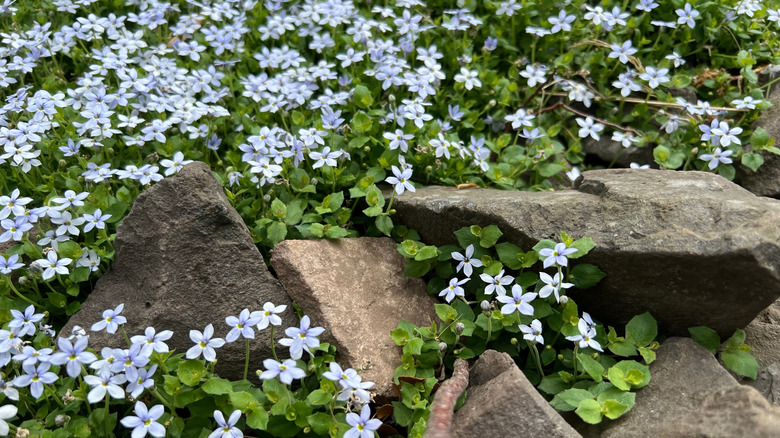
Blue star creeper (Isotoma fluviatilis) is a low-growing groundcover that is native to Australia and New Zealand, where it grows in damp grasslands and in the moist sand or mud at the edges of streams. It produces beautiful star-shaped flowers in early spring that last into summer and is evergreen in the right climate; in colder areas, it dies back in the winter. The dense mat of foliage it creates is durable enough to tolerate heavy foot traffic, and it does a terrific job at holding erosion — and mud — at bay.
Blue star creeper thrives in partial shade to dappled sunlight, but is tolerant of full sun as well. Tuck it between stepping stones, plant it as a living mulch beneath trees and shrubs, or even use it as a lawn replacement. There are, however, some downsides to choosing blue star creeper as a grass alternative for your yard. The plant can be difficult to control due to how quickly it spreads — as much as 10 to 15 feet in the first two to three years. However, blue star creeper can be contained using deep landscaping edging material. Most parts of the plant are proported to be toxic, so children and pets should be monitored closely when playing nearby.