

10 Perennial Bulbs To Plant In The Spring For Beautiful Summer Blooms

Daffodils and tulips might first come to mind when gardeners think of flowering bulbs. These bulbs are typically planted in the fall for stunning spring blooms. Tulips, daffodils, crocuses, and many other fall-planted bulbs not only survive a deep winter's freeze; they actually need that long period of winter dormancy (called stratification) before they can emerge in spring. Almost all bulbs need some period of stratification, but some need longer periods than others. Spring-planted bulbs require shorter chill-hours, and those that you might buy in a garden center have typically already gone through their stratification. You can plant them this spring and they will bloom this summer.
But unlike fall-planted bulbs, spring-planted perennial bulbs may need to be treated differently in the winter if you want them to come back year after year. Some might survive the long sleep of a cold winter, but others will not. If you live within the recommended USDA hardiness zone for your bulbs, you're in luck. It's likely that you can just treat leave them where they are. Others can remain in the ground, but only if you protect them from the worst of winter. Still others are cold-sensitive and need to be dug up and saved for next season.
For the sake of simplicity, "bulbs" is used as a broad umbrella term here, as some of these plants technically have corms, tubers, or rhizomes. However, their planting methods and growth patterns are generally the same. What they all have in common is that they grow faster than fall-planted bulbs and can bring delight to your garden in the very same year.
Amaryllis
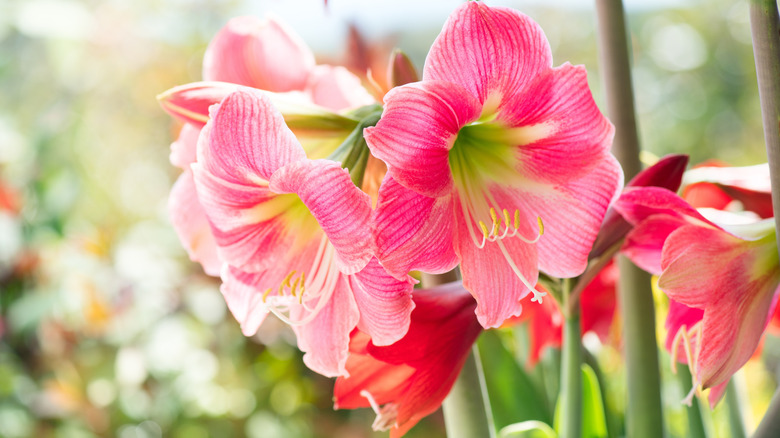
Amaryllis bulbs (Hippeastrum spp.) are perennials, hardy in zones 7 to 10. They can be planted in early spring after all frost danger has passed, and will take about eight weeks to bloom. Fertilizing every two to four weeks while they are growing will be helpful. Cut their flower stems once they have stopped blooming, but allow their leaves to continue photosynthesizing. Once they die back , you can mulch the plant to leave it in the ground. Otherwise, pull it up and store it in a cool, dry place over the winter.
Anemone
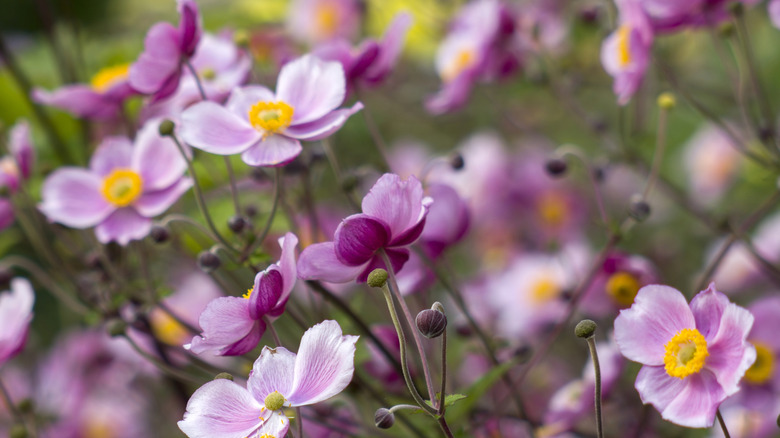
Anemone (Anemone spp.), also known as windflowers, can bloom in mid spring to early summer or as late as fall, depending on the species. They naturalize (or spread) easily through underground rhizomes make excellent ground covers. Among the hardiest of anemones is meadow anemone (Anemone canadensis) which blooms in mid-spring, is native to North America, and is hardy in zones 3 to 8. For other spring and summer blooming anemones, De Caen varieties, 'Honorine Jobert', and 'Bordeaux' are good choices.
Begonias
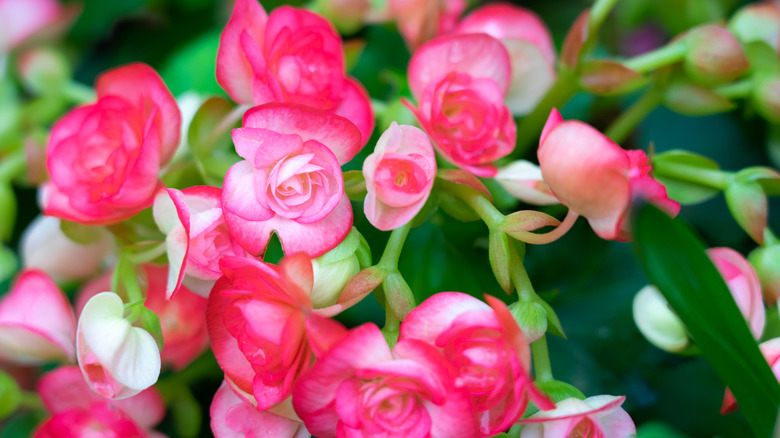
Tuberous begonias (Begonia spp.) are grown from tubers (which are swollen roots) rather than from bulbs. The tubers require some preparation before planting in early spring, but begonias are an excellent plant to grow in full or partial shade. This makes them favorites for hanging baskets, patio planters, or as bedding plants that don't get a full day's sun. They are hardy only in zones 9 to 11, so dig them up before the first frost and store them in a dry, cool place before replanting in spring.
Caladiums
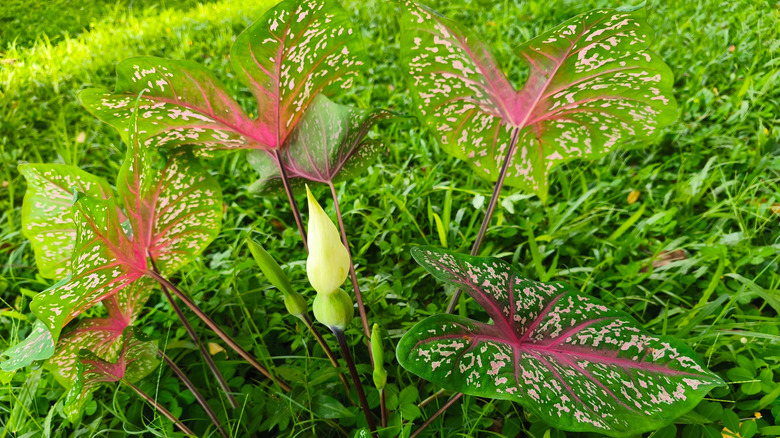
Caladiums (Caladium spp.) are another tuberous perennial that is planted in spring, more for their spectacular and colorful foliage than for summer blooms. However, they can produce inflorescences that release a lovely citrus-like scent. Like begonias, they're good for shade gardens. Also known as angel wings or elephant ears, caladium is only hardy in zones 9 to 12, but it's not hard to overwinter caladiums and save them for the next season. Just dig up the tubers after the entire plant has died back and store them in a dry but warm location (70 to 75 degrees Fahrenheit).
Canna Lily
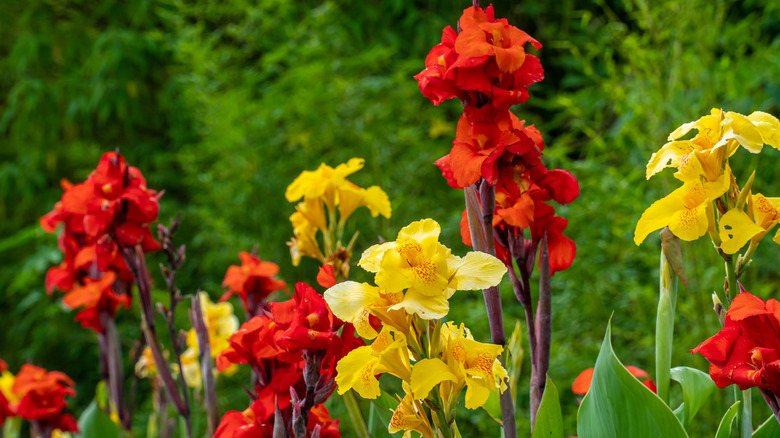
Canna lilies (Canna spp.) grow from rhizomes, which are fleshy, underground stems that resemble thick roots. Canna rhizomes can be dug up each fall and replanted the following spring. Also known as arrowroot, canna lilies produce tall and gorgeous orange, pink, peach, or yellow flowers in mid-to-late summer. Hardy only in zones 8 to 11, they will need to be dug up after a light frost has turned the leaves black, cut back to their rhizomes, then stored in a cool, dry place over the winter.
Crocosmia
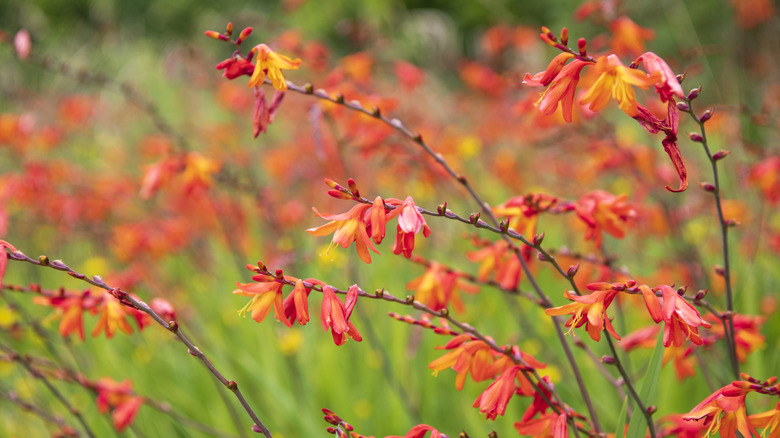
Crocosmia (Crocosmia spp.), like similarly named crocuses, are not technically bulbs but corms. The corms will die back each year but produce new corms growing on top, allowing them to keep blooming in summer year after year. Unlike crocuses, however crocosmia are planted in spring. Where they are hardy in zones 6 to 9, you can leave them in the ground. In marginally hardy zones, plant them against a south-facing wall and cover them with a thick mulch to keep the ground warm. Otherwise, dig up the corms, clean them up, and store them in a refrigerator over winter.
Dahlias
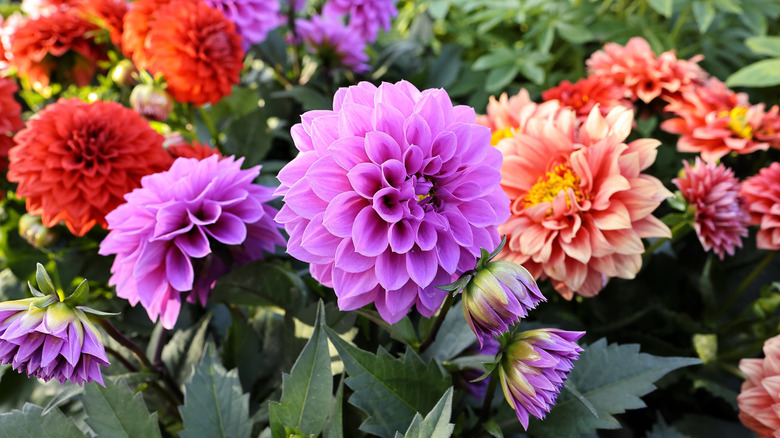
Dahlias (Dahlia spp.) are spring-planted bulbs that are popular with humans, but dahlias also attract beautiful hummingbirds in mid-to-late summer. They are often treated as annuals, as they are only hardy in zones 7 through 10, but they're actually perennials. If you live in a cooler zone, you might be able to over-winter dahlias in a protected site. But in regions colder than that, dig up the tubers, dry them without washing them, and store them in sand, sawdust, or other dry material in a cool location (35 to 45 degrees Fahrenheit).
Gladiolas
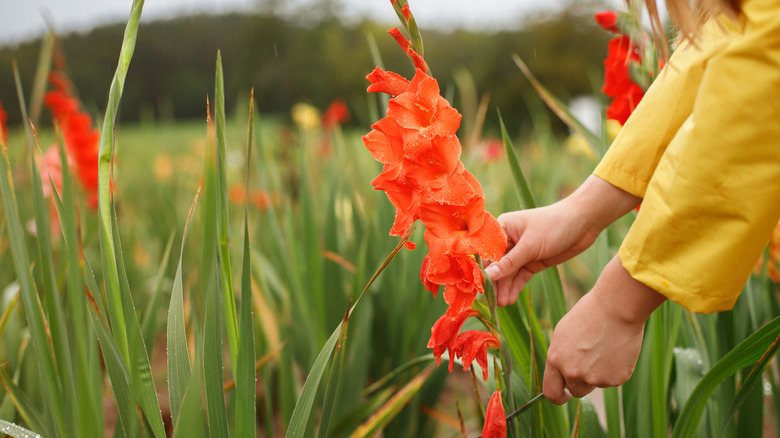
Gladiolas (Gladiolus spp.) are tall, flowering corms that make excellent cut flowers and are one of the most popular of spring-planted bulbs. Plant them in full sun in successive weeks during the spring for a longer-lasting display of flowers from summer into fall. Depending on the species, gladiolas can be hardy in zones 5 to 11, but more tender varieties are only hardy in zones 8 to 11. Dig up the corms after the leaves die back, cut them back to their corms, wash and dry them, and store them in a paper bag in a cool area indoors.
Lilies
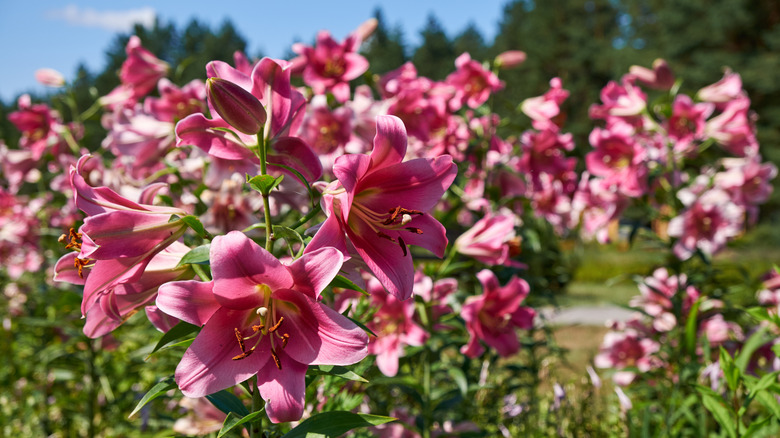
Lilies (Lilium spp.) can be planted in either early spring or fall. They are winter hardy in zones 3 to 9, so you can leave their bulbs in the ground year-round without much fuss. With so many gorgeous species and hybrids, they've become gardener favorites around the world. Plant lilies in full sun in border gardens or harvest the cut flowers. Asiatic lilies will bloom in early summer and are almost odorless, while Oriental lilies will bloom in late summer and are heavily fragrant. Just make sure they are planted in well-draining soil, as they are subject to bulb rot.
Tuberoses
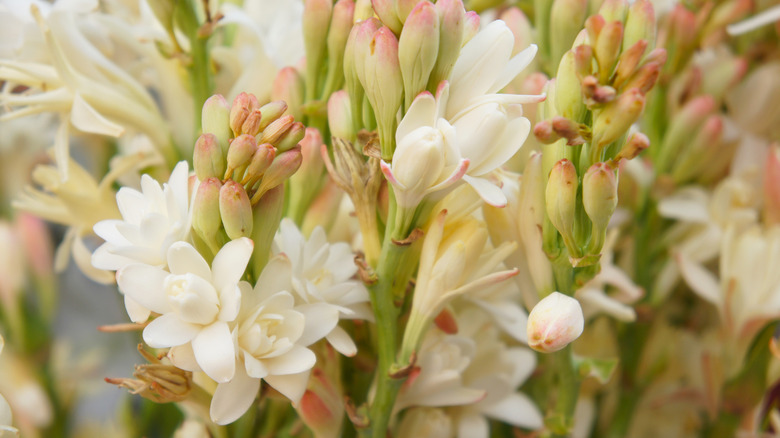
Tuberoses (Polianthes tuberosa or Agave amica) are not roses but they are tubers. They are native to Mexico, and hardy only in zones 7 to 11, but they are well worth the extra winter care. Their fragrant spring and summer blooms are a highlight in any cut flower arrangement, and plants will continue to bloom for a long time. Tuberoses require full sun or part shade, and their tubers will need to be dug up before winter. Alternatively, grow them in pots and bring them indoors for the winter so that they bloom earlier the following year.