

Transform Old Nursery Pots Into A DIY Combination Bird Feeder And House
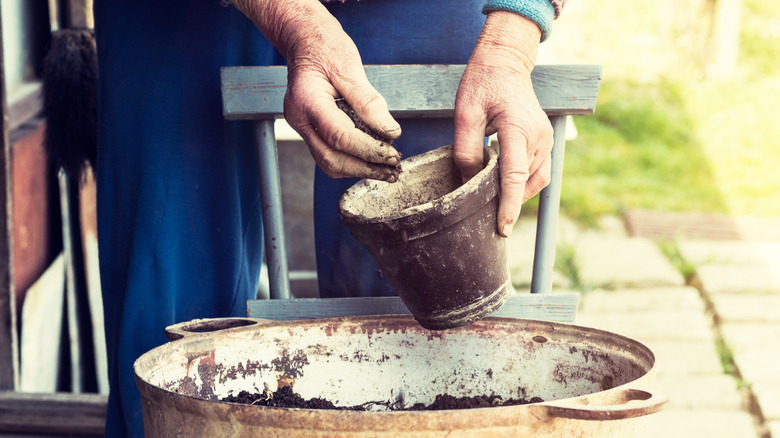
Whenever you purchase a plant, you also purchase the plastic nursery pot the plant comes in. Plastic pots are so widely used by nurseries because they're lightweight, tough, and hold water well. Plus, they are relatively cheap to manufacture. If you frequently buy plants, you'll quickly build an unmanageable stash. Thankfully, there are also plenty of creative ways to reuse plastic nursery pots in your garden outside of just growing plants in them, including YouTuber Refúgio Green's clever idea: transforming them into a combination bird feeder and birdhouse.
You'll need two nursery pots, a hanging planter saucer, and a plastic lid. One nursery pot should be larger than the other, and the smaller pot's diameter at the opening should be about the size of the base of the larger pot. The lid should be roughly the same size as the smaller pot's base, and since the larger pot will sit face down on the hanging saucer, make sure the saucer is larger than the pot's rim diameter. Some birds will avoid houses that are too large or too small, so choosing the right pot sizes is important.
Most birds need a house with a floor space of at least 4 inches by 4 inches, so your pot will need a diameter of at least 4.51 inches to achieve the same area of floor space. Other birds may want up to 6 inches by 6 inches of floor space, or a diameter of about 6.77 inches. To ensure that your birdhouse gets used, look up the size recommendations for the types of birds you find in your yard or the types of birds you want to attract.
How to build this DIY bird feeder and house
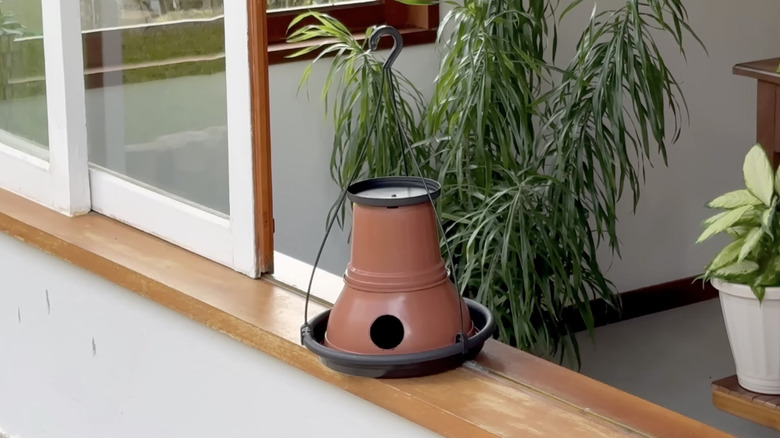
While a dual-function bird feeder and birdhouse might sound complex to build, this DIY is actually fairly simple. Once you have chosen your pots, the first thing to do is cut out the entrance hole in the larger pot. Just like the floor space, birds have preferences for the size and height of the hole in the wall. Most holes should be at least 1.25 inches in diameter and placed at least 4 to 6 inches above the floor, but requirements vary significantly by bird type, so you should check the requirements for your local birds before cutting out the hole and sanding any sharp edges smooth.
When the entry hole is complete, assembly is quite simple. Apply glue to the rim of the larger planter and stick it onto the hanging plant saucer, allowing it to dry completely. Apply glue to the rim of the smaller pot, and press it onto the top of the upside-down larger planter. Then, apply glue to the lid so that it is placed like a bowl and secured on top of the stacked planters. The result should resemble a two-story birdhouse with a wide, round base.
Fill the top upside-down lid with birdseed, and use the hanging attachment of the plant saucer to hang your project from a hook, rope, or post. Finally, you may also want to check out some tips to encourage birds to use the new birdhouse in your yard before you get ready to enjoy some bird watching. Or, you could spend more time customizing it.
Decorating and maintaining your DIY bird feeder and house
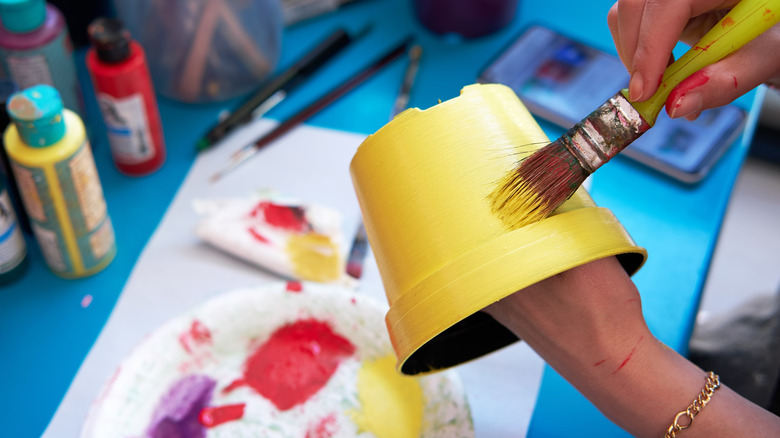
The final thing you'll want to consider during this DIY process is the decoration. Nursery pots come in a wide variety of colors, but some are better suited for birds than others. Black nursery pots are common, but dark colors absorb heat, creating an environment that can be dangerously hot for birds. Plastic already gets hotter than other birdhouse materials, such as wood, so you should paint your pots lighter colors.
Colors that are too bright may be avoided because the brightness could attract predators, so opt for muted shades. Also, make sure you use a non-toxic and lead-free paint and sealer. Apply both only on the outside of the house, and allow them to dry completely before putting the house outside for the birds. If you need some inspiration, you can use these stunning colors on your birdhouse to attract more flying friends. Painting the lid and hanging the plant saucer will complete the look and give your unused nursery pots new life.
Regular cleaning and care are important maintenance for birdhouses. Bird feeders should be cleaned every couple of weeks. The process usually involves scrubbing the feeder and cleaning it with a solution of nine parts water and one part bleach before drying it out and hanging it back up. Birdhouses don't need to be cleaned as frequently as feeders, but when you do clean them, you can use the same process and solution. While the same bleach and water solution is often recommended for cleaning plastic nursery pots, you may need to be careful of your painted decorations when cleaning.