

20 Impressive Trees That Can Help Create A Stunning Canopy In Your Garden
We may receive a commission on purchases made from links.
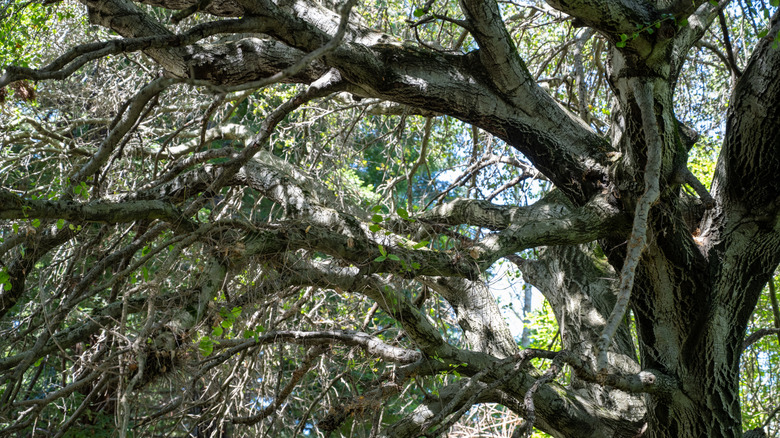
Canopy trees form the tallest layers in a forest or woodland, and are usually at least 30 feet tall, hanging over understory trees, shrubs, and herbaceous perennials. If your yard or garden is lacking this type of tall greenery, choose species based on your region for the greatest benefits. Some of the best options are oaks (Quercus spp.), maples (Acer spp.), and hickories (Carya spp.). Whether you're hoping to provide natural shade for your yard or increase biodiversity with your landscaping, growing tall trees to create a canopy brings incredible benefits. This approach helps balance the temperature in your garden, keeping your outdoor space cooler during summer. An upper layer of vegetation will also soften rainfall before it hits the ground, which can help prevent erosion and flooding.
When choosing trees to create a canopy for the ultimate natural backyard shade, take measurements of your yard so that you know what you have room for. Of course, you'll also need to consider sun and water availability, as well as soil type and USDA Hardiness Zone — make sure the requirements for these impressive trees match your conditions. You probably also want to choose species that are native to add wildlife benefits. Remember that small saplings will one day change the amount of light in your outdoor space, meaning you may need to grow shrubs or perennials adapted to part or full shade under their branches.
American ash
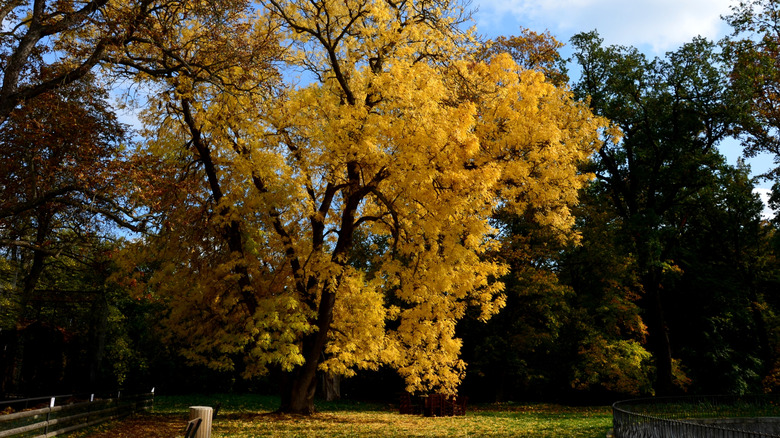
If you're looking for a canopy tree to add deep shade to your yard, you should consider American ash (Fraxinus americana). This magnificent deciduous species is a fast grower that thrives in part or full sun, and is native to the eastern and central U.S. It can reach up to 120 feet tall, and has a spread of 50 to 75 feet. These swallowtail butterfly host plants have corky brown to gray bark on single trunks, and compound leaves that turn gorgeous colors in autumn. Grow American ash in zones 3 to 9, in well-draining, moist soils.
American beech
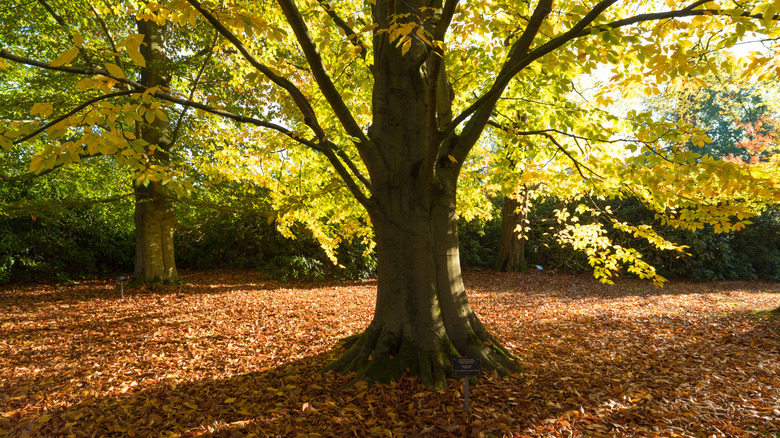
American beech (Fagus grandifolia) is a deciduous species with an impressive canopy that spreads to 40 feet wide, on a single trunk that reaches up to 80 feet tall. Its dense growth is perfect for shady woodland gardens. It has glossy, oval-shaped leaves, smooth bark, and prickly fruit husks containing nuts that wildlife love. American beech thrives in full sun or part shade, and in clay, loam, or sandy conditions as long as the soil is well-draining and preferably moist. Growers in zones 3 to 9 can reach for this native tree of central and eastern North America.
American elm
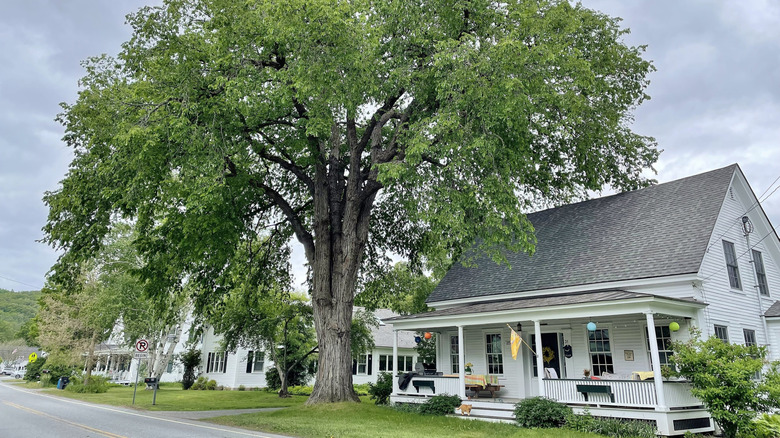
To create a canopy over your backyard quickly, American elm (Ulmus americana) is a fast-grower you can plant in moist or dry soils. This majestic deciduous species has a single straight or multiple forked trunks, and oval leaves that turn gold in fall. Grow this U.S.-native tree — which reaches up to 80 feet tall and 60 feet wide — in a large rain or pollinator garden, where it will attract beautiful butterflies. For resistance to Dutch elm disease, choose the 'Jefferson' variety. You can grow adaptable American elms in full sun in zones 3 to 9.
American sycamore
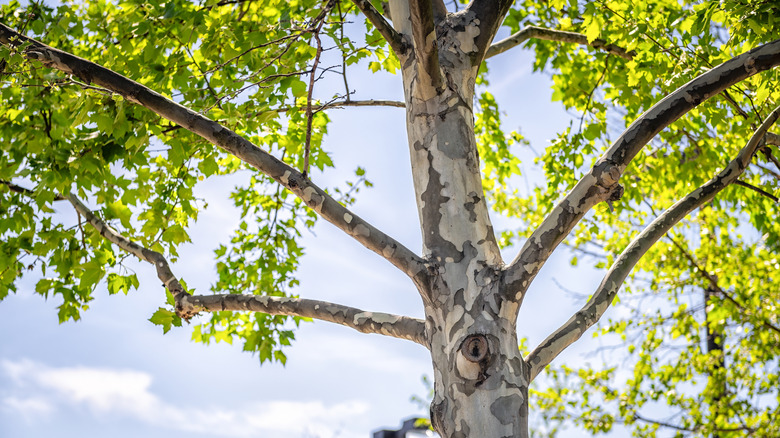
American sycamore (Platanus occidentalis), also known as American plane tree, is another wonderful candidate for your canopy. This native to the central and eastern U.S. is best for large gardens since its trunk can reach 10 feet wide and grow to a 100-foot spread. A deciduous species that thrives in zones 4 to 9, it needs full sun and moist, well-drained soil. This grandiose, 100-foot tall species has gorgeous, mottled bark on the upper section of the tree, ball-like fruits, and lobed foliage that resembles maple leaves. As a bonus, American sycamores can host beautiful songbirds like purple finches, juncos, and chickadees, in their branches.
Basswood
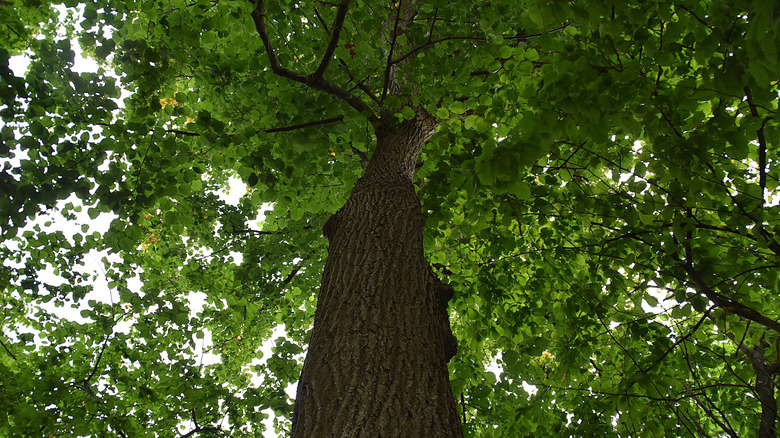
If you're looking for a canopy tree to create a deep shade garden in zones 3 to 8, add Basswood (Tilia americana) to your list. This impressive deciduous species is native to eastern and central North America and it spreads between 30 and 60 feet wide. You'll recognize it because of its straight trunk, mature size of up to 80 feet, showy flowers, and heart- or oval-shaped leaves with toothed edges. An additional advantage of basswood is that this species attracts fireflies. It thrives in full or part sun and prefers moist, well-drained soil.
Black tupelo
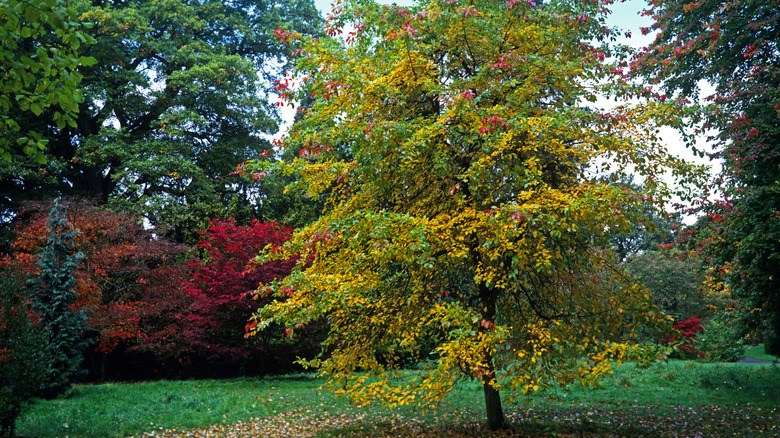
There are many reasons to love black tupelos (Nyssa sylvatica) for a canopy. Adapted to zones 4 to 9, this species is resistant to drought, heat, flooding, and even pollution. Plus it's very popular with all types of wildlife, like deer, bears, and birds, which enjoy its fruit and sprouts. This deciduous tree can reach 70 feet tall and around 35 feet wide, and is native to the eastern and central U.S. Expect glossy leaves that are gorgeous in fall, a straight trunk, and bark that is furrowed and matures to a dark black color. Grow black tupelos in full sun or part shade in moist, acidic soil.
Black willow
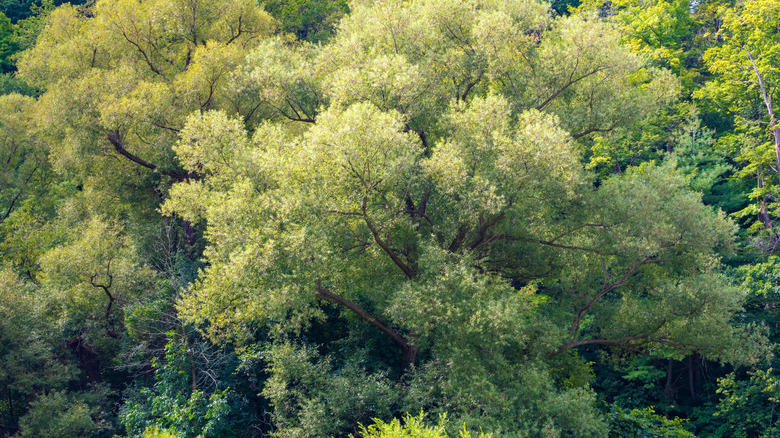
Native to eastern North America, black willow (Salix nigra) is an attractive, multi-trunked tree that reaches up to 60 feet tall and wide. This lush, deciduous species has a rounded shape, narrow leaves, and scaly bark — and is an important pollinator species, attracting both bees and butterflies. Plant this fast-growing willow in zones 4 to 9, in full sun where the soil is moist or wet. The best place to use black willow for a canopy is in a large landscape near a body of water, where it can help to prevent erosion.
Cabbage palm
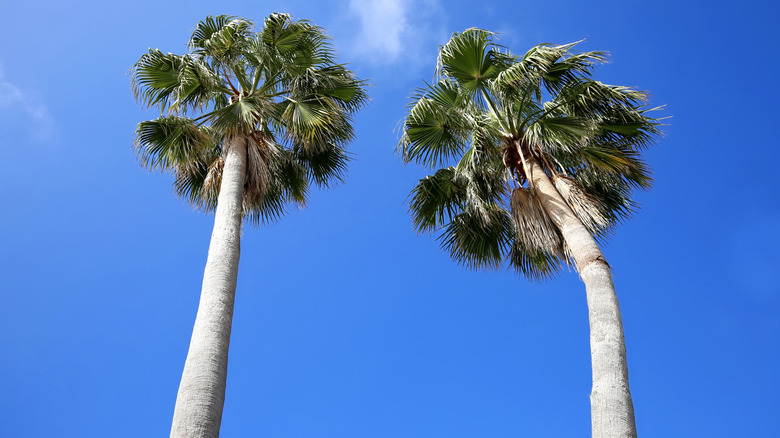
Cabbage palm (Sabal palmetto), is an evergreen whose spread can be greater than 10 feet wide – grow it to provide light shade in your garden if you live in zones 7b to 11b. This imposing native of coastal areas of the southeastern U.S. has fan-like fronds, and single trunks that reach up to 80 feet tall. As part of the upper tree canopy, its flowers and fruits provide nourishment for an array of wildlife. Grow cabbage palm in full sun where soils are well-draining and moist.
Dahoon holly
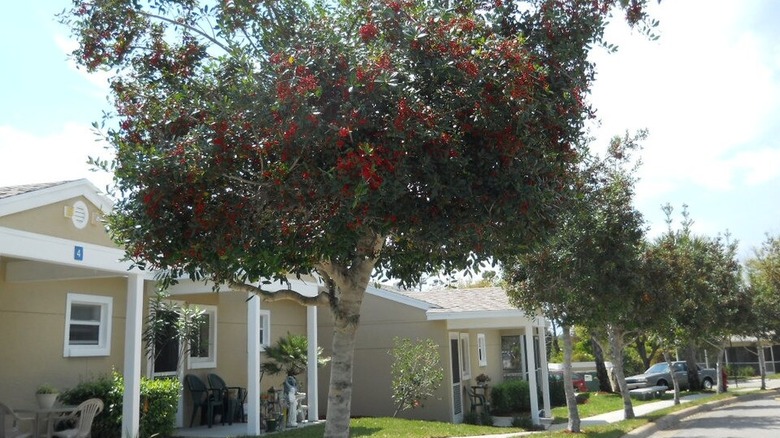
For smaller yards, dahoon hollies (Ilex cassine) provide a stunning evergreen canopy that reaches just 10 to 15 feet wide, on trees that grow to be 30 to 40 feet tall. This native of the southern U.S. has glossy, spineless leaves, and gorgeous red berries that feed birds throughout winter. Its open growth habit will cast dappled shade beneath it. Plant dahoon holly in full sun or part shade in moist areas of zones 7 to 11. You may also want to consider using this evergreen as an attractive year-round privacy screen.
Eastern cottonwood
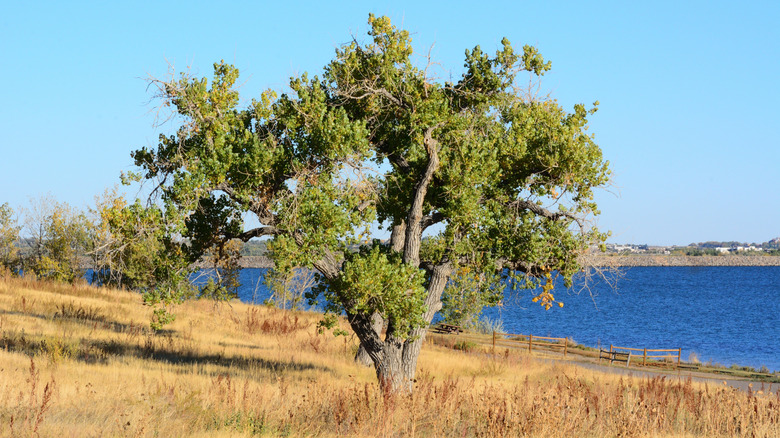
Eastern cottonwood (Populus detoides) makes an attractive choice for so many types of yards, since it grows as a native plant across most of the continental U.S. These beautiful trees are adapted to different soil types across zones 3 to 9 as well as full sun. Eastern cottonwoods have triangular or oval-shaped leaves and fluffy catkins that are blown about by the wind in spring. This drought resistant species can provide shade with its canopy on slopes or next to bodies of water.
Kentucky coffee tree
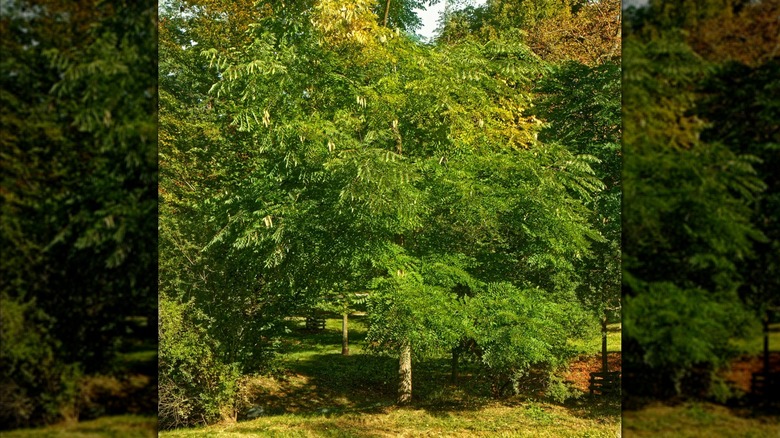
To create canopy for growing part-shade shrubs or perennials, plant a species like Kentucky coffee tree (Gymnocladus dioicus), which produces dappled shade under its branches. This stately deciduous species, which hails from the central and eastern U.S., produces oval-shaped leaflets, scaly, grayish-brown bark, and large seed pods. It reaches up to 80 feet tall and 55 feet wide. Gardeners in zones 3 to 8 can plant this selection in full sun to shade, preferably in moist, well-draining soil. As a bonus, Kentucky coffee tree is resistant to heat and pollution, making it fitting for urban yards.
Northern catalpa
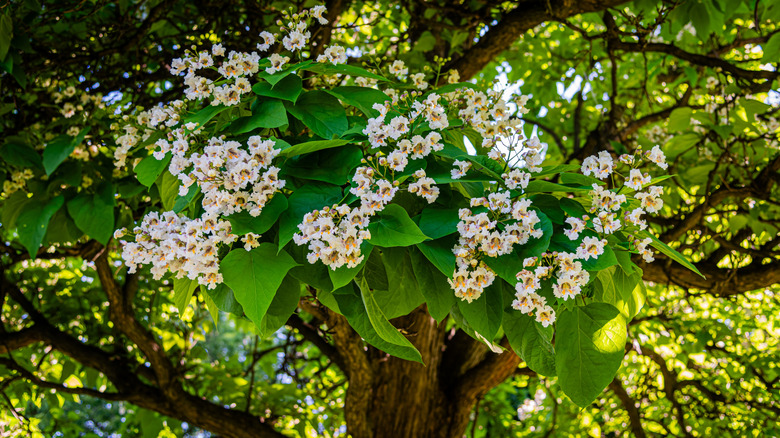
Canopy trees aren't just for creating shade gardens — you can also use them to grow incredibly showy blooms, like those of Northern catalpa (Catalpa speciosa). This awe-inspiring, deciduous species reaches up to 70 feet tall, but has a limited spread of just 16 feet, making it great for narrower spaces. This U.S. native has large, heart shaped leaves and big, orchid-like flowers that bees love. Plant Northern catalpas in zones 4 to 8 where the soil is well-draining and preferably moist, and where there are at least two hours of direct sun per day.
Pin oak
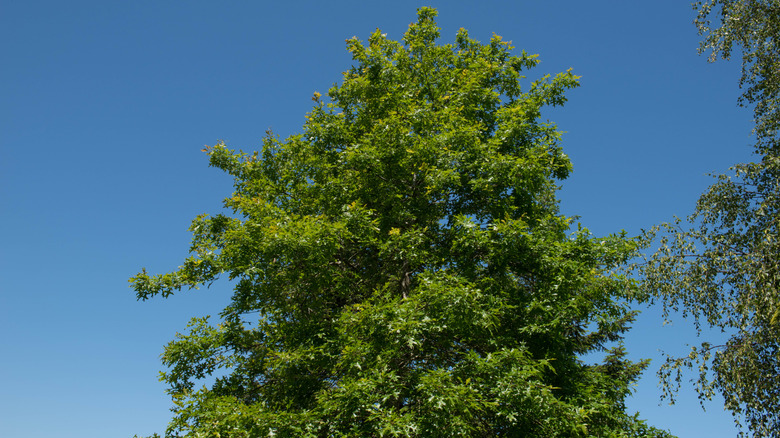
Pin oaks (Quercus palustris) are majestic canopy trees that reach 70 feet tall and 60 feet wide at maturity. They bear leathery, lobed leaves, and produce acorns in fall. These deciduous oaks are very popular with wildlife, including songbirds and butterflies, and provide shade for gardens made up of sun-sensitive plantings. Native to the eastern U.S., pin oaks are adaptable to different soil types — even compacted areas — and can grow in full sun or part shade in zones 4 to 8.
Red maple
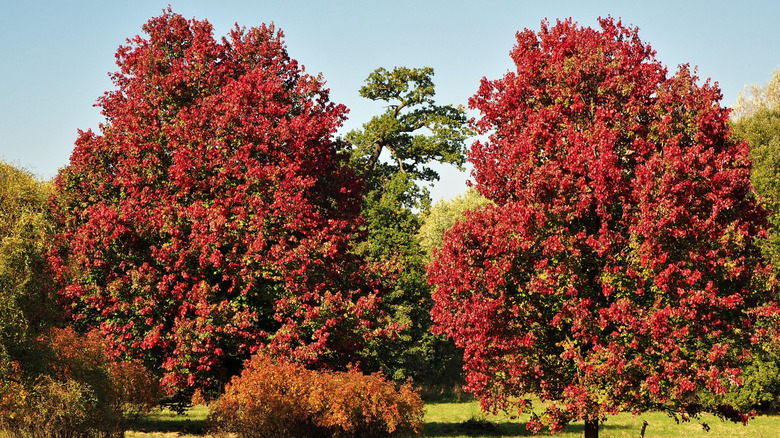
Red maple (Acer rubrum) is a deciduous tree that can reach an impressive 120 feet tall, and has a canopy that stretches out up to 50 feet in your yard. With palm-shaped, lobed leaves, and smooth to ridged bark, this species is a stunner with its incredible fall color. Grow red maples in zones 2 to 9 where you have at least two hours of direct sun and well-drained soil. Pollinator gardeners take note — bees love this U.S. native for its early spring flowers.
Red oak
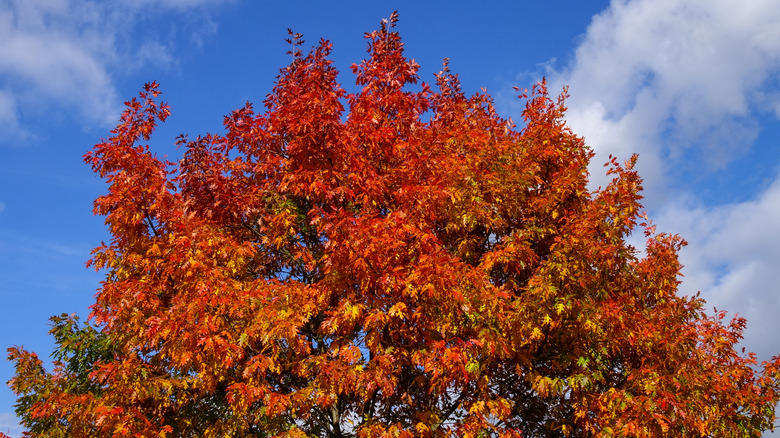
Red oak (Quercus rubra) is one of the fast growing shade trees you can use to cool off a hot backyard. This stunning U.S. native grows to be up to 70 feet tall and 75 feet wide, and has lobed leaves that turn beautiful shades of copper to burgundy in fall, while producing rounded acorns beloved by squirrels, white-tailed deer, black bears, mice, chipmunks, and wood ducks. Red oak canopies are also wonderful for breeding birds and butterflies. Grow red oaks in zones 4 to 8, in full sun or part shade. This magnificent species is adaptable to many different soil types.
River birch
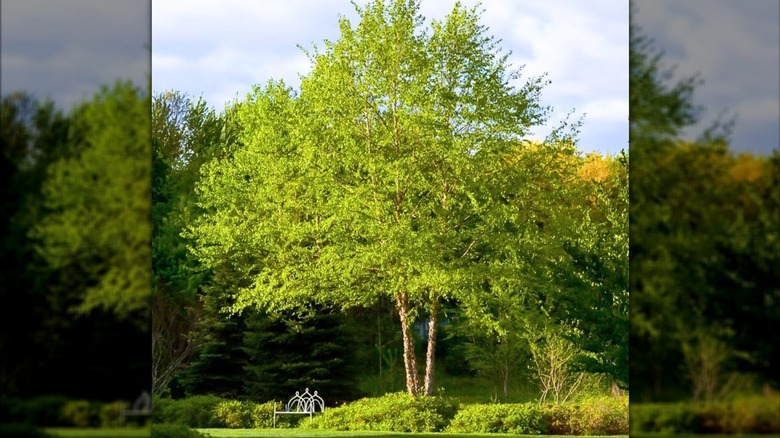
River birch (Betula nigra) is a beautiful species that flourishes in moist locations in full sun. You can add natural shade to your backyard by planting this gorgeous, fast-growing tree, which is loved for its peeling bark, showy flowers, and serrated leaves that are a beautiful gold in autumn. This deciduous, multi-trunked species attracts birds and pollinators, and at maturity, river birch reaches an impressive 70 feet tall and has a 60-foot-wide canopy. Plant it in zones 4 to 9 where its multi-branched, open growth habit that will create dappled shade over your garden.
Scarlet oak
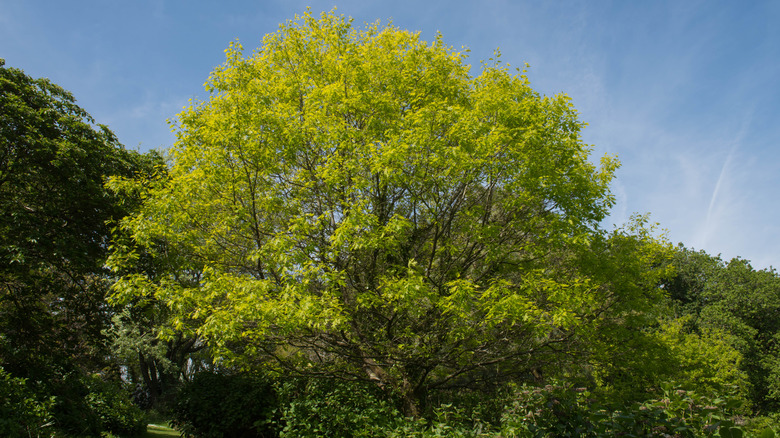
If rising summer temperatures are a concern in your yard, know that scarlet oaks (Quercus coccinea) are among the shade trees that can handle high temperatures. These deciduous North American natives reach up to 80 feet tall with a 60 foot spread, have lobed leaves, and gorgeous fall color. These majestic oaks are also wildly popular with pollinators. You can grow scarlet oaks in zones 4 to 9, whether you have full sun or part shade, as long as you have well-draining soil. Areas that are acidic and sandy are a plus when adding this species for canopies.
Shagbark hickory
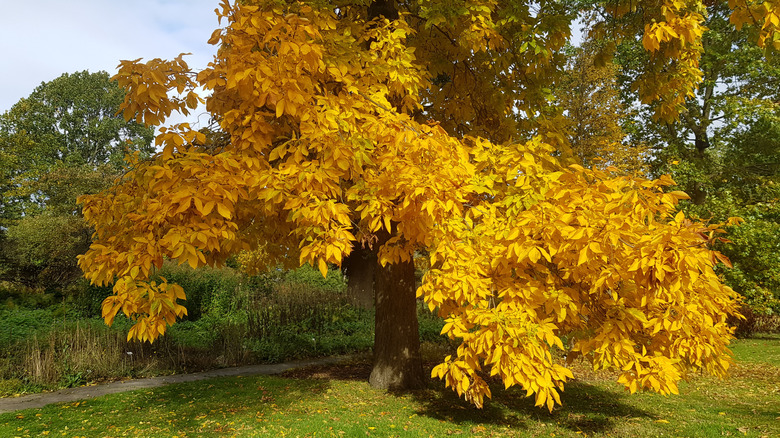
Shagbark hickories (Carya ovata) are deciduous canopy trees that can be used in large landscapes. This North American native reaches 90 feet tall with a spread of up to 70 feet wide. It produces compound leaves, has shaggy bark, and bears edible nuts. This species, rated for zones 4 to 8, is adaptable to full sun or part shade, and many different soil types as long as drainage is good. If you love the idea of attracting beautiful Luna moths to your yard, you'll be thrilled to know that shagbark hickories are host plants for those impressive insects.
Sugar hackberry
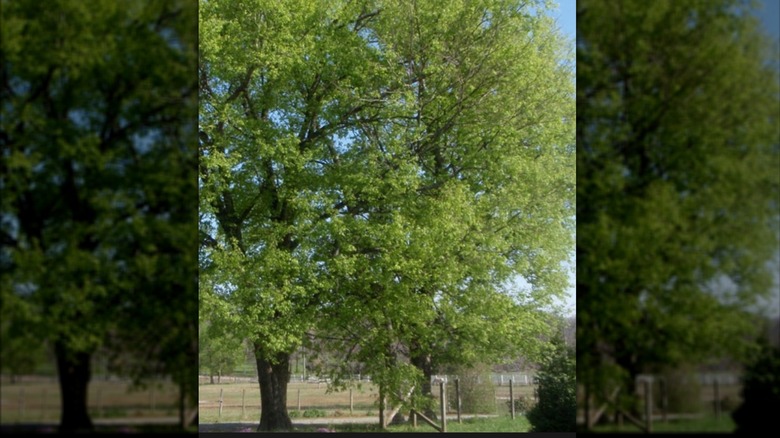
Sugar hackberry (Celtis laevigata) is a fast-growing canopy tree for your yard that birds and butterflies love. This stately species has corky bark, oval- or lance-shaped leaves, and colorful fruit. This deciduous species, also known as sugarberry, grows to be up to 70 feet tall and develops a spread of up to 60 feet. Sugar hackberry is adaptable to different soil types, full sun or part shade, and even grows well in urban areas. It grows natively in the southeast and south central regions of the U.S.
Tulip poplar
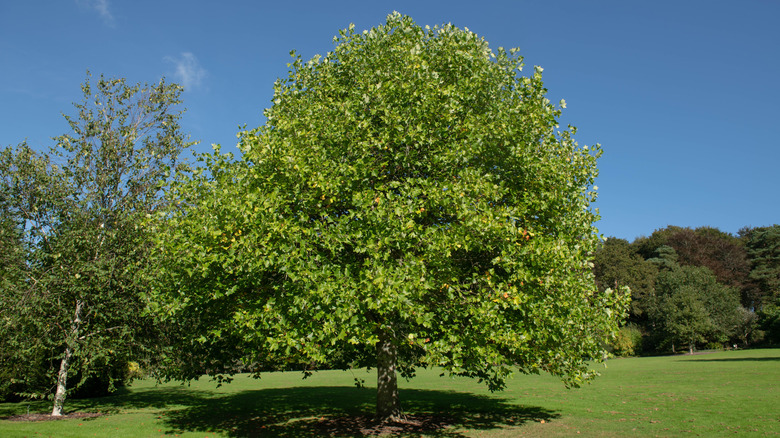
Tulip poplar (Liriodendron tulipifera) is a tree that grows fast, blooms bright, and may be perfect for your yard if you live in zones 4 to 9. This large deciduous species with a straight trunk can grow to an astounding 120 feet tall, with a spread reaching 60 feet wide, giving it a pyramidal shape (narrower towards the canopy). Its waxy, lobed leaves turn a stunning gold color in autumn, and in spring and summer, it bears showy, tulip-like yellowish green and orange flowers that attract hummingbirds. Grow tulip poplars in yards where there's full sun, good drainage, and preferably moist soil.