

A Simple Plastic Cup Is The Solution To Young Leaning Plants In Your Garden
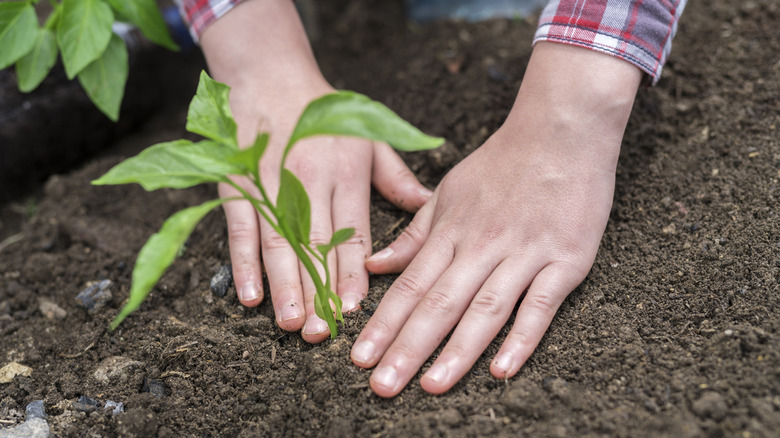
Gardening can be an extremely rewarding pastime, especially when you have lovely, healthy plants. But, as many can attest, it can also be extremely frustrating when things go wrong, especially at the start of the season. Young plants can be more finicky than a kid trying to decide what to eat at lunchtime. One minute they're standing tall and green, the next they're listing sideways or flopped over like they've given up. The good news is that it most likely isn't anything too serious – your plants might just need some support until they get a little stronger and more established. You won't even need to run out and buy anything; the fix might already be in your cabinet — a plastic cup.
There are a few reasons why your seedlings or young plants might be falling over. Because they aren't fully developed, young plants can lean for several reasons (tomato plants often do this), including uneven sun exposure, overwatering that weakens soil, wind, or transplant shock. The issue is that if a leaning plant is left for too long, it can cause permanent damage from insects, fungus, or even a permanent deformity to the stem. While there are a lot of great ways to support your plants to keep them happy and healthy, simple solutions are often the best solutions. Tomato cages are usually too big for smaller plants, and stakes with ties can sometimes damage a growing plant. That's why the plastic cup collar works — it supports your plants' stems without unintentionally damaging them.
How a plastic cup works as a temporary support collar for young plants
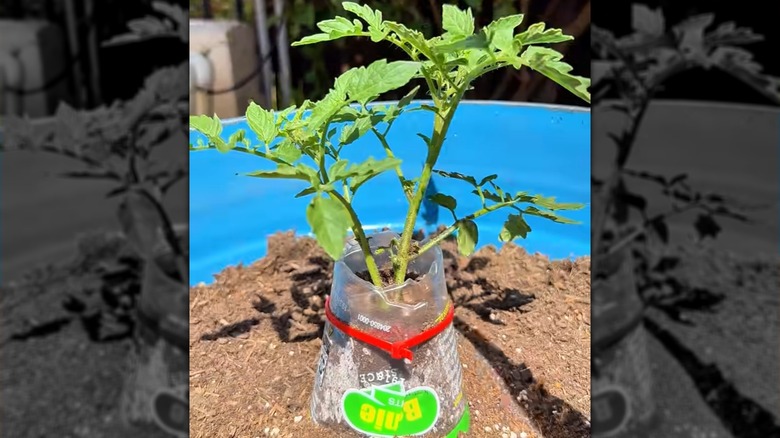
Young plants have a better chance of growing strong and tall when they are supported during the early stages of their growth. A plastic cup can give many types of young plants the extra support they need by providing more stability to the stem. Simply make a cut from the rim down the length of the cup, and cut the bottom off of it. Open the cup and place it around the base of your plant, then gently lift any leaves through the opening at the bottom. Be sure the cup is pushed down into the dirt about an inch for stability. For shorter plants, you can cut the cup down to fit. If you want extra security, you can add a zip tie around the center to keep the cup in place.
It's best to use a clear plastic cup for this because you can see what's going on with the plant by monitoring soil moisture and the health of the stem. You should leave the cup on until the stem of your plant is stronger, and the root system is well established. After a couple of weeks, you can remove the cup for a day or overnight to see if the plant is still leaning. If you're dealing with tomatoes, this would be when you could graduate your young plant to a tomato cage if you prefer. With vining plants, this is also a good time to set up a trellis system to support and train them to grow vertically.