

The Screws Hold The Secret To Identifying Real Antiques At The Thrift Store
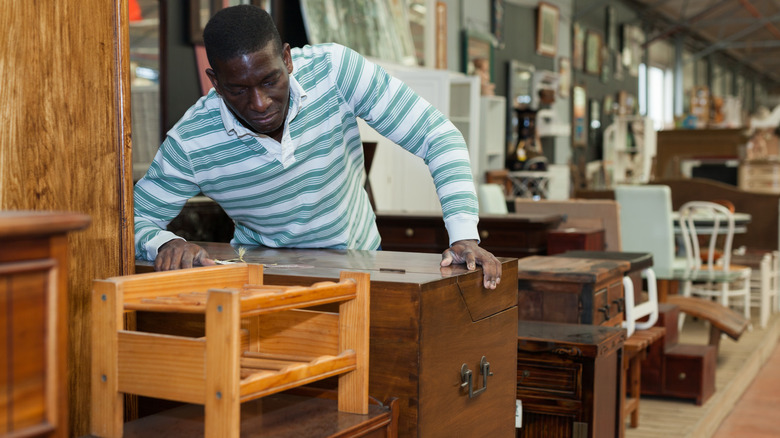
The thrift store can be a great place to search for hidden gems like antique furniture at affordable prices. The only problem is that sometimes the beautiful piece of furniture you think is an antique might not actually be authentic. If you're not an expert in antiques, it can be really frustrating when you purchase something you think is genuinely over 100 years old, but it turns out to be a very convincing reproduction. The key to successfully buying antique furniture for your home is to be knowledgeable about what markers are found on authentic antiques. Features like the type of joinery, maker's mark, or materials can help you identify a real antique. But one thing that can help determine if an antique was made in the early 20th century or before is the type of screws that are holding it together.
Like many types of technology, even something as simple as a screw has evolved over time. Phillips head screws weren't used in furniture until after the 1930s. Prior to this timeframe, you would never see a Phillips screw in a piece of furniture. Before the 1930s, furniture was assembled using flat-head or slotted screws, which were either handmade (prior to 1812) or machine-made (after 1812). The quickest way to check whether or not you have an authentic antique is to look on the underside and see what type of screws were used to hold the furniture together. If you spot a Phillips screw head, it's most likely not a true antique. However, the screws could have been replaced later in the piece's life. There are some things to look for that will help determine this as well.
How screws can date your antique furniture
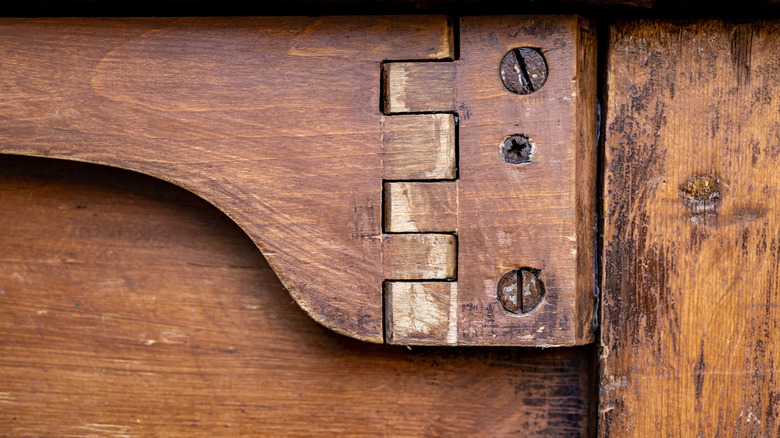
If you checked your beautiful piece of furniture and discovered the telltale cross-shaped slot of a Phillips head screw, it might not be the end of the world. While it may have been made after 1930, it could also have been repaired at some point. There are a few ways you can check for this as well. If original screws have been replaced, whether Phillips or flat-head, you may notice tool marks on the head, differences in oxidation, or mismatched patina compared to the rest of the hardware.
If there are flat-head screws but they look suspiciously modern, you can tell the difference between older flat-head screws and modern ones by the craftsmanship. Hand-cut flat-head screws made prior to 1812 have visible tooling marks, the threads aren't evenly spaced, and the slot isn't perfectly centered. Flat-head screws that were made by machine after 1812 will have more symmetrical threading, the slot will be more centered, but the threads won't run all the way to the head like modern versions. If you're still unsure whether a piece is an authentic antique, consider consulting a professional. They may also be able to tell you if your antique find is worth anything as well.