

The Lovely Cascading Plant That Grows Beautifully Indoors
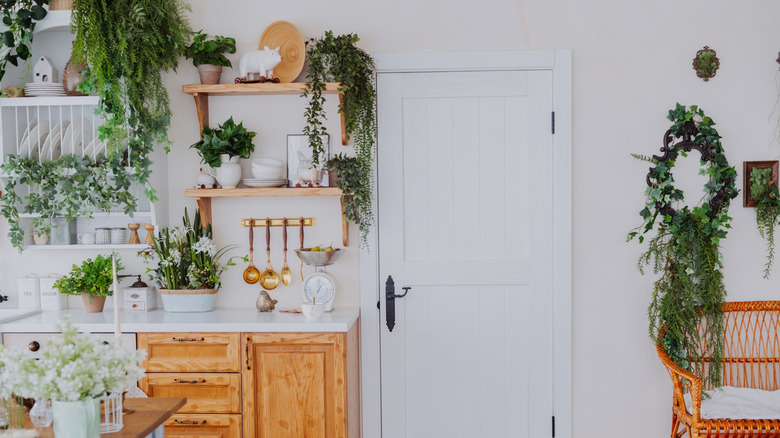
Growing plants indoors is an incredibly satisfying experience. Not only do they add color and texture, but they also bring a feeling of calm and peacefulness to the indoor space. And when it comes to indoor plants, cascading ones are a popular choice. Take string of nickels (Dischidia nummularia), for instance. It gets its name from its small, almost circular leaves, which look like hanging coins on its thin, stringy stems. The stems themselves can grow up to 2 to 3 feet long and drape beautifully over the edges when grown in containers. This creates a cascading effect that looks especially appealing in windows, on shelves, and on patios. If, however, small circular leaves seem just too plain and boring, there are many other beautiful trailing "string of" plants to decorate your home with, too. Some even have leaves that look like turtles and leaping dolphins.
As for the string of nickels itself, it is pretty easy to grow and grows well in low or dappled light indoors. This is all thanks to its epiphyte nature. If you don't know what that means, epiphytes are plants that grow on other plants. Thus, they are naturally adapted to grow in dappled or filtered sunlight, which is typical of most indoor spaces. Just keep in mind that if you are growing string of nickels indoors, it is best to keep it out of reach of pets and children. Its milky sap can be toxic if ingested and can cause skin irritation on contact. So, if you are looking for pretty houseplants safe for your child's bedroom, you might have to go with another indoor plant.
Helping your string of nickels plant thrives indoors
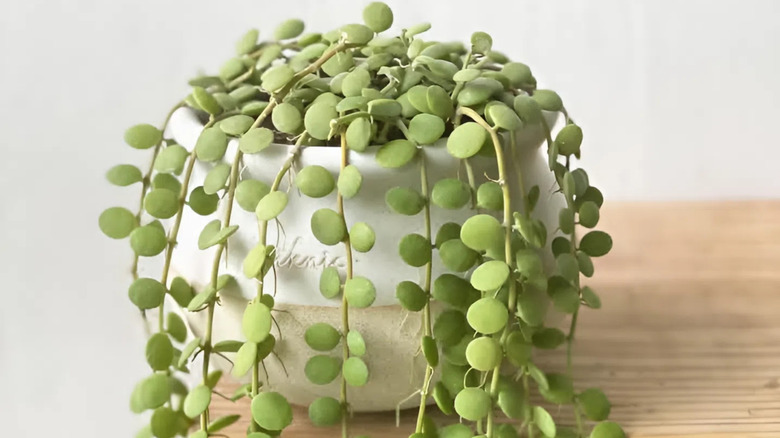
Since the string of nickels prefers filtered and indirect sunlight, place it somewhere near a north- or east-facing window. Don't put it in direct sunlight as it can scorch its leaves. If, however, the light levels are too low inside, you can use grow lights for indoor plants. Additionally, make sure the space where the plant is housed stays warm, ideally between 65 and 80 degrees Fahrenheit. Protect your string of nickels from cold drafts, too. Also, if you have placed it on a windowsill, don't let its foliage touch the glass to reduce the risk of its leaves getting frost damage.
Keep in mind that the string of nickels is a tropical plant, and it thrives in high humidity. This can be a problem, especially in winter, when indoor humidity levels drop due to heating systems running all day. Don't worry, though. There are many ways to increase humidity for plants indoors. Some are as simple as placing plants in groups or putting a pebble tray nearby.
Just don't confuse its love for humidity with its watering needs. The string of nickels prefers to dry out between waterings, and overwatering can be dangerous for it. Since it's a succulent, it can not only cause root rot in the string of nickels plant but can also lead to its death. The same goes for fertilizing. The string of nickels does not need much feeding. You only need to fertilize it about once a month with a diluted balanced fertilizer. And that too, only in the growing season of spring and summer. You do not need to fertilize it during the winter, and doing so can harm the plant.