

The Fast-Growing Shrub With Pretty Foliage That Adds Privacy To Your Yard
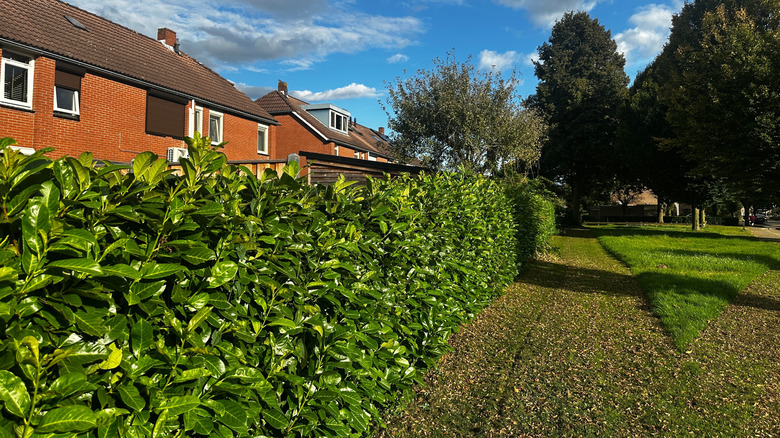
Stepping out onto your back porch to immediately make eye contact with a neighbor can be an awkward way to start your morning. Installing a fence is the usual solution, but for some, it can feel a bit like a cage. If you want a more organic privacy screen, seagrape (Coccoloba uvifera L.) is an excellent choice. This plant doesn't waste any time, shooting up quickly to form a wall of green that feels much more inviting than a fence made of pressure-treated lumber. The leaves are what really make it stand out — they're big and round with bright red veins that look almost painted on. As these shrubs grow, they create a thick screen that blocks the view of people walking by while maintaining your yard's relaxing vibe.
Because it grows so quickly, you won't be waiting years to feel like you have your own private space away from the rest of the neighborhood. This low-maintenance, fruit-bearing tree can shoot up to 50 feet tall in the wild, but you can keep it pruned down to a thick hedge between 6 and 10 feet tall. Plus, this plant is great for more than just privacy. Because the leaves are so dense, it also does a good job at muffling street noise and trapping dust before it can blow onto your patio. Local birds often pick the seagrape as a favorite spot to build their nests, and it helps stabilize soil and prevent erosion on sloped areas.
Seagrape thrives in warm coastal climates and sandy soil
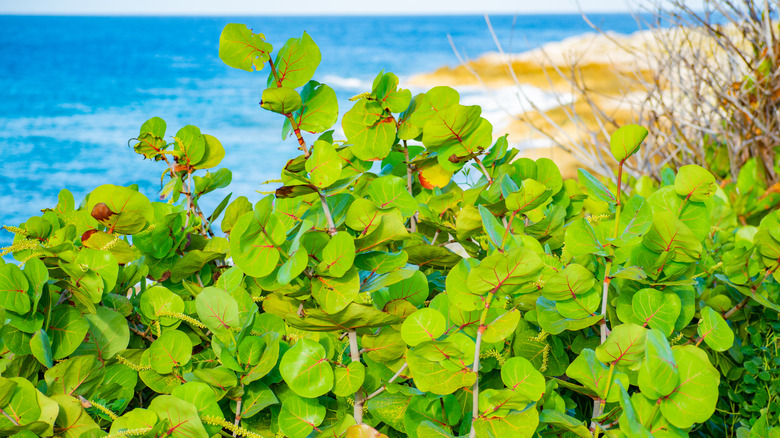
Seagrape is a great low-maintenance tree used for landscaping and well-suited for USDA Hardiness Zones 9 through 11, where winters are mild, and the sun is strong. This plant is famously tough, standing up to the wind and salt spray that many shrubs can't tolerate. It doesn't need much in the way of soil quality and thrives in gritty, fast-draining soil. While it loves to soak up the full sun, it isn't too picky and will still grow in areas that get a bit of afternoon shade. Seagrape has a high tolerance for alkaline conditions, meaning it won't struggle in areas with high limestone content or crushed shell paths. However, it's important to remember that this species is very sensitive to frost, and even a brief dip below freezing can cause significant damage to the plant.
Once the roots have had a chance to settle in, the plant becomes quite self-sufficient and won't need you fussing over it every day. This makes it an ideal choice for a vacation home or anyone who wants a beautiful yard without spending every weekend on maintenance. The natural shape can be sprawling, which helps it cover a lot of ground. Its root system helps it stay put during strong storms, making it much less likely to topple over than other shallow-rooted ornamental trees.
Occasional pruning helps maintain a thick and healthy privacy screen
Even though seagrape is a low-maintenance plant, a little bit of grooming goes a long way in keeping your privacy screen looking solid. Giving it a light trim in the late winter or early spring helps the plant spread out, making sure there aren't any holes in the foliage for people to see through. Since the leaves are so large, you should stick to hand pruners instead of electric hedge trimmers. A smooth cut through a single stem looks much cleaner than the shredded leaf edges that power tools tend to leave behind.
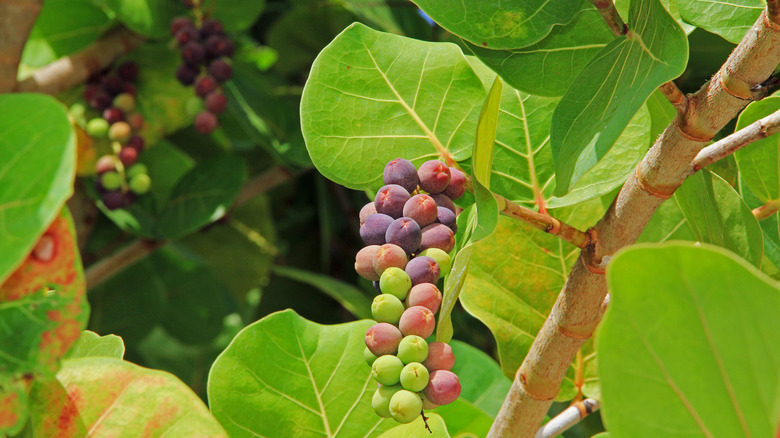
Planting seagrapes around your property is the kind of landscaping idea that will create privacy in your backyard while adding some visual interest to the space. If you happen to have both male and female plants, you may see fruit that looks like grapes hanging from the branches. The flowers appear in the spring, and the fruit begins to ripen throughout the summer and into the early fall months. These berries change from green to a deep purple as they ripen and attract birds. The fallen leaves take their time breaking down, so you might want to rake them up every so often to keep your lawn from getting covered.