

16 Self-Seeding Flowers That Bring Birds To Your Yard
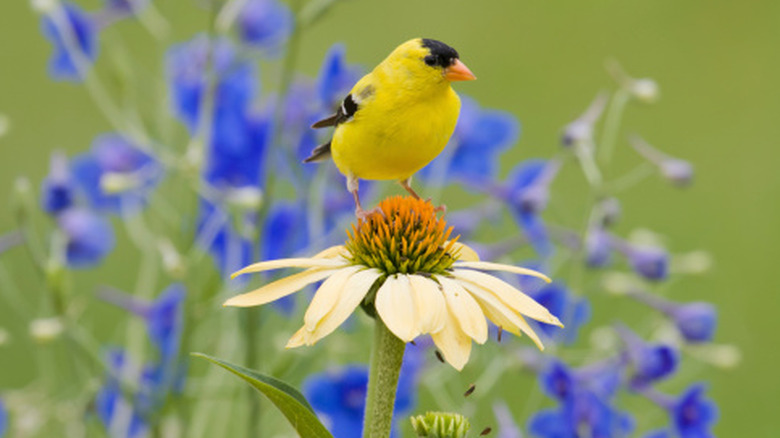
Gardens are full of beauty, more so than just the blooms themselves. They can bring cheery and charming wildlife like birds to your yard. If you're looking for a garden you can plant once and bring in birds for years to come, you may want to look at self-seeding flowers. As the name suggests, these are blooms that will drop seeds and grow new plants every year with minimal care on your end. There's no need to plan out rows or germinate seeds indoors. Some of the more notable kinds of self-seeders are sunflowers, zinnias, and coneflowers, but there are dozens of others sure to bring in songbirds and resow themselves every year.
These plants also have a secondary benefit of providing food for wildlife. Self-seeding flowers attract songbirds, like robins, jays, juncos, chickadees, and finches. However, some are also great at attracting insects for birds like orioles, titmice, woodpeckers, and cardinals. By planting flowers that bloom during different seasons and have seeds of various sizes, you can bring in a wide mix of flying wildlife. Additionally, since these plants usually produce the seeds after they finish blooming in fall or winter, they act as a great food source for birds during the scarcest parts of the year, all without having to constantly clean out and stock your bird feeders.
Bearded tongue
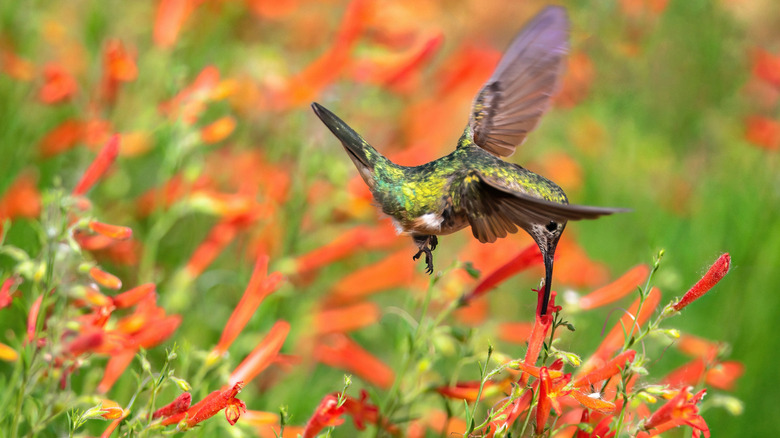
Bearded tongues (Penstemon spp.) are a colorful choice, excellent for attracting various songbirds like sparrows as well as hummingbirds. They are perennials, but relatively short-lived, and the first ones you grow may only live 3 or 4 years. Thankfully, though, you will never run out of these flowers in your garden, since they are also self-seeders. Bearded tongues thrive in USDA Hardiness Zones 3 through 9, but are naturally found across the entirety of the United States. Their ability to handle droughts, cold, and disturbed soils makes them easy to grow in almost any lawn.
Bee balm
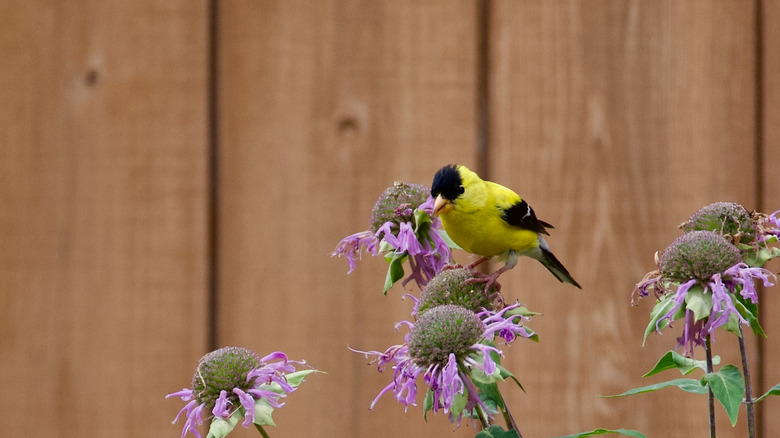
Hummingbirds, sparrows, and finches are just some of the bird species that will flock to your yard when you start growing bee balm (Monarda spp.). They are hardy perennials closely related to mint that grow best in zones 3 through 9. Because they spread via self-seeding and rhizomes, they may need to be thinned out every few years to keep them looking healthy. Bee balm, except for the roots, is edible and makes delicious teas and garnish for drinks, which can slow down the growth a little as well.
Purple coneflowers
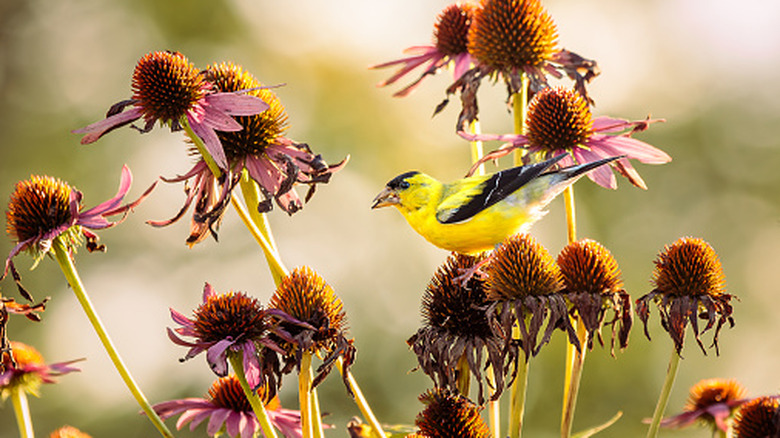
Coneflowers (Echinacea spp.) are also the perfect flower to plant near a bird bath, as they are a tasty snack for birds in the fall and winter if you leave the seed heads on the flowers. One of the best species, though, if you're looking for a low-maintenance and self-seeding plant is purple coneflowers (Echinacea purpurea). They produce seeds true to the parent and will keep producing the same stunning flowers every year. These beautiful perennials thrive in zones 3 through 8. Species like goldfinches, sparrows, and blackbirds are some of the birds that will flock to your flowers.
Ironweed
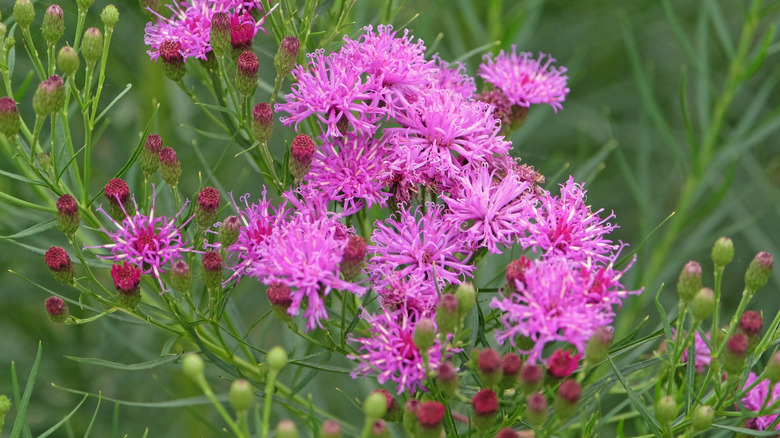
Ironweeds (Vernonia spp.) are sturdy plants with bright purple or red flowers. They are sure to attract birds like goldfinches and sparrows, as well as insect-eating varieties, such as bluebirds. The flowers also produce a lot of nectar, which can help attract hummingbirds as well. These perennials are hardy in zones 5 through 9, and self-seed prolifically, germinating around late spring. They often get a bad rap, as they can be a problem for pastures and fields, but in a garden, they can serve as a beneficial native plant.
Beggarticks
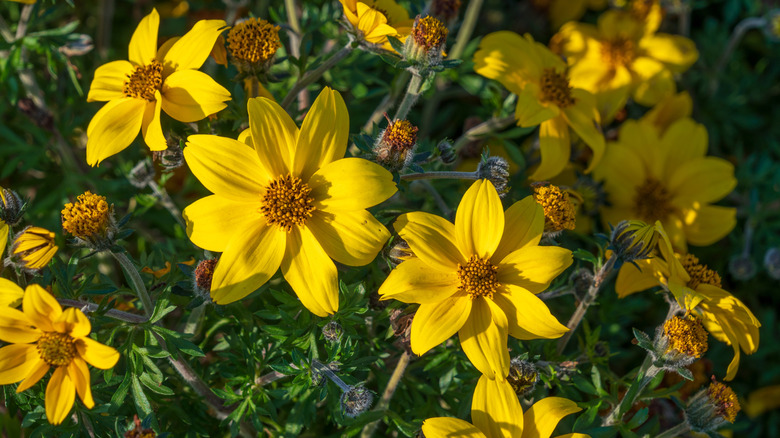
Beggarticks (Bidens spp.) are generally treated as annuals, though they can also be biannuals, and are found all across the United States. These plants self-seed with seeds that hook onto animals, clothes, and blow away on the wind, meaning they can pop up almost anywhere in your yard. Gamebirds, waterfowl, and songbirds all enjoy eating these plants, making them a well-rounded and attractive flower for both wild and manicured yards. In addition to bringing in a wide range of birds, they are one of the best flowers to attract monarch butterflies.
Tickseed
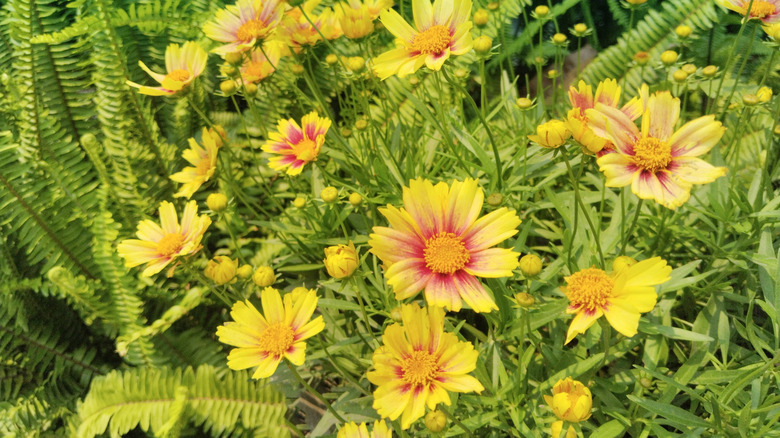
Tickseed (Coreopsis spp.) may have an unfortunate name, but they are gorgeous perennial flowers that thrive in zones 5 through 9. There is some variety, but many have at least a bit of bright and cheery yellow on the blooms. The seeds are small and black, which look a little like ticks or tick eggs and give the plant its name. Despite their creepy appearance, they are well-loved by birds of all shapes and sizes, including crows, goldfinches, and buntings. Not only are these self-seeders, but they are also a great low-maintenance addition to your garden.
Blanket flowers
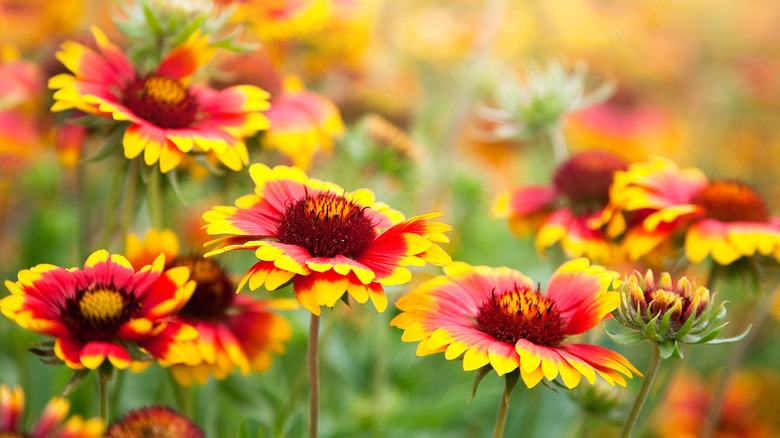
If you want a plant that will grow fast and enjoys the hottest part of the year, consider blanket flowers (Gaillarrdia spp.). They are a short-lived perennial hardy in zones 3 through 9, though they are sometimes grown as annuals. These self-seeding flowers pop up early in the summer and continue blooming until the first frost. As they produce seeds, songbirds such as finches will flock to your yard in search of a nice meal. Deadheading can encourage new growth, but be sure to keep some seeds around for repopulating and feeding your feathered visitors.
Sunflowers
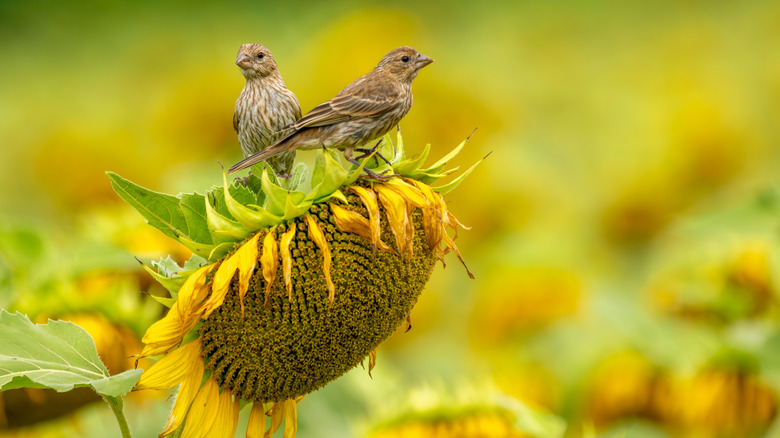
Sunflowers (Helianthus spp.) are another genus of native flowers that stretches across the entirety of the United States. While they are usually associated with cheery yellow, there are many options to choose from in a range of colors and varietiesincluding several stunning sunflowers that will brighten your property. Most are annuals that bloom from July to October. However, there are perennials such as the Maximilian sunflower (Helianthus maximiliani), which is hardy in zones 3 through 9. Many birds, both big and small, love the seeds from these flowers, including cardinals, chickadees, finches, nuthatches, and juncos.
Thistles
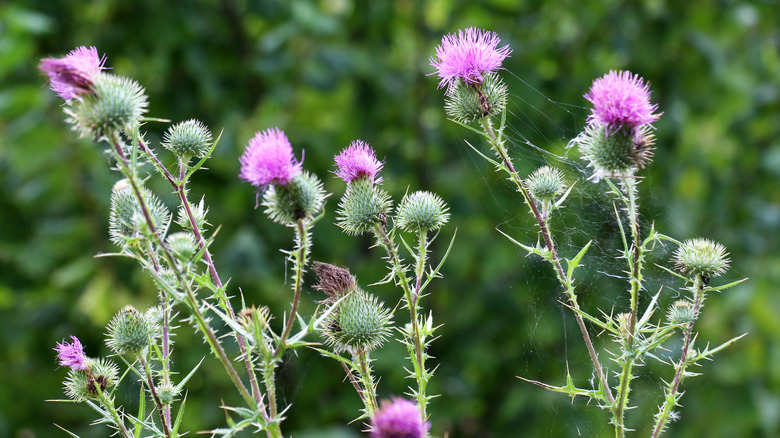
Plants like thistles (Cirsium spp.) might not be what you initially think about growing in your garden. After all, they are a little prickly. However, native species of these flowers play an important role, including attracting songbirds like goldfinches, pine siskins, and juncos. Native thistles tend to be biannual or short-lived perennials and thrive in zones 2 through 10, depending on the species. However, take care to only plant native thistle in your area. Ones like the Canada (Cirsium arvense) and bull (Cirsium vulgare) thistles are invasive and should be avoided.
Mistflowers
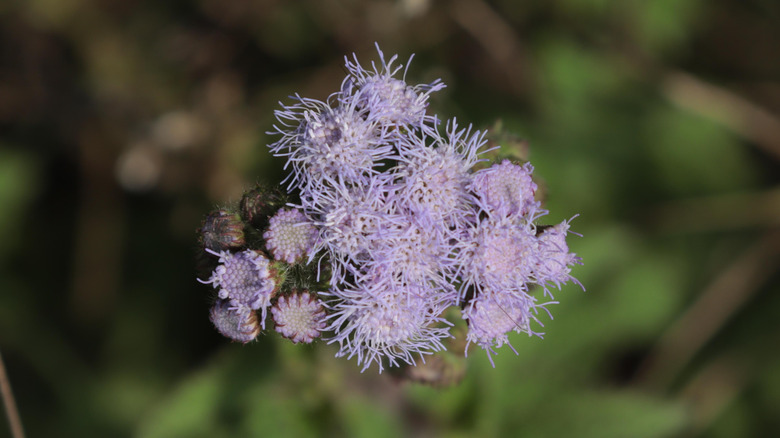
Mistflowers (Conoclinium coelestinum) are light blue perennials that bloom primarily in the late summer and fall. The seeds are a good food source for small songbirds, like juncos and goldfinches Mistflowers are natively found on the eastern part of the United States, and most cultivars thrive in zones 5 through 10. However, they do grow and spread quickly. They are self-seeders and can spread from their rhizomes. If you don't stay on top of them, they will easily take over a smaller garden and be a headache to contain.
Cosmos
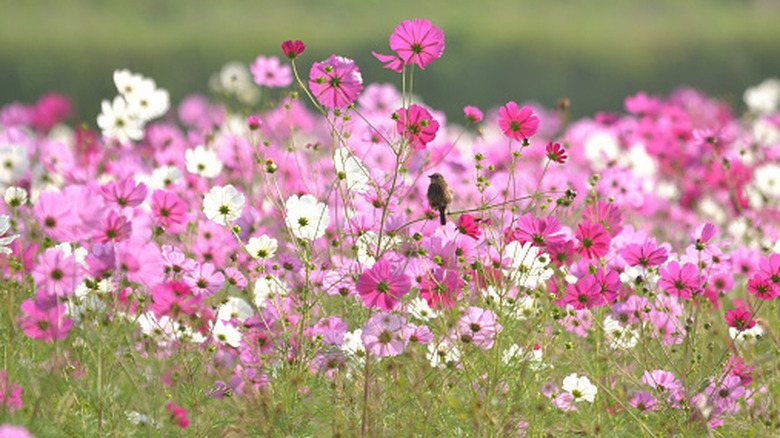
The colorful self-seeding flower that will regrow by itself in the spring — known as cosmos (Cosmos spp.) — is also a great bloom to have if you're looking to bring in birds. Their seeds are an attractant to sparrows, doves, and goldfinches, to name a few. They are also popular with insect-eating species, like orioles, jays, swifts, and flycatchers, as these flowers attract all sorts of bugs. Cosmos are annuals and can be grown in pretty much any zone after the last frost. They tend to bloom from summer to fall, and come in many different colors.
Golden groundsel
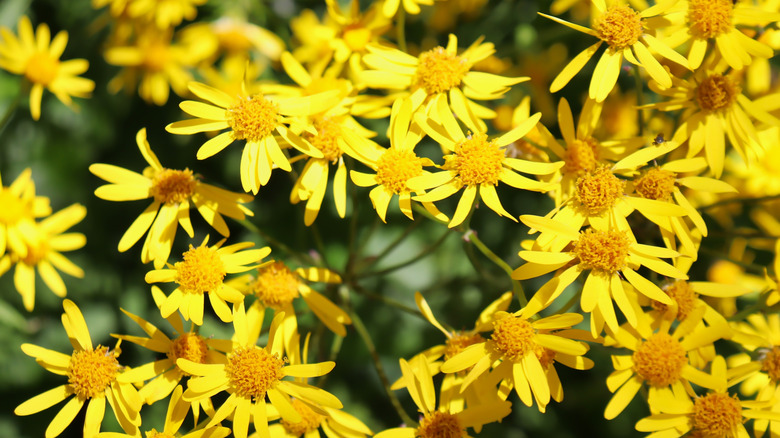
Golden groundsel (Packera aurea) self-seeds and is a very prolific plant that can grow in dense mats. This bright yellow flower is a short-lived perennial and grows in zones 3 through 9. It spreads using both rhizomes and seeds, making it another prolific plant. Once the flowers start to die off for the season, songbirds tend to flock to the seeds, especially goldfinches. Additionally, hummingbirds will use the fluffy parts of the seedheads to make nests. Golden groundsel tends to prefer moist conditions and can even handle a little flooding.
Zinnias
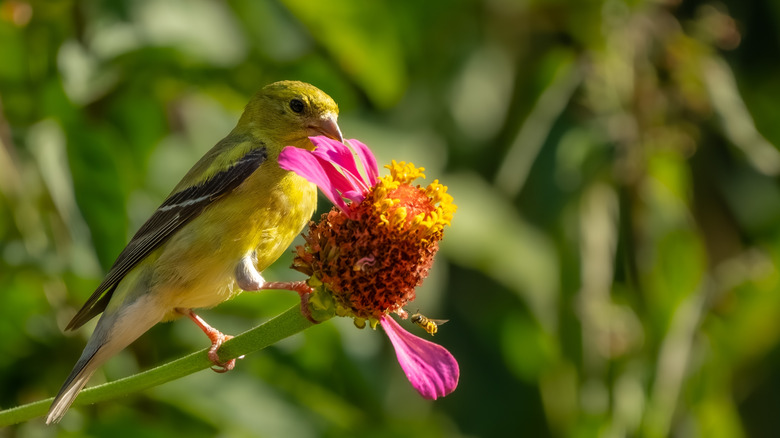
Another beautiful choice for your garden is the well-loved zinnia (Zinnia spp.). Many varieties are self-seeding annuals, continuously producing blooms year after year. They are known for their abundant and fast-growing flowers, as well as their diversity when it comes to color, size, and shape. There are a few perennial varieties, though, like plains zinnia (Zinnia grandiflora), which is hardy in zones 4 through 8. Hummingbirds flock to these flowers for their nectar while chickadees, buntings, and finches enjoy their seeds. Their heat and drought tolerance further make zinnia an ideal plant for many yards.
Marigolds
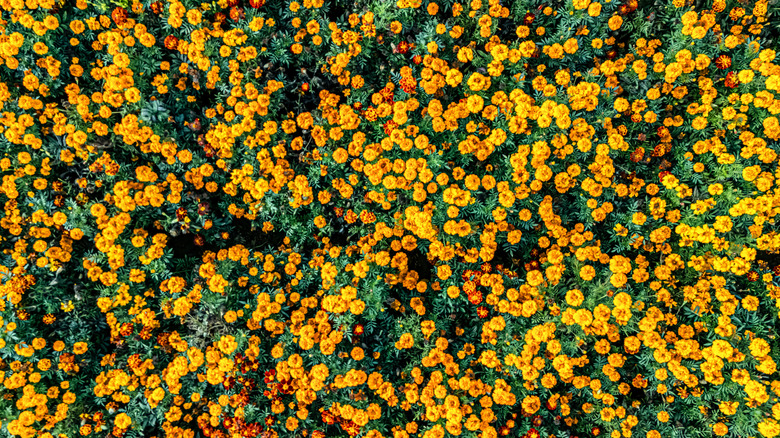
If you want a plant that offers nothing but benefits all around, you should grow a self-seeding flower in your garden for healthy soil and color — marigolds (Tagetes spp.). These flowers are hardy, but birds like grosbeaks and titmice love to eat the seeds after the blooms die. They are fast-growing plants as well. Most commonly planted species of marigolds are annuals, but are sure to be the center of your attention in your garden while they're around, thanks to their abundant and bright blooms, especially if deadheaded on occasion.
Black-eyed Susans
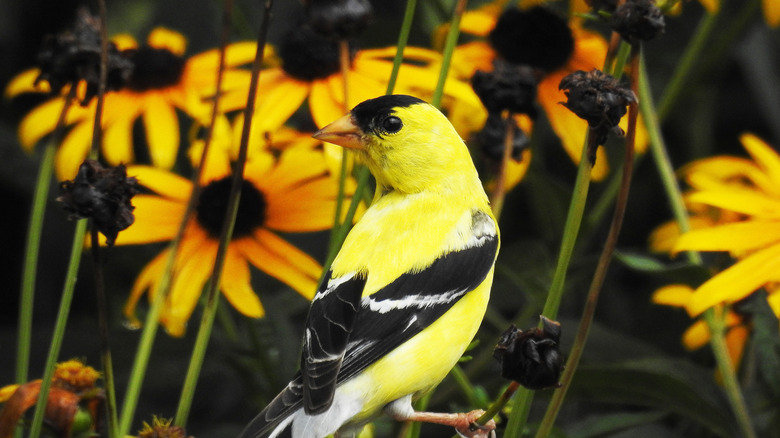
At the beginning of fall, black-eyed susans (Rudbeckia hirta) start drying up and forming hard seeds, which bring in all sorts of birds, especially goldfinches, cardinals, nuthatches, and chickadees. These perennial flowers thrive in zones 3 through 9, and they love the heat. They're pretty easy to care for, but still take time to do some research on everything you need to know before planting black-eyed Susans, to ensure sure you don't make any simple mistakes. For example, they are self-seeders, but sometimes struggle if the temperatures don't drop enough in the winter.
Asters
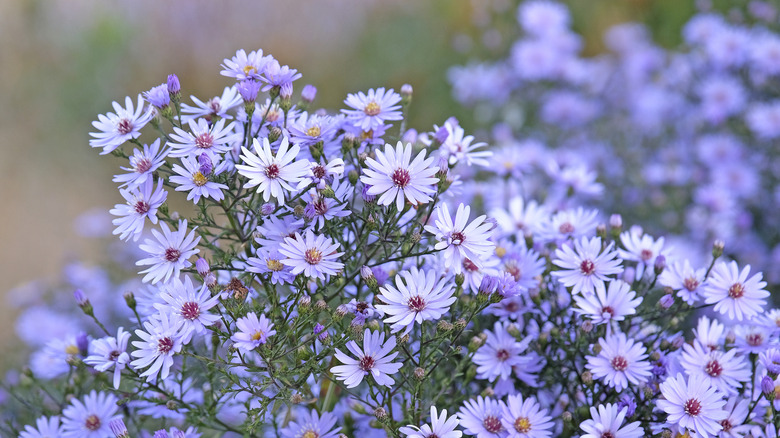
Asters (Aster spp.) are a large group with over 100 native species found in the U.S. alone. Most of them are perennials and hardy in zones 3 through 8, though there is some flexibility between specific ones. They are beautiful and varied, but have a few things in common, including the fact that they're self-seeders and feed birds like sparrows, chickadees, nuthatches, and cardinals. Many flying friends will eat the seeds, but they also attract insects to feed other species. Since they bloom in fall, they act as a late-season food source for many birds.