

The Unexpected Benefit Of Having Moles In Your Yard
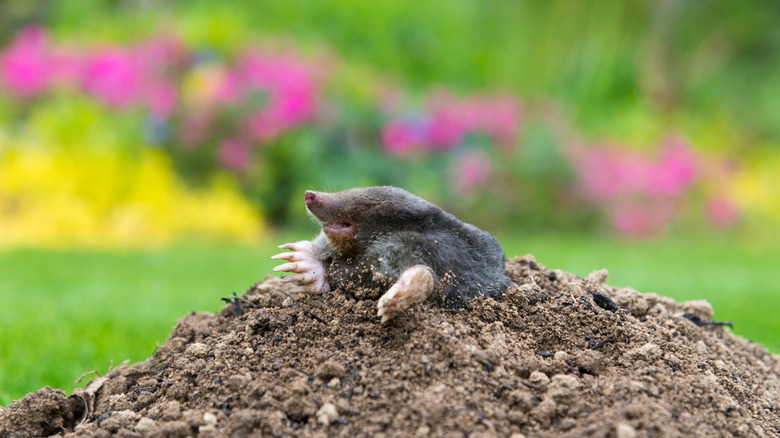
There are many factors that could be attracting moles to your yard. And, if you happen to find yourself faced with one of these little critters, your first instinct may be to get rid of the moles and repair the signs of their burrowing. However, while it may seem like your garden isn't big enough for the both of you, there's a benefit to letting nature take its course and allowing moles to roam your garden. They can make your soil and plants healthier, thanks to their digging and diet.
Moles are small mammals commonly found in backyards throughout the country. These mammals sport large front feet for digging intricate underground tunnels, and their diet mainly consists of invertebrates like worms and insects. For many gardeners, their constant digging may pose a nuisance, dislodging or uprooting plants entirely. However, their presence is a natural part of the garden, and if you look past the visible tunnels they leave in their wake, you can reap the advantages of their natural behaviors.
Like with all wildlife you share your outdoor spaces with, it's important to avoid handling or interacting directly with the moles in your yard. Depending on your region, handling wildlife may be restricted, and even something as seemingly small as picking up a mole to relocate it puts both you and your new favorite garden helper at risk of harm. When left alone, however, they'll do their best soil-improving, pest-controlling work.
How moles help boost your garden's health
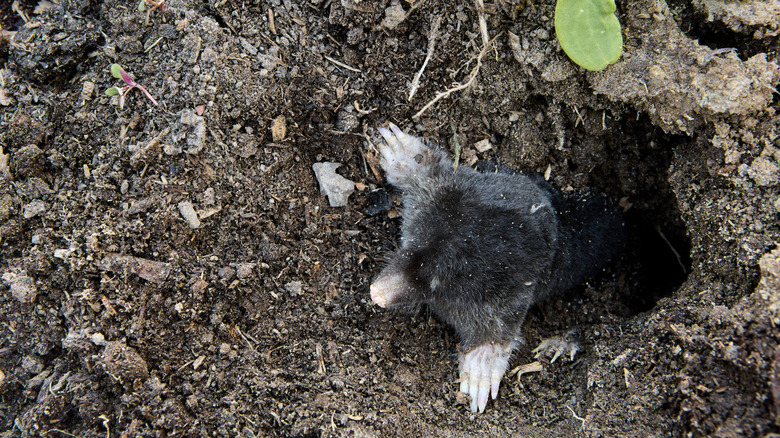
Think about the average day in the life of a mole: they tunnel, and they eat. While these tasks may seem simple, each one plays a unique role in boosting your garden's health. When moles dig, they shift and mix the soil. As a result, nutrients and organic matter become readily available for the plants in your yard. This tunneling also provides aeration, breaking up compacted soil that may be blocking the flow of water and nutrients. Although there are several ways to fix compacted soil in your yard by yourself, letting moles handle some of the heavy lifting can free up time for other essential outdoor chores.
Aeration is only one of the benefits of having a mole in your yard. Remember how you learned above that these little critters are carnivores? This means they act as natural pest control in your garden, eating insects and other invertebrates that could harm your plants. Moles eat a variety of common garden pests, including grubs, snails, slugs, beetles, and cranefly larvae. In fact, to fuel their tunneling, moles can eat their body weight in invertebrates each day. And as they produce waste, they add a bit of fertilizer to the soil. By making your garden healthier, moles earn their keep many times over.