

Double Check Before You Make A Thrift Store Donation! You Could Be Putting Yourself At Risk

Developing the strategies that work best for decluttering your home and putting them into practice is a satisfying and rewarding experience. Once you have completed the process and have all your unwanted items packed away, it's understandable to just want to dump the boxes at the closest donation center. However, double-checking before making a thrift store donation can help you avoid putting yourself at risk of a stranger obtaining your personal information.
When determining what you should and shouldn't donate to thrift stores, don't overlook personal items. Items have been sold at thrift stores that contain bank account information, legal documents, mortgage statements, IRA and 401K statements, tax returns, leases, car titles, photographs, and other sensitive paperwork. If the wrong person buys these items, it can put the donator at risk of becoming a victim of identity theft.
Some organizations, such as Goodwill and the St. Vincent DePaul Society, have policies in place for holding onto items containing private information and attempting to find donors. Goodwill implemented these policies after an investigation by journalists found some stores knowingly sold personal information in donation boxes. However, smaller thrift stores may not have set policies, and they aren't foolproof; a social security card, credit card, or check tucked into a book, pocket, or bag can be missed. The best way to ensure your own financial and personal safety is to avoid donating sensitive private information with other items.
Protecting sensitive personal information
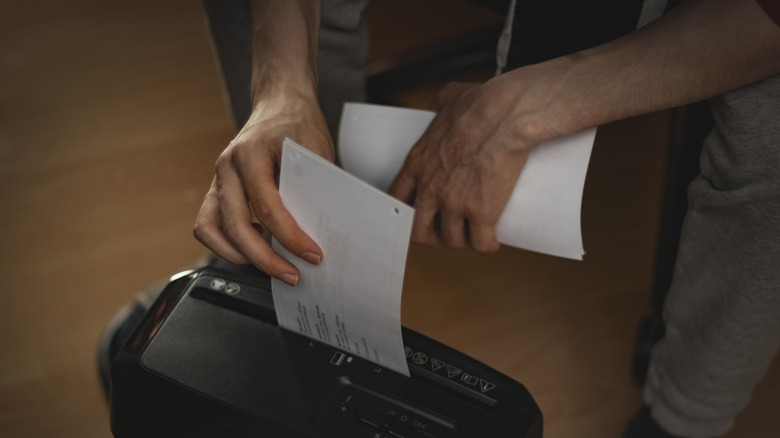
The first thing you can do to protect your personal information is to be extremely careful when donating items to a thrift store. With books, bags, boxes, and old notebooks, be sure to go through them thoroughly. Old checks or checkbooks tucked away in the pocket of a bag, a credit card in a jacket pocket, or documents inside the pages of a book can be easily missed. Things to watch out for include social security cards, old driver's licenses, credit cards, insurance cards, medical records, tax documents, checkbooks, and prescription bottles.
When you need to get rid of old documents and other items containing sensitive personal information, it is important to dispose of everything properly. Any paperwork with personal details, such as tax returns or medical records, should be shredded. You can do this yourself or hire a company that shreds documents. Another option when you have confidential documents to get rid of but no shredder is to turn them into mulch for your garden.
If something is accidentally donated, call or go to the thrift store as soon as possible. Employees may be able to look through unprocessed donations to recover your items. Acting quickly is imperative, as some thrift stores process and sell items within 24 hours after donations are received. If you are unable to recover your papers, monitor your bank and credit card accounts, close compromised bank accounts, and cancel missing credit cards.