

Neighbor Using Your Trash Cans? Here's Exactly What You Can (And Can't) Do About It
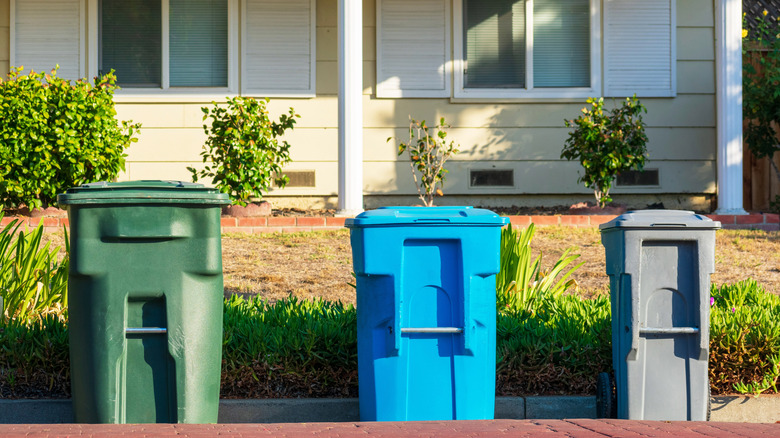
It may seem like a little thing at first, but if you've ever had a neighbor who often uses your trash can, you'll know how frustrating it can be. It's even more problematic if their activities mean there is less space for your own trash in the can. There's a big difference between neighborly behavior that borders on overbearing — like people who bring in their neighbor's trash can after collection day — and truly worrisome behavior like filling up another's trash can as if it was their own. If you're in this situation and unsure how to address the issue with your neighbor, start by documenting each action when it occurs, then research local regulations around theft of services, illegal dumping, and nuisance behavior.
If you're wondering whether or not it's legal for your neighbor to do this, the short answer is that context matters. There is no federal law that says you aren't allowed to use someone else's trash can, at least as a one-off incident. You can't rely on federal law for help in this situation. However, there are broader rules around theft of services and illegal dumping. What does this all mean? If, for example, a neighbor keeps using a service you pay for without your permission, that could be considered theft of services under the law. In serious cases, such as when someone repeatedly fills your trash can with their own waste or throws restricted materials into it, the issue can become nuisance behavior or illegal dumping, depending on municipal regulations. If this dumping starts to affect public cleanliness standards, it could be the reason why you receive a sanitation violation — something that would certainly seem unfair.
How to stop a neighbor using your trash can without making the situation worse
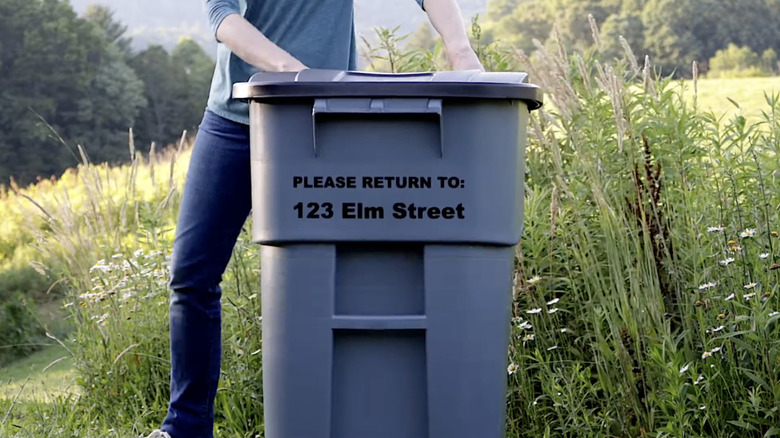
One of the best ways to get along with a difficult neighbor who regularly uses your trash can is to have a calm, non-confrontational conversation. It may be a little uncomfortable, but very often, such neighborly disputes boil down to a simple misunderstanding or incorrect assumption. Kindly communicating your boundaries can go a long way toward resolving the problem in most cases. If the thought of speaking to your neighbor in person is unrealistic or they have a reputation for volatility, then your next step is to limit their access to your trash can. Move the container closer to your home or further onto your property, clearly label the can with your address in a bright color on at least two sides, or take it out to the curb right at pickup time.
If you try all of these ideas and your neighbor doesn't stop using your trash can, reporting an instance of theft of services, nuisance behavior, or illegal dumping to your local waste management provider or the police may be your only option. Many U.S. cities have reporting and dispute forms you can fill out on their website — just make sure you select the correct issue category. Others offer free conflict resolution services. If there's an active Homeowners Association (HOA) in your area, you may be able to report a rules violation. Consult the association's governing documents for steps. Tenants should, of course, consult with their landlord or property manager before taking other steps. Such reports would most likely be taken seriously, so reporting should be a last-resort solution. At the end of the day, no one wants to live with actively hostile neighbors or end up paying for the services of an attorney.