

We Bet You Didn't Know You Could Grow Your Own Strawberries In A Gutter
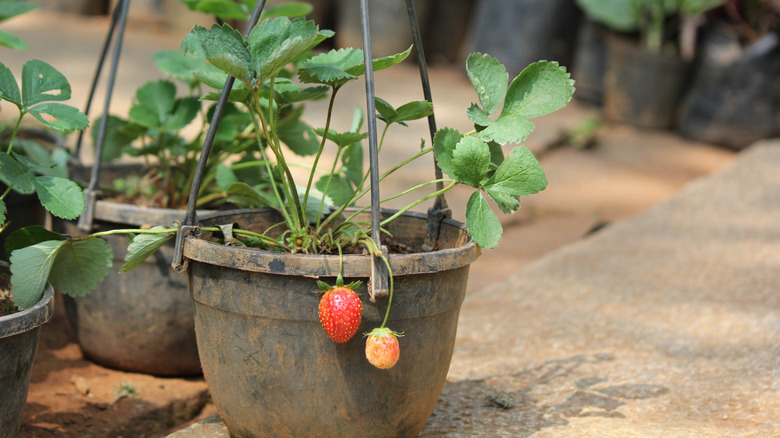
Gardeners often have to think in three dimensions, and it always helps to have a few tricks up your sleeve when you're hanging flower baskets or planting a living wall. Before you take out your sketchbook to plan your spring garden, there are a few 3D garden ideas to consider to get more out of every square inch of your backyard. One such idea just happens to also be a genius way to repurpose gutters around your home. Gutter gardens are popular both indoors and out, offering visual appeal saving space. Strawberries (Fragaria x ananassa) grow well in hanging planters, so planting them in a gutter garden is a match made in heaven — especially if you're someone who loves to eat strawberries right off the plant without bending over.
Strawberries are also a good choice for a rain gutter garden because they adapt easily to life in a wide range of containers, planters, and pots. As mentioned, they're well suited to hanging baskets, but they also thrive in raised beds and hydroponic gardening. In fact, they should really be at the top of your list of plants for an edible gutter garden. Most people mount their gutter gardens to a fence or the side of a house or yard structure. You could also build a portable or in-situ frame for them, hang them from porch cover rafters, or attach one to deck railing. The design also makes it easy to run a drip line to each of your plants, which is important because rain gutters are shallow and dry out quickly.
Tips for successfully growing strawberries in a gutter garden
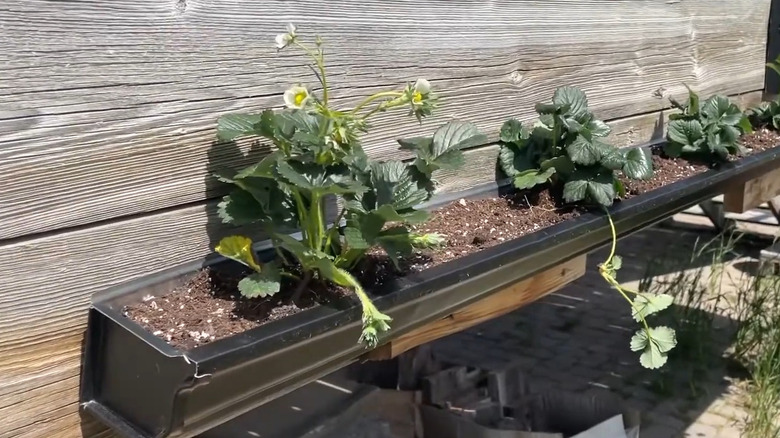
There's no denying strawberries work well as a flowering groundcover that replaces bare spots with delicious fruit. They're also a good choice for disguising an ugly old fence if you plant them in the rain gutter garden you install on said structure. Whether your plan includes several rows of guttering or just one, make sure each length has a right and left end cap. They keep the soil in place. If you buy your guttering new, request these parts. If you're upcycling old guttering, you may have to buy them separately. Good drainage is critical for strawberries — the roots are prone to rot in waterlogged soils. Drill a decent number of holes in the base of each gutter. After that, you can attach the gutters to a board, wall, or fence posts using screws or specialist gutter hangers or mounting brackets, just as you would when installing them to fascia.
Once your rain gutter garden is in place, it's time to choose the type of strawberry to plant. Day neutral strawberries, which produce fruit for most of the season, are a good choice for those aiming for abundance. Consider cultivars 'Albion,' 'Cabrillo,' 'Everest,' and 'Seascape.' Though everbearing strawberries, like 'Ozark Beauty,' only produce two crops, they're compact and produce fewer runners. They also bear fruit in their first year. No matter what variety you grow, don't forget to feed your strawberries with an all-purpose fertilizer two to three times during the growing season. Gutter gardens are poorly insulated. If you live in a cold climate, protect your plants in winter by digging the gutters into the ground and covering them with mulch or bringing them into an unheated garage.