

Turn An Old Sweater Into The Cutest Pet Bed With An Easy DIY
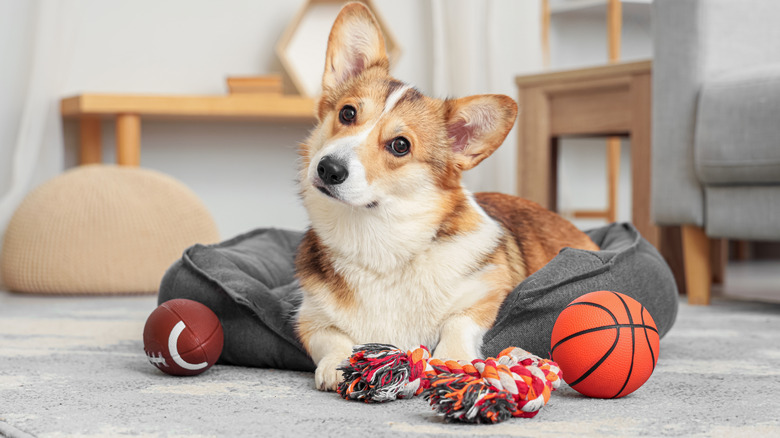
What do you do when your trendy sweater goes out of fashion? Or, your chunky knitwear starts sporting large holes and looks worn out? You might begin wearing them exclusively at home or trash them. However, if you take the latter route, you'd simply be adding to the millions of tons of textile waste already rotting away in landfills. So, why not give them a second life and upcycle them into a cute pet bed? This way, your furry friends will get to appreciate the coziness of your sweaters and you'll get a decent return on the money you spent. Win-win!
The entire process — stuffing, sewing, and shaping the sweater into a bed shape — doesn't take long once you have the supplies handy. You'll need an old sweater, though a hoodie (sans a hood or with it curled in) or sweatshirt will work, too. Just ensure it has a round neck, as it can be slightly difficult to align the back and front portions of a V-neck. Turtlenecks can be problematic, too, so be prepared to tuck them in the neck region completely. Otherwise, cut them off before you start working on the bed. Whatever your choice, ensure the material isn't too thick, or your pet might overheat. Moreover, it shouldn't feel scratchy to the touch. Also, it should be big enough for your dog or cat to snuggle in comfortably, so you might want to avoid using a kids' sweater for this project. Once you have your base, determine the stuffing you'll be using. You can go with pillow stuffing for the sleeves and a foam board for the middle, or use pool noodles and an old pillow. Styrofoam balls feel comfortable, too.
How to turn your old sweater into a pet bed
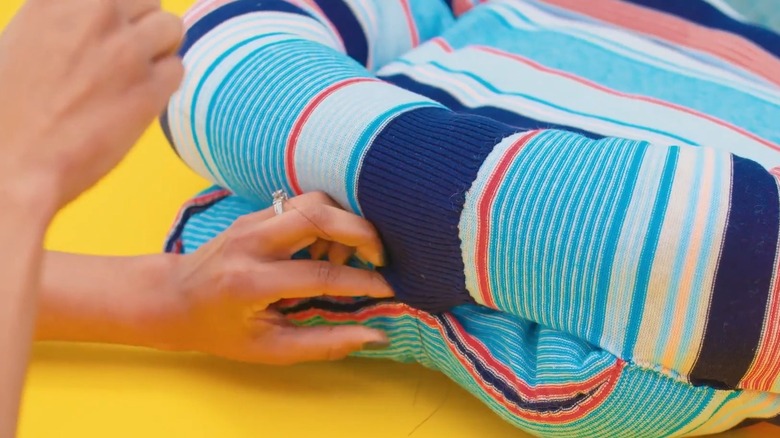
Spread out your sweater on an even surface and sew its neck shut. Try using a thread that matches (or complements) its color if you'd like to upcycle your old clothes into unique home decor. Post that, mark a straight line across the chest region and sew the two sides together. Think of it as working from one end of an armpit to the other. Now, for the fun part: stuffing the sweater. You can puff up the sleeves before working on the chest region or vice versa — the choice is yours. Push in enough stuffing that the base and boundary feel squishy, but don't overdo it or you'll have trouble sewing the ends. A good way to ascertain this is to constantly press the edges and middle as you fill them up. Bonus advantage: You can find the "empty" spots and spread around the fill better. Keep in mind that this step is only necessary if you use polyfill or Styrofoam balls. You won't have to worry about this with other stuffing elements, like an old pillow or pool noodle.
After you're done, sew the ends of the sweater together to ensure the stuffing doesn't come out with your pet's wrangling. Additionally, push the end of one armhole into the other and sew them together. In case this looks slightly odd, get an old fabric scrap and loop it over the ends to hide the stitches. That being said, pick something that goes with your old sweater, or the fabric will be an eyesore. Finally, turn the bed over and thread the stuffed arms with the stuffed bottom for a seamless finish.
Tips and tricks you can follow when turning an old sweater into a pet bed
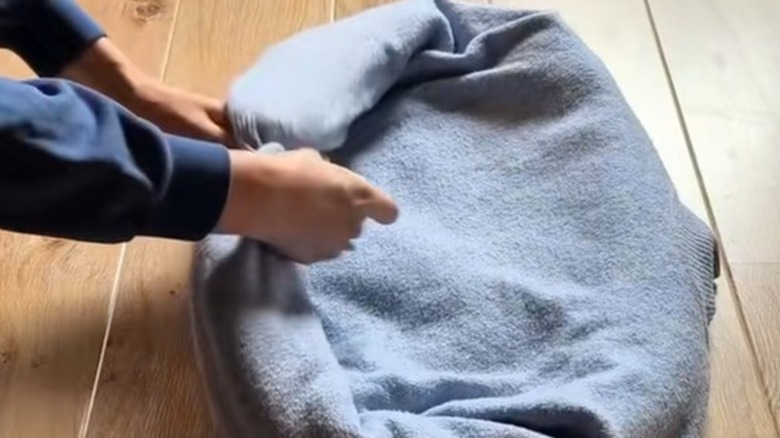
In case you aren't an expert sewer and don't feel comfortable pushing thread into a thick sweater, see if you have the right type of glue on hand. Fabric adhesive will make the process seamless, but only if you use one that can bond to a thick material like a sweater. Another trick is to tie off the ends of the arms and use rolled up old towels or throws for stuffing the sweater. Besides being an easy alternative to the sew or glue method, this trick will help you clean your dog beds often since you won't have to worry about the adhesive weakening.
This technique is preferable when your pets are small or well-mannered and you don't have to worry about them pulling out the stuffing with force. Another tip to create a pet bed that's easily washable is to put in zippers (Velcro fasteners work, too) along the edges of your sweater instead of sewing or gluing them shut. Whichever way you go and whatever stuffing you use, remember that you'll have to keep an eye on the bed and mark the areas your pets chew through, so you can patch the small holes before they turn catastrophic (think your dog or cat swallowing the stuffing).