

Build A Gorgeous Coneflower Display By Following These 12 Plant Placement Tips
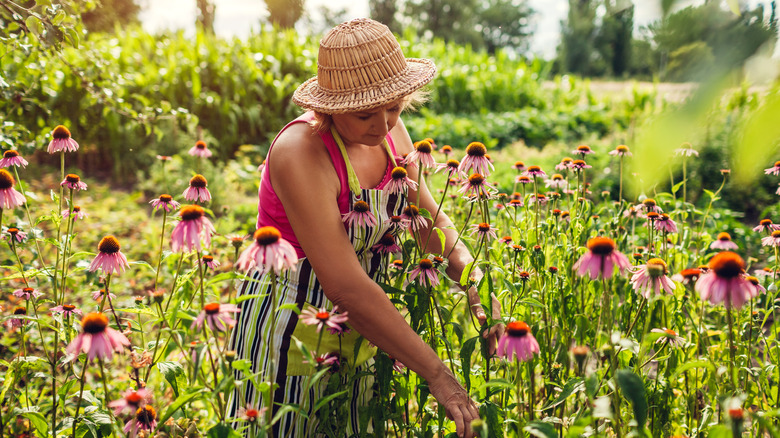
Have you ever wandered into a friend or family member's garden and asked what on earth those glorious cone-shaped flowers were in the corner? Often surrounded by bees and butterflies, coneflowers (Echinacea spp.) are loved around the world for the color and buzz of biodiversity that they bring to garden landscapes. What's more, there are lots of colorful varieties of coneflowers that can easily be grown from seed, which makes them popular among both beginner and more experienced gardeners. But that doesn't mean they're always easy to grow.
As with almost every other plant, the key to getting the most out of your coneflowers is knowing where to plant them. This doesn't just mean giving them a sun-soaked spot with well-drained soil (although both of these are key to success). Additionally, ask yourself if you're planting them to attract pollinators, and if so, where are you most likely to enjoy the sight and buzzy sound of butterflies and bees? Alternatively, are you hoping they'll self-seed, and thus fill your garden with color long-term with the minimal amount of maintenance? If so, which varieties are best (and worst) for self-seeding? If all of this sounds complicated, rest assured, it's not. Sure, it's not as simple as scattering a handful of seeds with merry abandon and calling it a job well done, but, with a few careful placement choices, there's no reason the coneflowers in your yard shouldn't thrive for years, even decades, to come.
Plant coneflowers in your garden's sunniest spots for maximum blooms
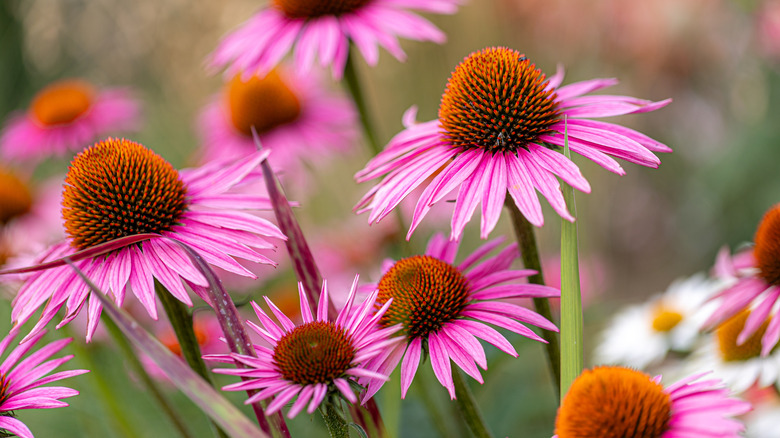
Before considering where to plant your echinacea, first double-check your hardiness zone and ensure it's conducive to happy coneflowers. These pretty plants grow at their best between zones 4 and 10, which, thankfully, is a fairly wide range. Having said that, they do still need an area with plenty of sunshine, ideally one that offers only partial shade (if any).
Don't be afraid to plant them in a place where there's lots of wind. Despite their height, these plants are known for their resilience against the breeze. Still, if you're growing a large cultivar, such as the aptly named giant coneflower (Rudbeckia maxima), consider staking around the stems. Regular purple coneflowers (Echinacea purpurea) typically grow up to 4 feet tall, but "giant" versions can grow in excess of 7 feet. A little assistance against the wind is sure to help them capitalize on a sunny spot without undue risk of snapping.
Consider planting on higher ground to encourage winter survival
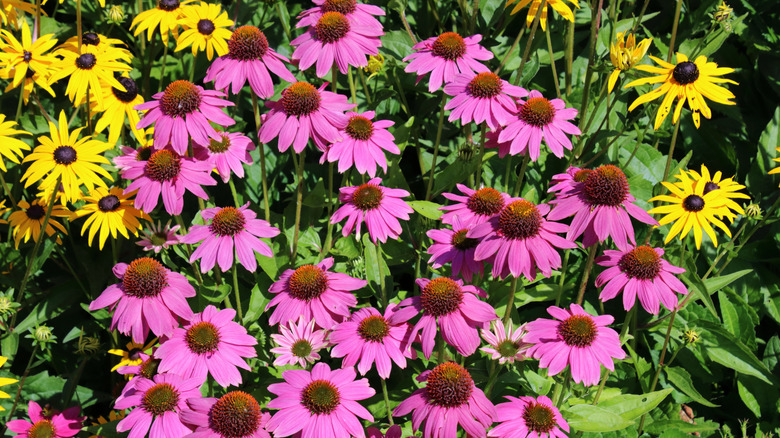
As mentioned, if giving your coneflowers a sunnier spot means exposing them to a little extra wind, it shouldn't matter too much. In fact, reserving the higher elevations of your yard for coneflower cultivation is highly recommended. Not only does this afford them more sunshine, but it could also help them survive the winter. Of course, being hardy perennials in zones 4 to 10, it's usually not too tricky to encourage coneflowers to come back, even after a long and frosty winter. But that's not to say that they love sitting in wet, claggy soil.
While they tolerate occasionally wet soil, coneflowers, like plenty of other plants, are susceptible to root rot if planted in a spot that doesn't freely drain. This is why higher ground is so good for them. By choosing higher spots in your garden, you don't need to worry as much about digging drainage since gravity should take care of the hard work for you.
Site coneflowers behind living mulch and ground cover plants that won't compete for soil space
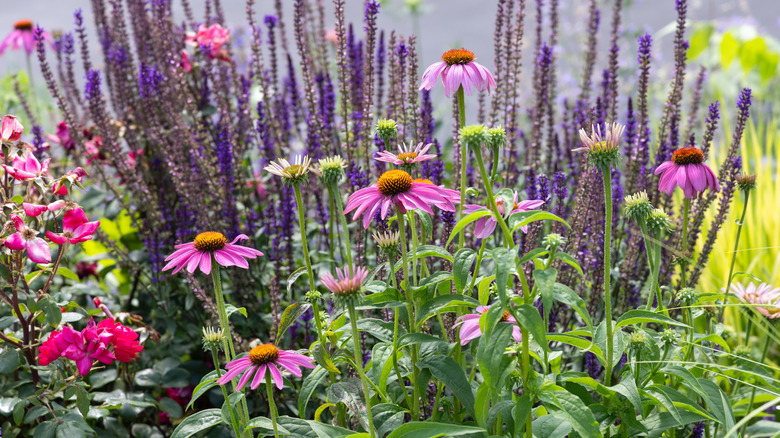
Since coneflowers tend to appear quite sparse, and even "leggy" (they're supposed to), planting them behind a lower-growing plant can help "color in" those gaps. Doing so effectively disguises the leggy part of the flowers, leaving just the flower (and a short part of the stem) on display. However, for this tip to work, choose plants that complement coneflowers.
As with many proposed planting companionships, ensuring they don't compete too fiercely for resources is generally good practice. With coneflowers, this is easily avoided. Coneflowers root up to 5 feet deep, so by pairing them with shallow-rooting plants, you can avoid competition for soil space. Many plants match this shallow-rooting criteria, including a number of beautiful groundcovers. The benefit of these is they naturally spread and "flesh out" your borders and flower beds — without the need to sow lots of individual flowers.
Creeping phlox is a good example. It roots shallowly, preferring to anchor itself just beneath the soil's surface. Once it's bedded in, it has similar growing requirements to coneflowers, including free-draining soil and full sun. It's just as pollinator-friendly as coneflowers, and it delivers a startling array of spring color, yielding carpets of star-shaped flowers in pink, purple, white, and blue.
Avoid planting coneflowers beneath trees and other natural canopies
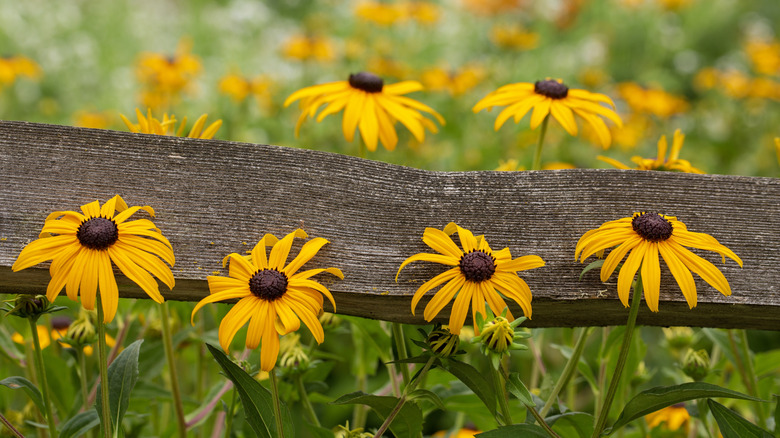
We already know coneflowers prefer a slightly elevated, sunny spot, and they're less likely to flower in the shade. This makes the area beneath a shady tree an obvious place to avoid. However, even under trees that don't starve the ground beneath of sunlight, planting coneflowers comes with risk. Trees tend to root at similar depths to coneflowers, which could lead to competition. And coneflowers tend to do best not with a minimum of root competition.
To avoid issues from occurring with trees, plant your coneflowers outside of the tree's drip line, which is the circumference of a tree measured by its outermost branches. Within this area, roots are at their thickest and most nutrient-greedy. Plants within this zone, especially those that root deeply, including echinacea, are unlikely to grow with any zeal. By staying outside it, you give yourself a better chance of larger, more resilient clumps of coneflowers.
Plant yellow coneflowers en masse for maximum visual impact
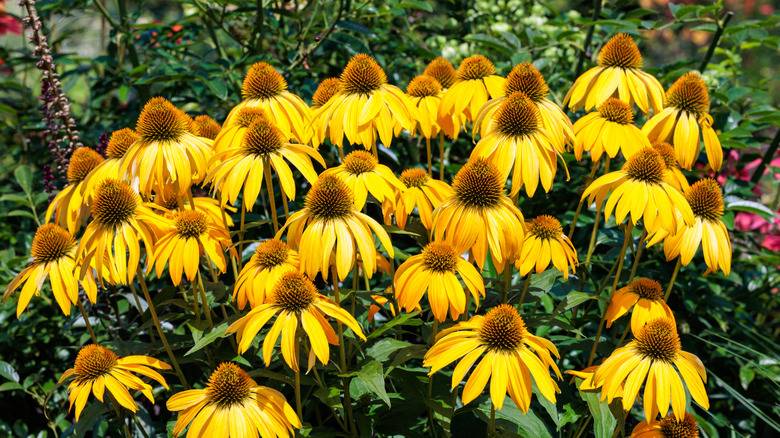
Coneflowers tend to need a large expanse of ground in order to make a significant visual impact. If planted individually in borders, these flowers can get lost in the landscape. Instead, it's often best to sow them in groups, although the need to do so can also depend on which coneflower you're hoping to cultivate.
Yellow coneflowers (Echinacea paradoxa) have more of an "open" growth habit than other types. They can particularly benefit from being planted in groups of three or more to maximize their visual impact. They should still be planted in a spot with free-draining soil and full sun. Just in case your plants don't flower for a few seasons, don't worry: Most coneflowers don't for the first few years if grown from seed. In fact, it can take up to five years to see a decent show of blooms. However, once they're ready to bloom — and provided you planted them in groups of three or more — you can expect a dizzying display of color.
Line walkways with coneflowers for a sensory show
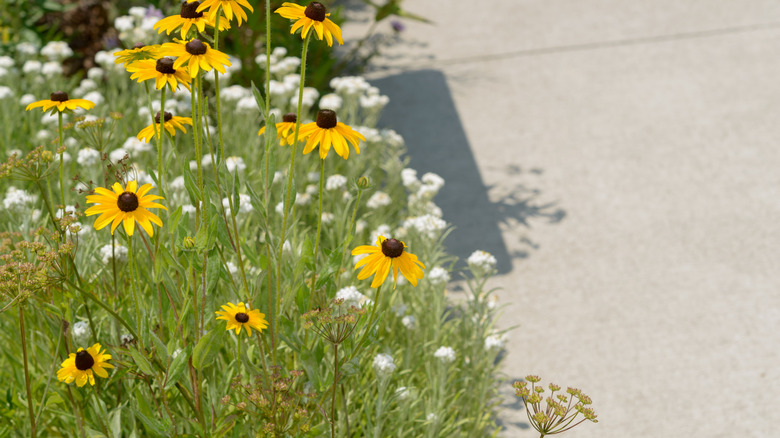
Not all placement tips are about helping your coneflowers thrive. Some, including creating a beautiful garden pathway flanked by coneflowers, are entirely for your sensory benefit. This doesn't mean you should plant them without paying attention to the soil and sunlight your garden walkways afford, but if those things aren't an issue, you're sure to love being flanked by coneflowers as you go about your summer gardening duties.
By planting these gorgeous plants in your common areas, you not only get to see their vibrant colors up close whenever they're in bloom, but you can also enjoy a lovely scent if you opt for a fragrant cultivar, such as 'Fragrant Angel' coneflowers. What's more, if any pollinators happen to learn the getting's good in your garden, you may also be able to enjoy the sight and sound of bees and butterflies.
For an even more gorgeous sight, place your coneflowers in a spot birds can easily visit
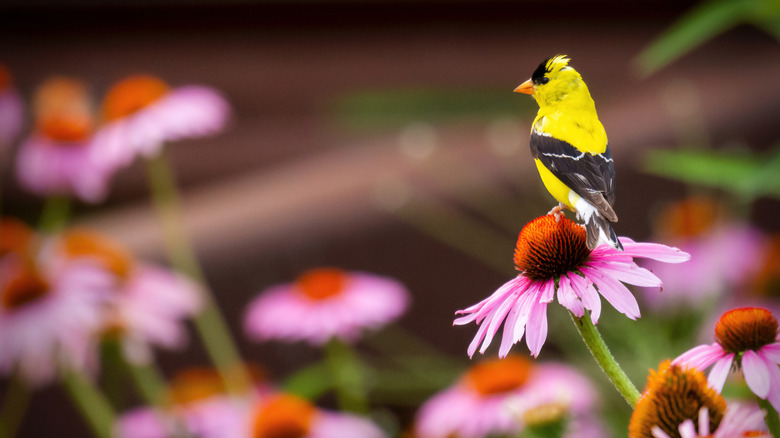
Not only are coneflowers a beautiful sight to behold on their own, but they can also draw in songbirds and seedeaters. If you want to guarantee your patch turning into a hive of bird activity once the flowerheads form seed, here's a tip: Pay extra attention to the placement of your coneflowers and try to choose spots where birds won't be chased off while they feast. Areas like busy back porches are less likely to encourage birdlife than more tranquil corners away from noise and sudden movements. Areas your pets frequently prowl are also sure to be seen as no-fly zones, as are large, exposed patches of open ground.
The key to encouraging birds to visit your coneflowers lies in making the route as risk-free for them as possible. With this in mind, plant some coneflowers in the quietest areas of your yard, ideally in reach of natural sources of shelter. Just remember the rule about planting outside of your trees' drip lines, and don't forget to provide your flowers with plenty of sunlight. But if you can plant coneflowers within reach or some nearby hedges, trees, or shrubs, those gorgeous little goldfinches (and other songbirds) are more likely to feel safe and interact with them.
Keep coneflowers clear of frequently fertilized lawn grass
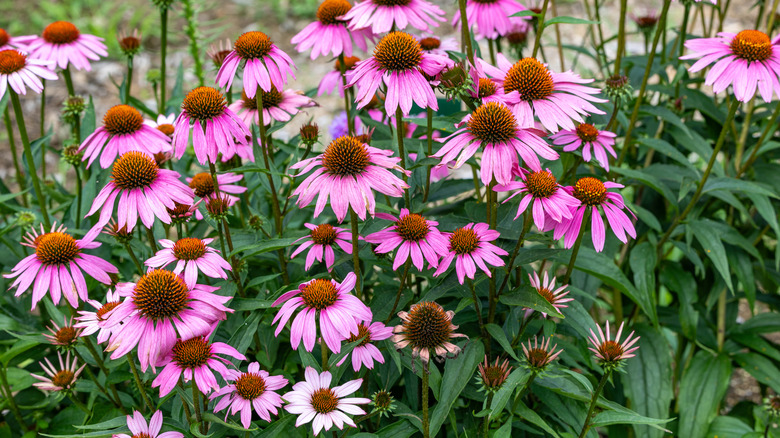
There are several reasons you should avoid overfertilizing your plants. One is that overfed plants can become plagued by aphids; another is that plants given too much nitrogen can focus more on producing lots of young, juicy leaves and less on making flowers. This might not sound like a bad thing, and in some cases it's not, but you didn't buy coneflowers for their foliage, now did you?
In the case of coneflowers, you don't need to feed them much, if at all. These plants favor soil that's only moderately fertile, so unless your flower beds are completely devoid of nutrients, they're probably fine for coneflowers. However, if your lawn leaks fertilizer into them and overfeeds your coneflowers, they can become weak and floppy. With this in mind, if you frequently feed your lawn, try to keep your echinacea at least a few feet away from the turf. This should prevent any fertilizer from accidentally running off into your flowerbeds and compromising your coneflowers.
Layer the backs of your borders with taller cultivars
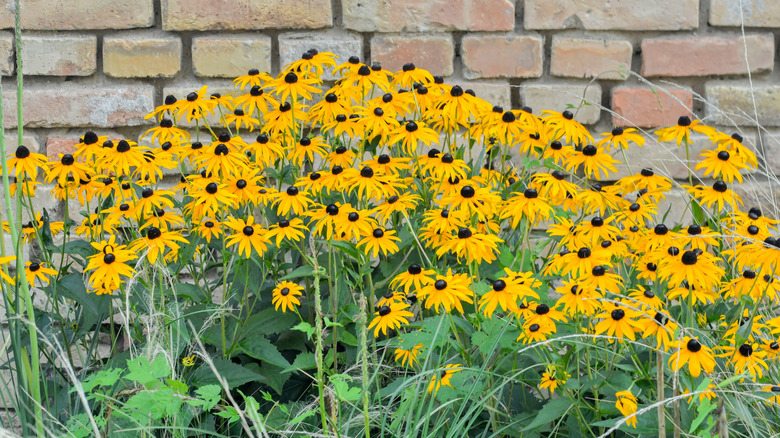
Layered planting is one of the most effective landscaping ideas to transform your space. If you're working with taller varieties of coneflowers, such as the promisingly named Echinacea 'flame thrower', which grows a little over 3 feet high, place them at the back of your borders. Doing so achieves two things, both of which are conducive to a beautiful border.
First, by putting them at the back, you can prevent them from "shading out" your shorter sun lovers. Second, placing taller, showy varieties at the back provides a structural backdrop for the rest of your planting scheme. As a bonus, you may find that layering your flower beds like this encourages more wildlife. If your coneflowers are at the back (with lots of flowers between them and the rest of your garden), birds may feel safe enough to pay your flowers a visit.
Plant coneflowers upwind, where they can self-seed and naturalize themselves
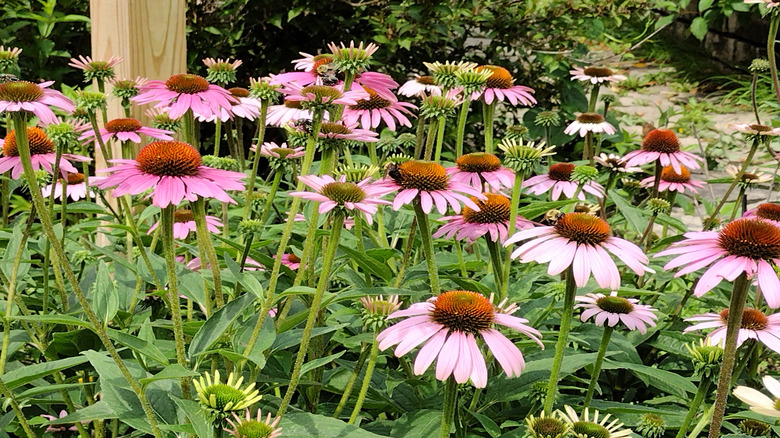
As one of the most colorful self-seeding plants you can add to your garden, coneflowers are a natural choice for gardeners who want to spend minimal time planting their yard. In fact, several varieties happily self-seed and, if allotted enough space, can naturalize themselves in a matter of years. If this sounds good, there are just a few things you need to bear in mind.
First, you can only expect non-hybrid cultivars to spread themselves like this. This might come as something of a disappointment, especially if you had hopes of filling your yard with flame-like swathes of 'Firebird', 'Flame thrower', and 'Hot papaya' (all popular coneflower hybrid varieties). Unfortunately, many hybrid coneflower seeds are sterile, which means only those you transplant grow back each year.
To have them naturalize themselves, focus on planting native varieties (those that developed naturally in the wild). There are several that do this, but a popular choice is good old-fashioned purple coneflowers (Echinacea purpurea). Then, to increase the chances of self-seeding happening within your yard (and not over the fence on the neighbor's side) — look for a planting location that is a little upwind of where you want the new plants to pop up.
Group coneflowers with structural companions to prevent post-rain flop
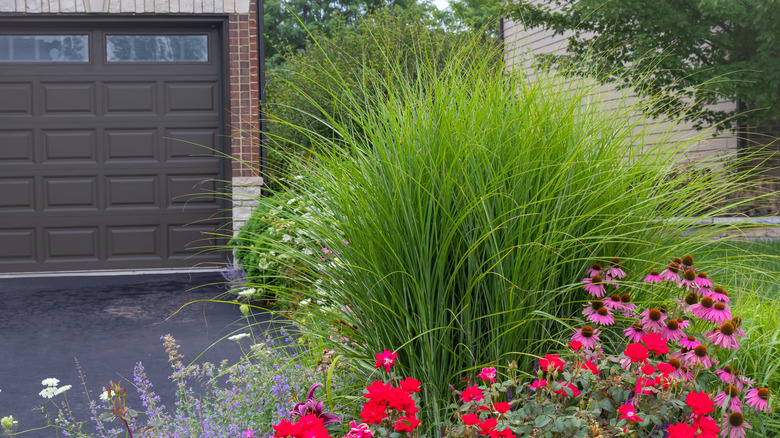
Imagine your swath of coneflowers has finally come into its own, putting forth a gorgeous display of blooms. But then a hard rain damages and flattens some of the stems! This isn't much of an issue in sheltered areas (and for shorter varieties), but it can pose a real problem with taller types of coneflowers, particularly in severe weather. After heavy rain, taller-stemmed coneflowers are prone to flopping over and even breaking.
To protect them from the elements and guard against flopping, consider which companion plants are most likely to support your coneflowers. For taller types, it's worth planting them with dense, sturdy-stemmed grasses, such as little bluestem grass (Schizachyrium scoparium). This way, you can give your coneflowers a natural "trellis" to lean on whenever the going gets tough.