

How To Space Out Vegetables In Raised Garden Beds For The Most Success
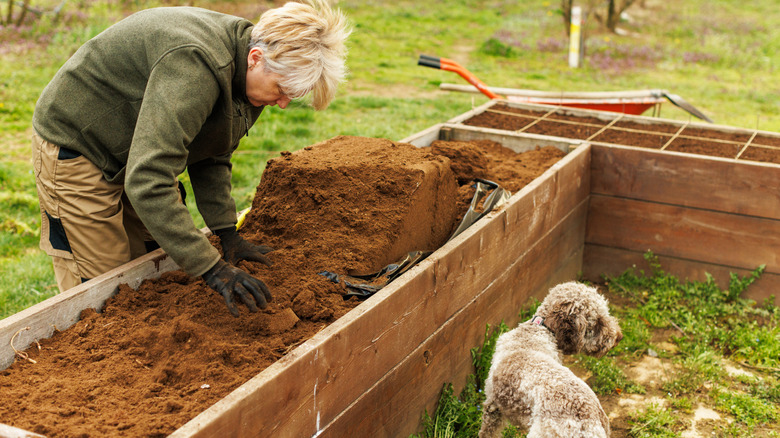
No one would blame you if you are confused about how far apart to plant your vegetables in your raised beds. Gardeners fiercely defend several spacing methods that often conflict in their approaches. A few things are clear, however, including the fact that correctly mapping out and spacing your garden veggie plants in an in-ground garden is different than it is in a raised bed. The bottom line is that gardeners have found vegetable production success with three spacing techniques: following seed packet spacing guidelines (with one exception), block or square-foot spacing, and intensive planting. You can implement the one that feels right for your garden or try all three to see which works best for you.
Spacing is important in a vegetable garden because it gives all of your plants the chance to access nutrients and water, receive sufficient sunlight, and benefit from air circulation so they aren't afflicted with fungal diseases. Spacing also determines how much weed growth you'll get, as weeds tend to fill in bare spaces.
The biggest difference between spacing in raised beds compared to a garden is that row spacing is unnecessary. Since raised beds provide for space around them for walking, tending to plants, and using equipment, rows aren't needed within the raised bed. Because of this, you can ignore seed packet instructions for how far apart to space rows.
Try block-style or square-foot methods to space plants in your veggie garden
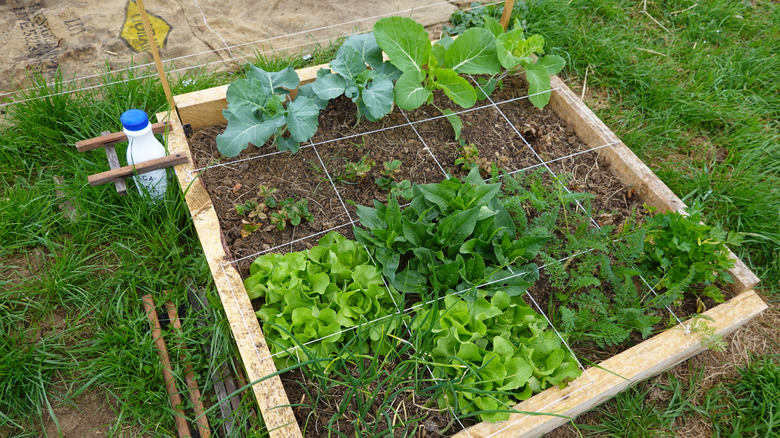
It's perfectly okay to to space out your veggies according to seed packet instructions, allowing the same amount of space in all directions. You'll also want to consider such factors as how tall and wide each plant will get and how much it will spread as you space and place your plants. Using trellising and other vertical supports can save space.
The seed packet method does have a couple of downsides. You're likely to get a smaller vegetable yield than if you used another method. Spacing plants according to packet directions is also likely to result in bare spaces in the soil that are like catnip to weeds, which will quickly encroach on those naked patches.
Thus, you may want to consider one of the other spacing methods. Block-style and square-foot gardening can help keep your plants flourishing. Block-style gardeners increase yields and encounter fewer weeds by planting their veggies in blocks, rather than rows, grouped according to recommended spacings. A block of vegetables like carrots that require 3-inch spacing is planted in a block next to another vegetable, like radishes, that also needs 3-inch spacing.
Square-foot gardening is similar, though blocks are exactly a foot square. The spacing is just one part of this gardening system developed by Mel Bartholomew — it also includes specific soil and compost recommendations. Success with square-foot gardening is tied to implementing all aspects of the method.
The intensive planting method requires more effort, but could greatly increase your yield
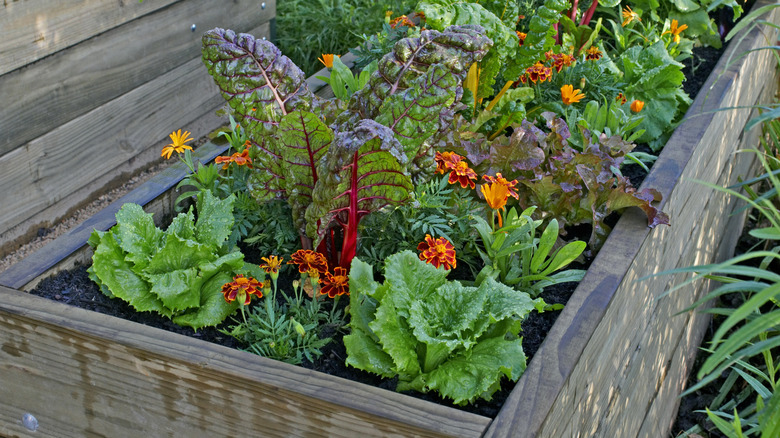
Yes, overcrowding is a risk with these methods and can be the overlooked mistake that's making your garden beds look bad, but if you plant closely together in a deliberate and methodical way, you can avoid this issue. The third raised bed spacing method, intensive planting, is a little like the block and square-foot methods on steroids. Simply put, it's not for everyone. Veggies are planted more densely than they would normally be in a pattern in which each plant is the same distance from all surrounding plants. After all, plants in nature grow as closely together as they want to. Like the block and square-foot methods, intensive planting results in higher yields and fewer weeds.
To succeed with intensive gardening, you have to commit to monitoring your veggie garden closely and providing regular watering, weeding, pruning, and fertilizing. If you like the intensive idea but are not sure you have the dedication, consider starting with a crop of fast-growing or small plants, such as herbs, which are well suited to this method.