

The Ancient Growing Technique That Turns A Simple Spider Plant Into A Work Of Art
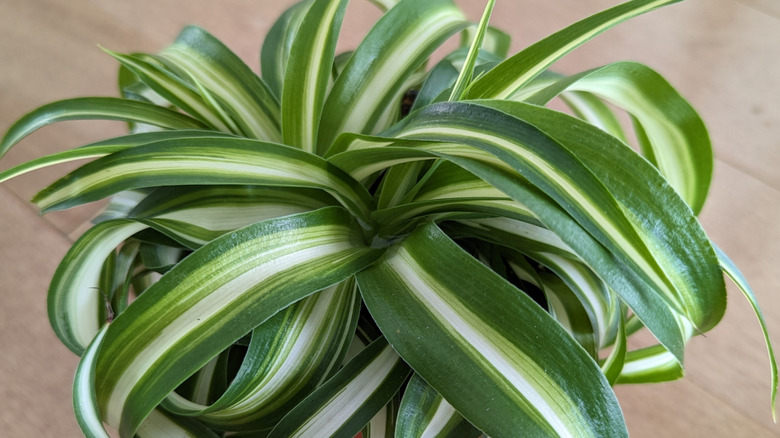
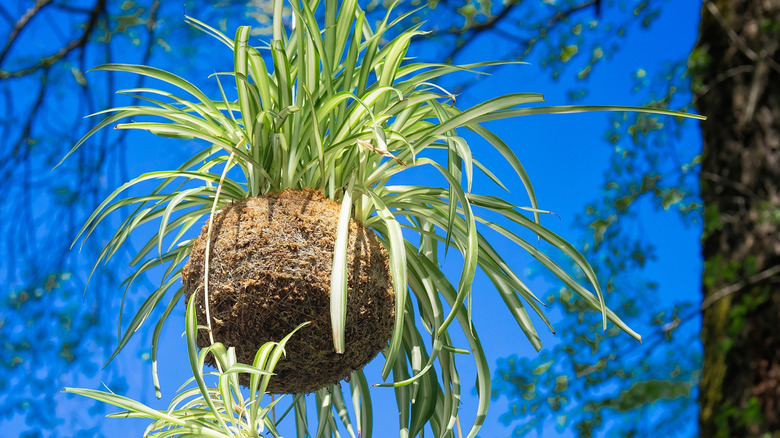
What happens when a centuries-old Japanese planting art meets a popular, easy care houseplant? Tiktokker Kristy Hawk explored that convergence in an exuberant 2025 video that shows how to grow a spider plant (Chlorophytum comosum) using this ancient art. The Japanese words that name this technique describe it perfectly. "Koke" means "moss," and "dama" means "ball," and kokedama is the art of using a moss-covered ball as a vessel to grow plants. As the TikTok video shows, you can transform a spider plant into horticultural art using the kokedama method; the curly spider plant variety Hawk used is especially dramatic in kokedama form.
While you could use flowering spring plants for your kokedama or other plants, easy-care options are best for kokedamas — and spider plants fit the bill. Spider plants appear on multiple lists of plants recommended for kokedama treatment and is especially cited as a good choice for kokedama beginners.
How to create a kokedama for your spider plant
The first of 13 steps in Hawk's TikTok video is a little different from other internet kokedama tutorials, which provide a recipe for the soil to use for the kokedama. Hawk takes the novel approach of using the soil from the pot of the spider plant she'll be planting, which appears to work just fine. For a fresh soil base, use 2 cups of potting soil, bonsai soil mixed with peat, or compost with peat. Hawk then adds water to the soil. Introduce water very gradually so you don't add too much and end up with liquid mud.
@kristysketolifestyle How to make a Kokedama! I have been wanting to make one of these for awhile! I have one that I bought from a local greenhouse and love it. That one has a Pilea plant in it and hangs upright. I decided to make an upside down one with a spider plant. It turned out soooo cute!! I had some help from my oldest daughter. She recorded this video and re-wrapped my twine job. lol. ♥️♥️ 1. Remove soil from plant. 2. Put soil in a bowl and add water. 3. Mix soil and water to combine and then form a ball. 4. Break the ball in half and place roots of the plant between both sides. 5. Squeeze! 6. Soak sheet moss in water and then squeeze excess water out. 7. Lay moss out on work surface and place the ball in the middle. 8. Wrap moss around the ball and squeeze! 9. Wrap ball with twine. 10. Turn upside down and tie a piece of fishing wire onto it. 11. Hang and enjoy!! 12. Soak ball in water one time per week for 15 minutes. #plant #kokedama #plants #spiderplant #howto #diy #kristyslifestyle
Hawk then firmly forms the soil into a ball. Some DIYers suggest tossing the soil ball in the air to test whether it will stay together. Next, Hawk breaks the ball in half and tucks the spider plant's roots between the halves and squeezes the ball together to secure the roots. To apply the moss, most kokedama DIYers, including Hawk, use sphagnum sheet moss. After soaking the moss in water and squeezing out the excess, Hawk places the sheet moss face down and wraps it completely around the soil ball.
Two approaches to holding the ball together are most common — visible and invisible. Some DIYers don't like the traditional look of twine wrapped around the ball and instead use monofilament fishing line. For both methods, the material is wrapped multiple times in all directions around the ball. Hawk uses twine for her kokedama, handing the task off to her daughter, who creates a symmetrical and attractive twine design, tying off and cutting the twine when finished.
Caring for your kokedama spider plant
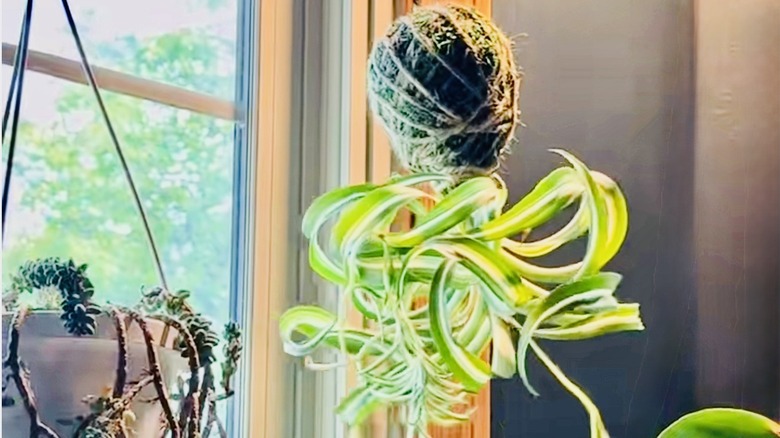
Hawk finishes the project by tying fishing line to bottom of the kokedama and hanging it with the spider plant upside down. Kokedamas are the "purr-fect" alternative for pet owners since they can be hung out of pets' reach. Kokedamas hung in a group are known as a string garden. While kokedamas are among the stunning DIY hanging planters you can make to liven up your home, you don't have to hang yours. You could instead display it on a saucer, a clear or wooden bowl, or any number of your own ideas for showcasing your artful spider plant.
Hawk's video doesn't cover how to care for kokedamas, but it's not difficult. Place or hang your kokedama in medium to bright light. Water regularly when signaled by soil dryness. Though you can't see the soil, check the weight of the ball to know when to water, as lightness means a dry plant. Soak the dry kokedama in water for up to 10 minutes and let the excess water drain. Fertilize monthly with liquid fertilizer added to irrigation water.
Periodically, your kokedama spider plant will need a bigger kokedama to accommodate growth. One caveat about spider plants in a kokedama — they develop thick, tuberous roots, which are great for storing water, but they may mean your spider plant will need to be transitioned to a larger kokedama more often than some plants.