

Attract More Robins To Your Yard With These Tricks And Plants
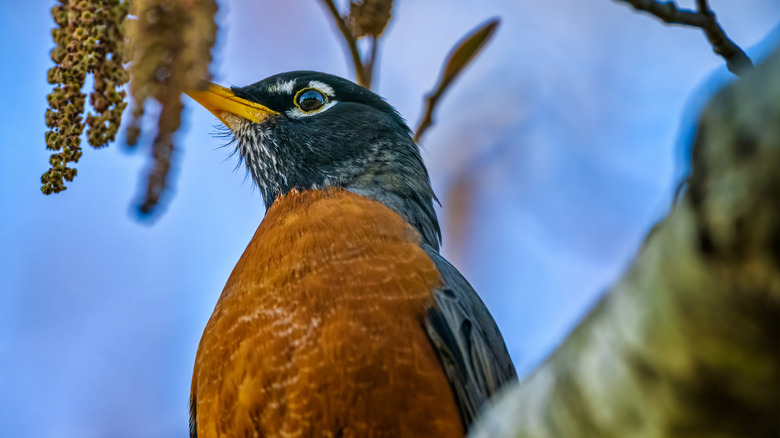
The American robin is a welcome, end-of-winter sight in yards around the country. It was originally named by early English settlers for its close resemblance to the European robin, although the two are unrelated. In fact, the American robin is a member of the thrush family. Not that this really matters. What's important to most homeowners is that they visit their yard in the first place. After all, is there anything more spirit-raising after a long and dreary winter than the sight of a couple of robins?
Unfortunately, while robins are indeed one of the first birds you're likely to see in your garden in early spring, their presence is never guaranteed. But it's easy to stack the odds in your favor. In fact, without oversimplifying things, it really just comes down to ensuring they have the food, water, and shelter that they need to survive. For you, this means providing them with appropriate nesting materials and a place to hide from predators. It also means understanding the specific foods they like to eat, and not just when things are plentiful during the summer, but also in the winter when they're at their most scarce.
In fact, there are various things you can, and should, do to encourage robins into your yard. But don't worry. In the sections below, we've covered 13 top tips to keep robins coming back to your garden. From helping you find the appropriate type of bird feeder for your yard to ensuring you don't overgrow your grass, if you're ready to see more robins, this guide is most certainly for you.
Maintain areas of short-mowed grass
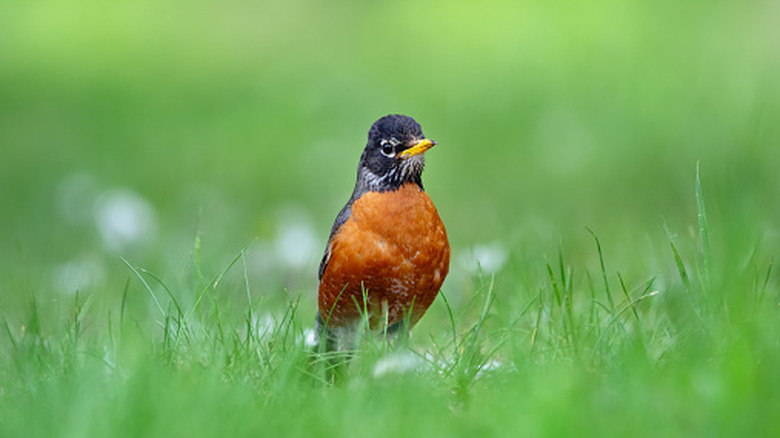
The first thing to look at when attempting to make your garden robin-friendly is your grass. Robins are highly visual hunters, and importantly, they're also ground feeders. In the warmer months, they spend much of their time on the ground looking for worms and a variety of other dirt-dwelling goodies. They tend to run and pause, scanning the area for movement as they go and watching for signs of both food and foe. In order to do this, they need open ground. Unfortunately, if your lawn is covered in long, wavy grass, it'll make it hard, perhaps even impossible, for robins to hunt. It'll also provide cover for any potential predators.
Now, exactly which lawn mower setting is right for your grass depends on the type of grass you're growing. But if you're hoping to encourage early birds to try and get the worm in your garden, then you'll want to keep it fairly short. Shoot for no longer than 2 or 3 inches. Depending on the grass you have in your garden, this is probably close to best practice, anyway. But even if you like to allow parts of your lawn to "grow wild" for other wildlife species, that's fine. Just try to keep an area of grass mowed nice and short.
Provide a mud station in the spring to help nesting robins
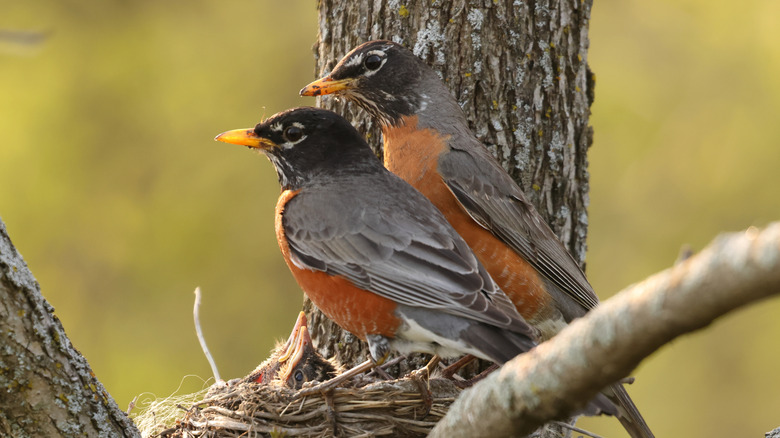
It should come as no surprise that birds are more likely to stick around if your garden provides what they need for nesting. Where things get confusing is knowing which nesting materials you should leave out for the birds in your yard. And while robins, like other species, often use twigs and dead grass to build their nests, they also require a reliable source of mud.
Robins typically reinforce their nests with a heavy mud "cup." They make this from things like worm castings or loose soil, and the sole purpose, it seems, is to strengthen the nest. Impressive, right? Unfortunately, it means that if your garden is perfectly pristine and lacks a source of wet mud, they may decide it's easier to make themselves at home elsewhere. With that in mind, consider creating a small, shallow depression in your garden or flower bed soil. You could do it in a flower bed that you don't expect to start growing until later in the season. Wherever you choose, shoot for a puddly patch of around two square feet, and try to keep the soil consistently wet during the breeding season — between April and July.
Stop using pesticides and herbicides
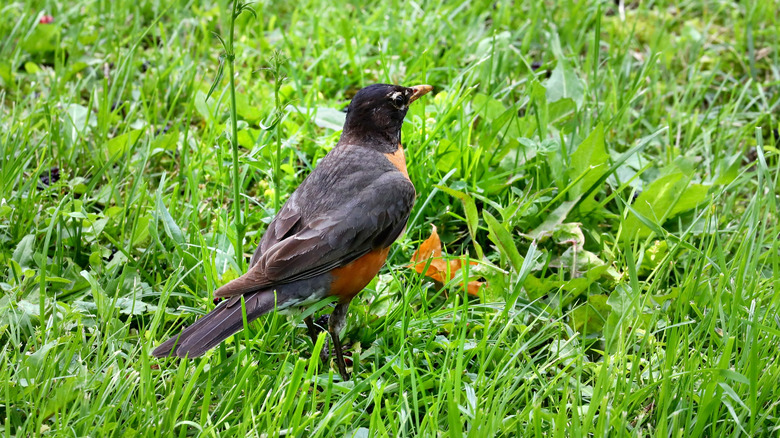
By now, we know that robins are prolific ground feeders, particularly during the summer when there's a bevy of bugs and worms to be found on your lawn. This means that they are especially prone to poisoning on lawns that have been treated with either herbicides or pesticides. And it can happen quite quickly. Robins can eat up to 14 feet of worms in a single day. If the worms in your garden soil are contaminated, the amount of poison ingested by robins can start to add up, fast.
If you're worried that your local robin population may struggle to completely control your pest problem, then consider other, more organic means of pest control. Planting native flowers, for example, could help to attract natural pest predators, like dragonflies, spiders, and ladybugs. You can also use nematodes to remedy any infestations beneath the soil of things like grubs. The key is to keep the chemicals in your cupboard. If you're going to the trouble of making the rest of your garden robin-friendly, the last thing you want to do is poison them when they finally arrive!
Plant native, fruit-bearing trees and bushes, like winterberry holly
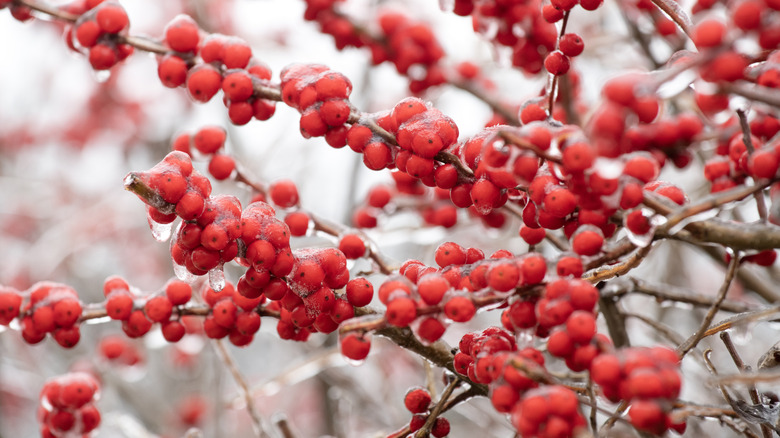
In the summer, keeping your lawn mowed short and free of herbicides and pesticides is a great way to encourage robins. But as summer turns to autumn, and the winter inevitably approaches, those gourmet goodies in your soil will eventually become scarce. Worms, which form a key part of the American robin's summer diet, either die off or burrow deeper into the soil to escape the cold, which leaves robins needing to change tack. Like other birds, this means turning to berries.
As for which berry bushes you should plant, there are several, but it's usually best to stick to plants that are native to your region. Birds in your area are far more likely to recognize these as a natural food source, which means they'll take to them much quicker. Good planting choices for robins and other pollinators include winter berry holly and white snowberries. At a time when food is most scarce, these plants provide berries that are packed full of sugar and energy.
Maintain a shallow birdbath throughout the year
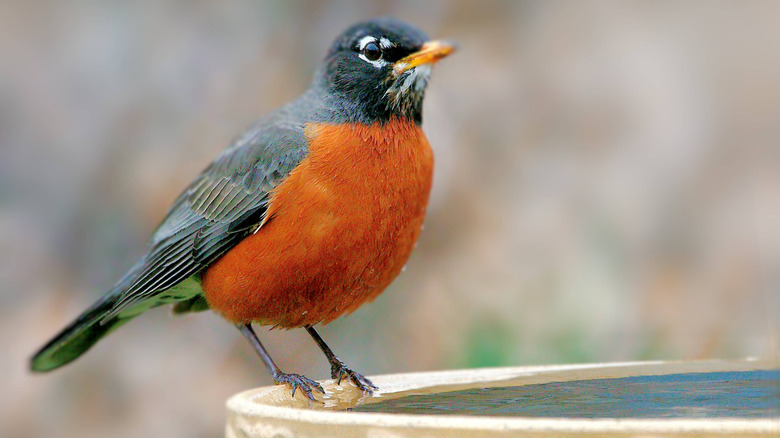
One of the best tips for attracting birds with a bird bath is to ensure it's the appropriate size. This might seem unnecessary for robins. After all, at least in terms of their body mass, they're considerably larger than other, smaller species of thrush. Unfortunately, they've been rather shortchanged in the leg department. In other words, if your birdbath is too deep, it represents a drowning risk for robins. It might seem like a small detail, particularly if you're going to the trouble of putting all of the other tips from this guide into practice. The thing is, robins need a plentiful supply of fresh water for both drinking and bathing.
To encourage them to preen themselves in your garden instead of your neighbor's, ensure that the water in your bird bath is no deeper than 2 inches. If it's slightly deeper, then don't fret. Just put some stones at the bottom in the deepest part to provide your robins with somewhere comfortable to perch.
Maintain a brush pile with loose leaves
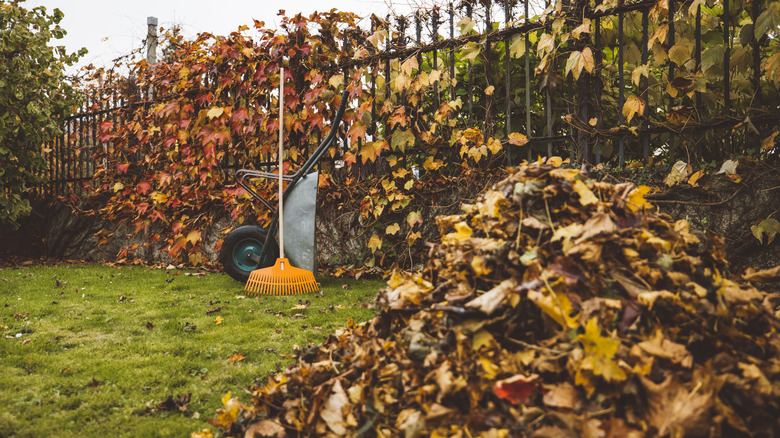
If you want to attract wildlife into your yard, then good news: that's one of the many benefits of keeping a brush pile. Even better news is that keeping one means one less trip to the waste center! Brush piles are especially attractive to birds, including robins, who are drawn to them for the insects that inevitably start to make themselves at home. Especially if the pile includes loose leaves, you can expect beetles, snails, and millipedes to eventually move in. And when they do, you'll likely start to spot robins happily flipping through the leaves and helping themselves to the morsels contained within.
So, instead of loading up your truck with garden waste, toss those branches and pieces of leaf litter into a quiet corner of your yard. As the pile grows and the items at the bottom start to break down, it'll start to attract an array of different insects. Robins may also help themselves to items from the pile to build their nests, especially if you've also created a mud pile for them to build with. And in the event that they feel threatened in your yard, that pile will provide an additional place for them to hide until the danger passes.
Offer a banquet of mealworms on open-tray feeders
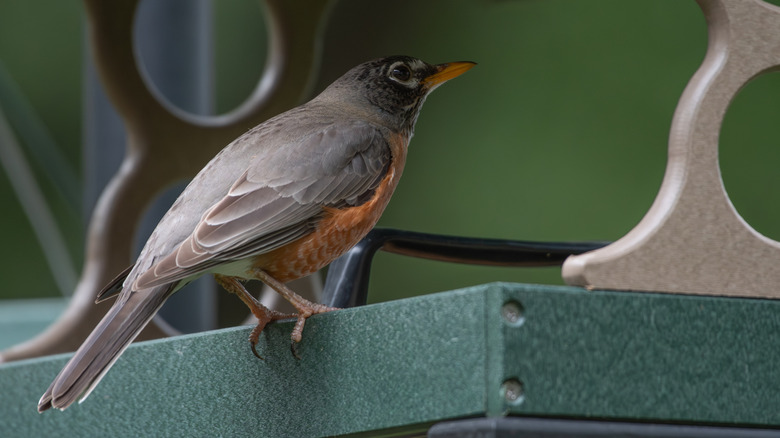
Robins absolutely love worms and insects. In fact, in the spring and summer, protein-filled critters like these form the vast majority of their diet. What they don't like quite so much are nuts and seeds. In fact, they're unlikely to even touch them. Instead, if you want to encourage them into your yard with a bird feeder, then you need to try and match their natural diet.
One of the most effective ways to do this is to fill your feeders with mealworms. They could be rehydrated dried mealworms, or live ones. It doesn't matter. What does matter is the kind of feeder that you use. Since robins naturally forage for food along the ground, they tend to respond best to platform, tray-style, or fly-through feeders.
Use a heated bird bath in the winter
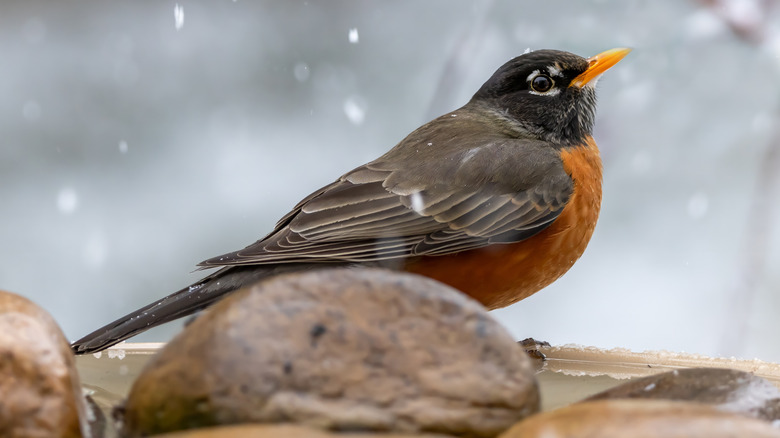
We already know that robins need a steady supply of fresh water for both drinking and bathing. We've also touched on the ideal birdbath depth (up to 2 inches), to ensure they're comfortable using the one in your yard. However, when it comes to winter, it's not enough to ensure your bird bath is topped up to an appropriate level. You also need to ensure it's consistently thawed, especially if you live in an area that experiences regular frosts.
Robins can easily dehydrate during the winter, which sounds strange. Surely that'd be impossible at what is the wettest time of year? And don't robins migrate south for the winter, anyway? In actual fact, not all robins do migrate. And if those in your yard happen to stick around, they'll be grateful for you ensuring your bird bath doesn't freeze over. The best way to do this is to use a heated birdbath. This will ensure the water stays available when other, unheated sources start to freeze over, thus helping to prevent dehydration.
Plant native evergreens for cool-season cover
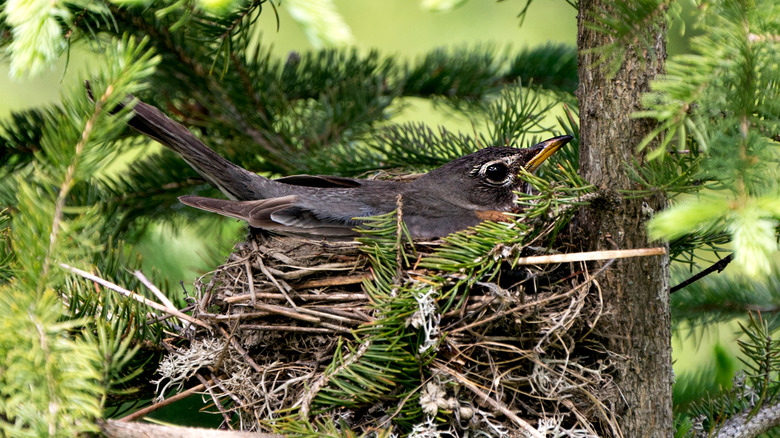
One of the best ways to ensure plentiful sightings of American robins is to encourage them to nest in your garden. There are several ways that you can do this that we've already explored, like ensuring there's a supply of mud, and building a brush pile. But for early-season nesters — that is, those building their nests in March or April — research suggests that these birds prefer to nest in dense, evergreen conifers.
It makes sense. Few deciduous trees will have fully leafed out at this early stage in the year, which means they'll offer little cover from predators. For the same reason, they also offer little protection from the weather. All of this makes planting native evergreens in your yard a good bet for attracting nesting robins. It's important that they're native, since birds are more likely to recognize and accept native trees as ready sources of shelter. Cedars (Cedrus spp.) and junipers (Juniperus spp.) are good choices. Not only do they provide year-round shelter, but these evergreens also produce berries, which are a boon to birds like robins during the colder months.
Offer females crushed snail shells or eggshells to help grow their signature eggs
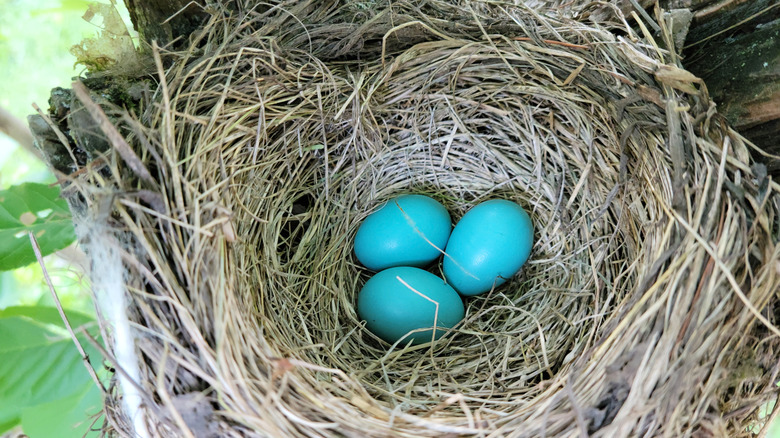
Further to providing both materials and a suitable site for robins to nest, it can pay to think about what the mothers need in order to breed. As with any other species, they need a plentiful supply of nutrients — that almost goes without saying. But they also need lots of calcium. Why? Well, if you've ever seen a clutch of robin eggs, you'll know that they often come out in a dazzling shade of blue. It's not completely clear exactly why the eggs are so vibrant, although one popular theory is that it provides the eggs with a natural form of sunblock. What's crystal clear, however, is that robins need plenty of calcium to produce them.
As for how to provide this critical mineral, there are several ways. Adding a brush pile, as mentioned earlier, will help, since it'll attract various calcium-rich creatures for robins to feed on, like snails and millipedes. Alternatively, you could supplement your bird feeders with a few choice items to help your local robins up their calcium intake. Crushed snail shells are one of the best additions, since robins are likely to recognize them as a calcium-rich food source. You can even put leftover eggshells from your kitchen to use. The key, as with other robin feed, is to use a platform-style feeder. And don't forget to mix your shells in with other, energy-rich items, like mealworms, fruit, and berries.
Support local caterpillar populations
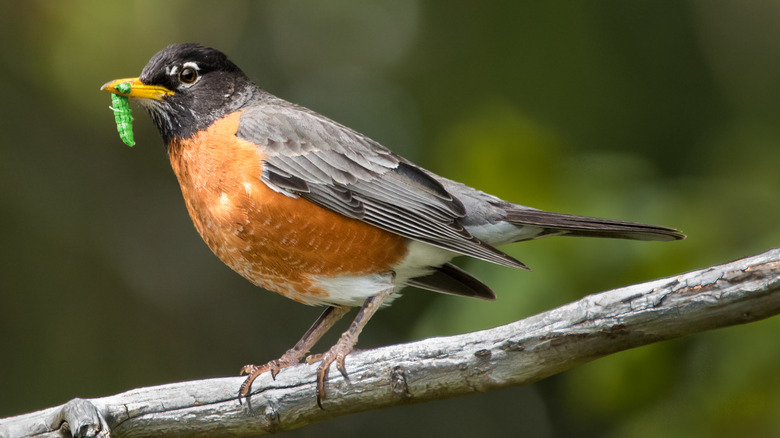
Who doesn't love seeing their flower beds bursting with butterflies? The presence of pollinators is a good indication that you've nailed your planting scheme. In fact, they're often considered an indicator of biodiversity, which is surely the ultimate goal of any gardener. The added benefit for those who love birds is that certain species, like American robins, absolutely love the taste of caterpillars. In other words, encouraging butterflies to stick around may also be enough to coax local robins into spending more time in your garden.
As for how to encourage butterflies, there are several ways. Generally speaking, you want to shoot for pollinator-friendly flowers, like bee balm (Monarda spp.), asters (Symphotrichum spp.), and coneflowers (Echinacea spp.), to name just a few. Try to keep your garden in bloom for as much of the year as possible to ensure you retain their attention. And don't forget to add some host plants, too. Often also called "food plants," these are the plants that caterpillars like to feed on. Good examples include nettles (Urtica dioica) and thistles (Cirsium spp.). If these are present, butterflies will be more likely to lay their eggs in your garden. And that, eventually, will mean a plentiful supply of caterpillars for your local robins.
Provide a platform for nesting robins
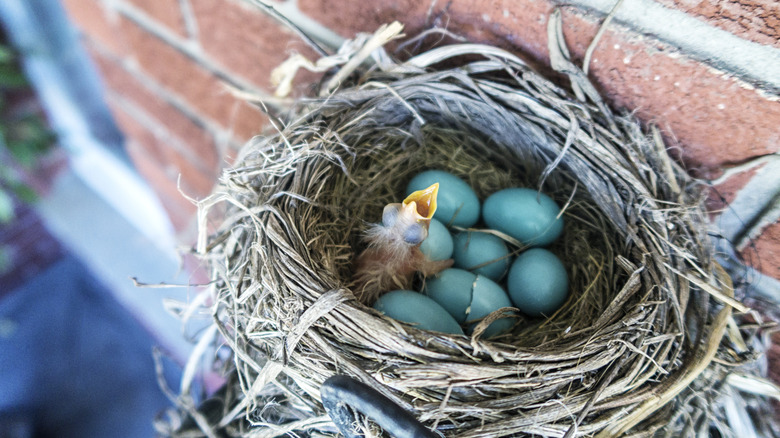
Adding a few nesting boxes to the walls of your house and high up in your trees is a great way to attract several bird species. But it's unlikely to work for robins, in fact they rarely ever take to traditional enclosed birdhouses. Instead, they're platform nesters, which means that, in the wild, they look for spots like tree crotches on which to build their nests.
In areas where these are scarce, they may be encouraged to stick around if offered man-made shelves. To do this, mount a wooden platform with an 8-by-8-inch base on a wall or a tree trunk. Ideally, it should be installed under something that offers some form of cover, like a tree canopy or your home's eaves. You should also make sure that you follow the other tips in this guide to encourage them to visit your yard. They may be convinced to nest on your platform if there's a plentiful supply of food, water, and calcium close to hand. But if there's not, they'll almost certainly look elsewhere for a suitable nesting site.